authenticated by

Share
Cultural Center
Dec 25, 2024 · 3 min read
Traditional Vietnamese music or folk music, folk songs were born very early. Since ancient times, Vietnamese people have been very passionate about music, for them music is an indispensable part of life. Therefore, in the process of historical development, the residents here have constantly created many musical instruments and musical genres to express their feelings, to add strength, working spirit or to escape the entanglement in daily life.
We can hear the melodies of lullabies, nursery rhymes, musical genres in worship rituals, funerals or in the dialogue between members of the community, in entertainment, in competitions with riddles, singing and responding to talent between boys and girls, the melodies when playing cards or telling epic poems, the songs and instruments of street singers, of "tai tu" groups and traditional opera genres...
Vietnamese traditional music is rich because of the accumulation of genres from many different eras and because of its multi-ethnicity. The same musical genre, but each ethnic group has its own way of expressing, performing and melodies. Vietnamese lullabies are different from Thai, Dao, Muong lullabies... Some ethnic groups use lyrics and songs to put their children to sleep. Others lull their children to sleep with the gentle sounds of instruments and flutes.
Vietnam has 54 ethnic groups, which means that there are 54 different traditional musics. So in this article, we would like to mention the traditional music of the Kinh people. There are many ways to classify the traditional music of the Kinh people:
If divided by genre, we have: Royal music, Cheo, Tuong, Hat Xam, Don ca tai tu, folk songs, Ca tru...
If divided by region, we have: Southern traditional music; Central, Central Highlands, Northern... or divided further by cultural region.
If classified by type, it can be: Solo singing, duet singing, group singing...
There are many ways to classify depending on the purpose and criteria, there will be a reasonable division.
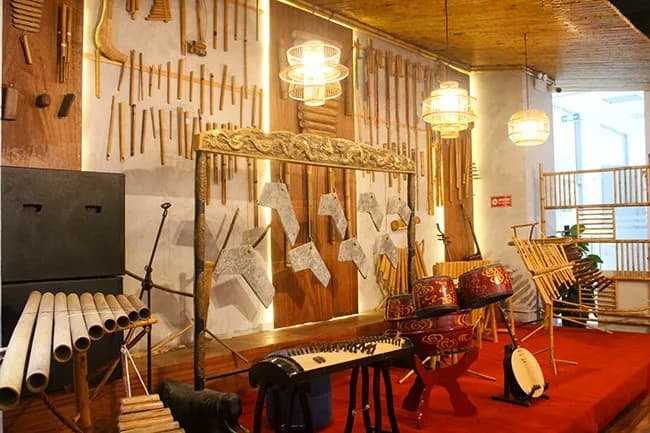
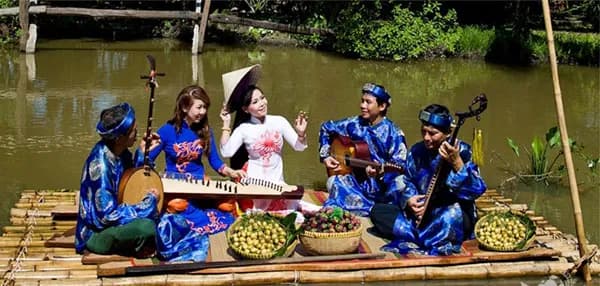
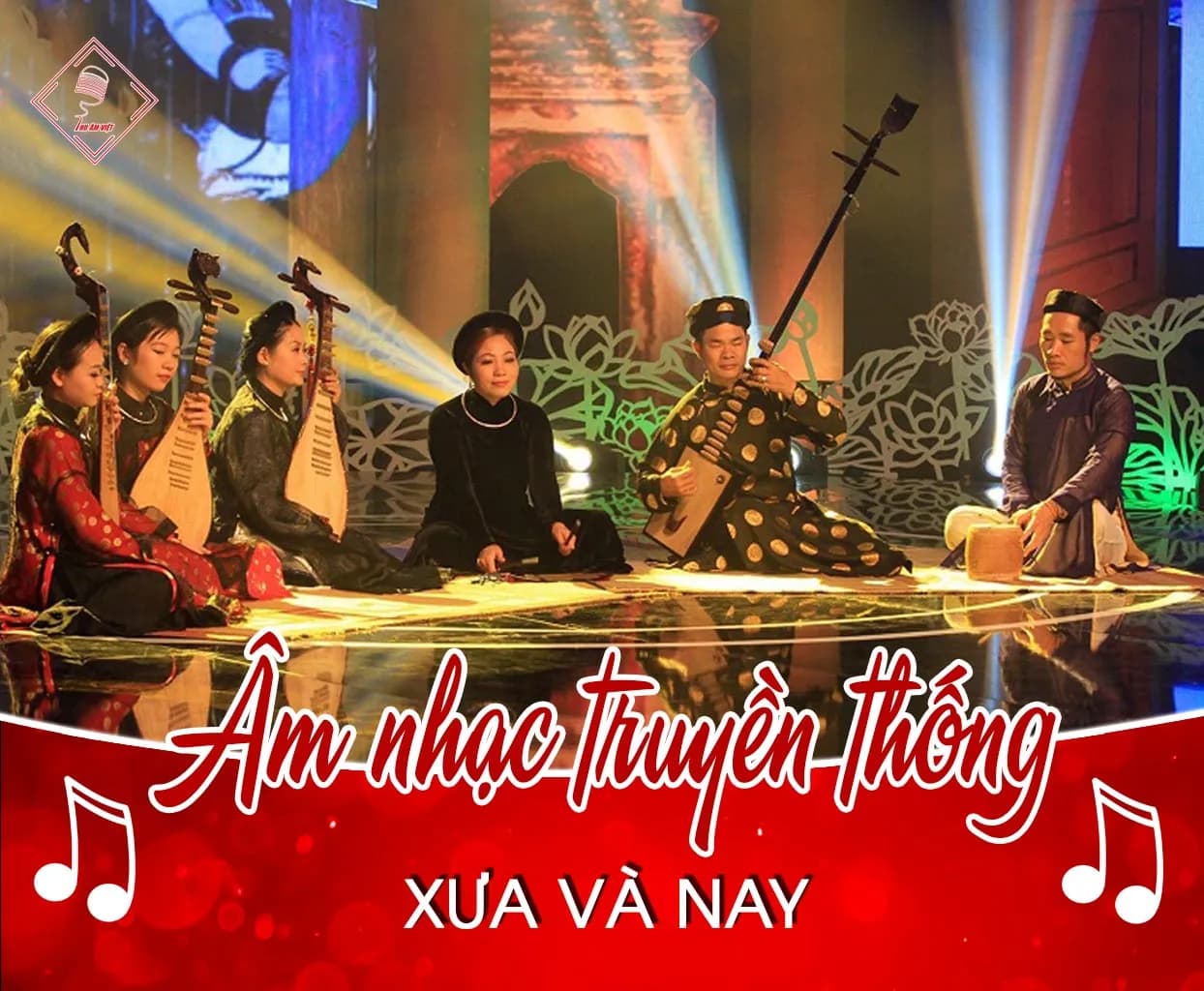
In traditional music, people also use many types of musical instruments such as monochord, two-stringed fiddle, zither, quartet, day-shaped fiddle, and kim-shaped fiddle... There are musical instruments that are specialized for one type of music, and there are musical instruments that are used for many types of music. For example, the day-shaped fiddle, clapper, and drum are specialized for Ca Tru, and the two-stringed fiddle is specialized for Xam...
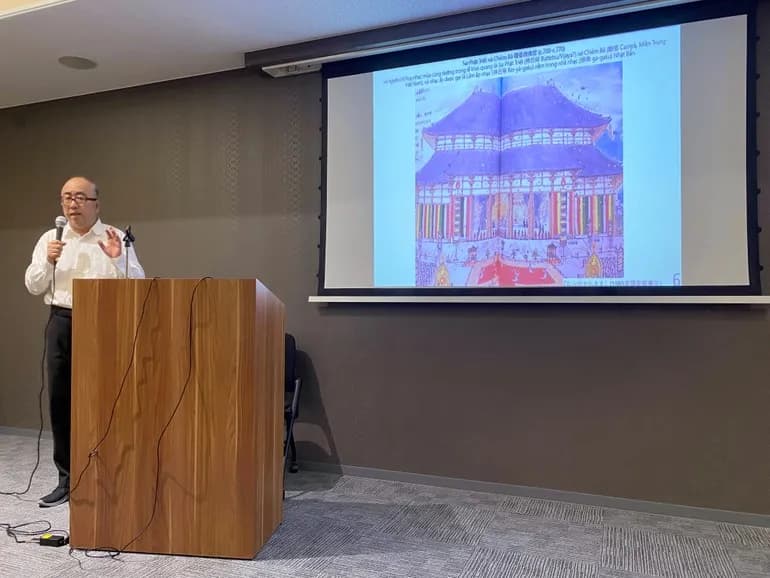
Among the eight dances taught by Buddha Triet, Kalavinka is a particularly prominent dance, imbued with Buddhist characteristics. This dance is usually performed by four women or children, wearing costumes with colorful feathers and tails, holding cymbals, moving with gentle, graceful movements but still maintaining the elegance of a dance performed in Buddhist ceremonies. The costumes of the dancers also aim to represent the image of Kalavinka, a precious bird in the Pure Land, with a miraculous song often mentioned in Mahayana scriptures. This bird often appears to sing as an offering while the Buddha preaches. According to Dr. Shine Toshihiko, the system of musical instruments used to perform this dance is almost similar to the Cham musical instruments still used today such as Ginang drum, Paranung drum, Saranai trumpet, etc. The dance movements of standing up straight and stretching arms in the Kalavinka dance and Cham dance also have similar points.
Regarding the timbre, Mr. Shine Toshihiko commented that if you pay attention, when listening to the performance of Lam Ap Bat Nhac, you can feel the difference compared to the rest of Japanese gagaku, giving the listener the feeling that Lam Ap Bat Nhac is a type of music imported from far away. At the same time, when studying Lam Ap Bat Nhac, you can discover the close relationship between other musical traditions, specifically Vietnam and Japan. Besides, the influence of the Mongol Yuan Qu on the Vietnamese stage performance under the Tran Dynasty is still evident today. This also reflects the tradition of "preferring Western Regions" that has taken place in both Vietnam and Japan. Also in the program, the audience will enjoy 5 Cham dance performances performed by artists from the Kawon Khik Nam Krung Dance Orchestra, inheriting the tradition of the Phan Rang Cham people.
Thank you for choosing iguide.ai to accompany your exciting experience!
Keep reading
 Related
 Related
 Related
 Related
 Related
 Related
By Admin
By Admin
Log in to leave a comment. Log in
Be the first to comment.
React to this story