authenticated by

Share
Caves
Dec 25, 2024 · 2 min read
In early March 2021, photographer Pham Huy Trung (HCMC) joined a 2-day adventure tour to explore Va - Nuoc Nut cave located in the cave complex of Phong Nha - Ke Bang National Park.
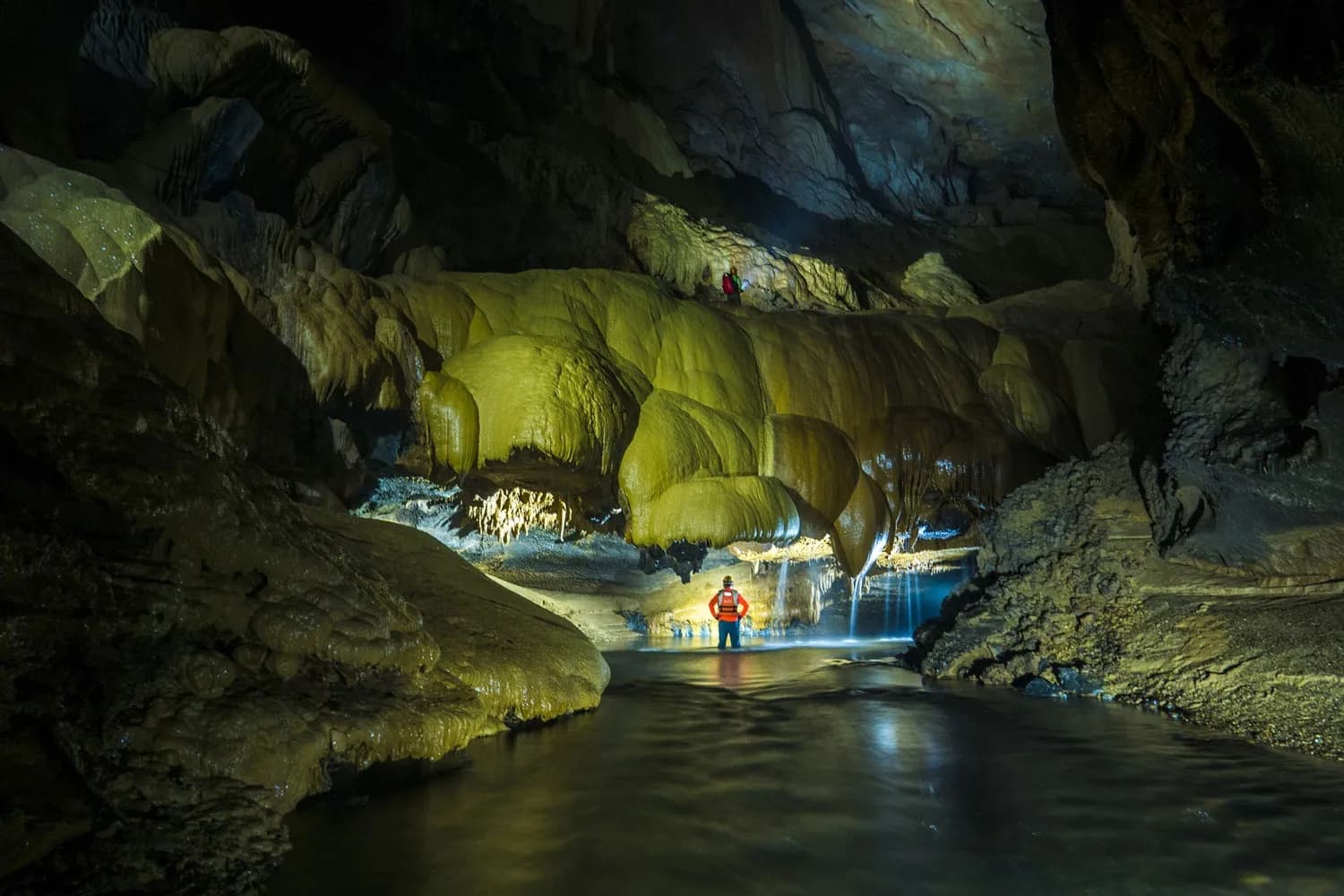
After traveling by car from the center of Son Trach commune to Km28 of Ho Chi Minh West road, the group continued to walk through the forest, passing through many beautiful scenes of Phong Nha - Ke Bang forest. At the first discovery point of the journey, Nuoc Nut cave, Mr. Trung was extremely impressed with the stalagmites "precipitated" from the ceiling and stalactites "growing" from the floor of the cave.
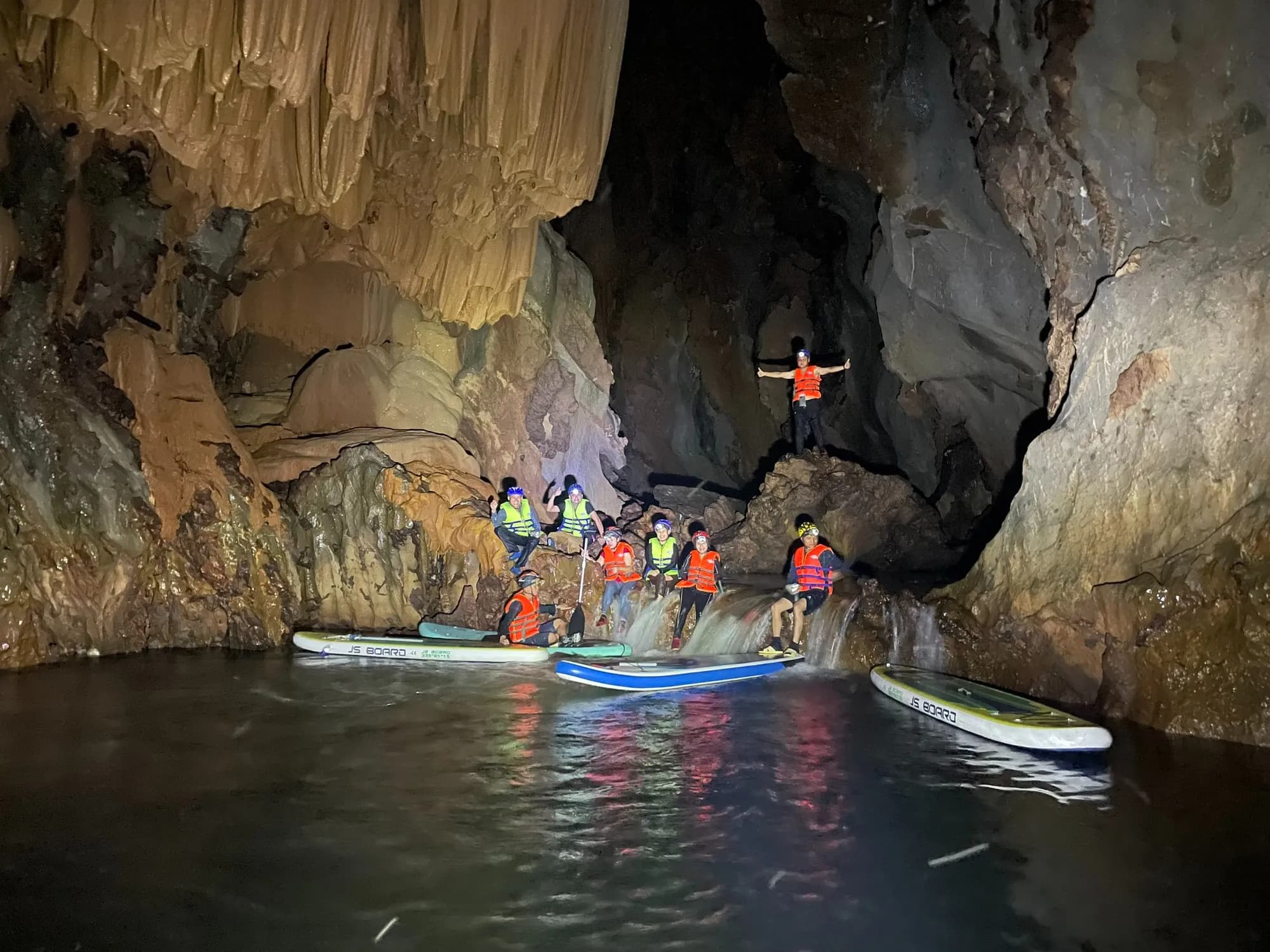
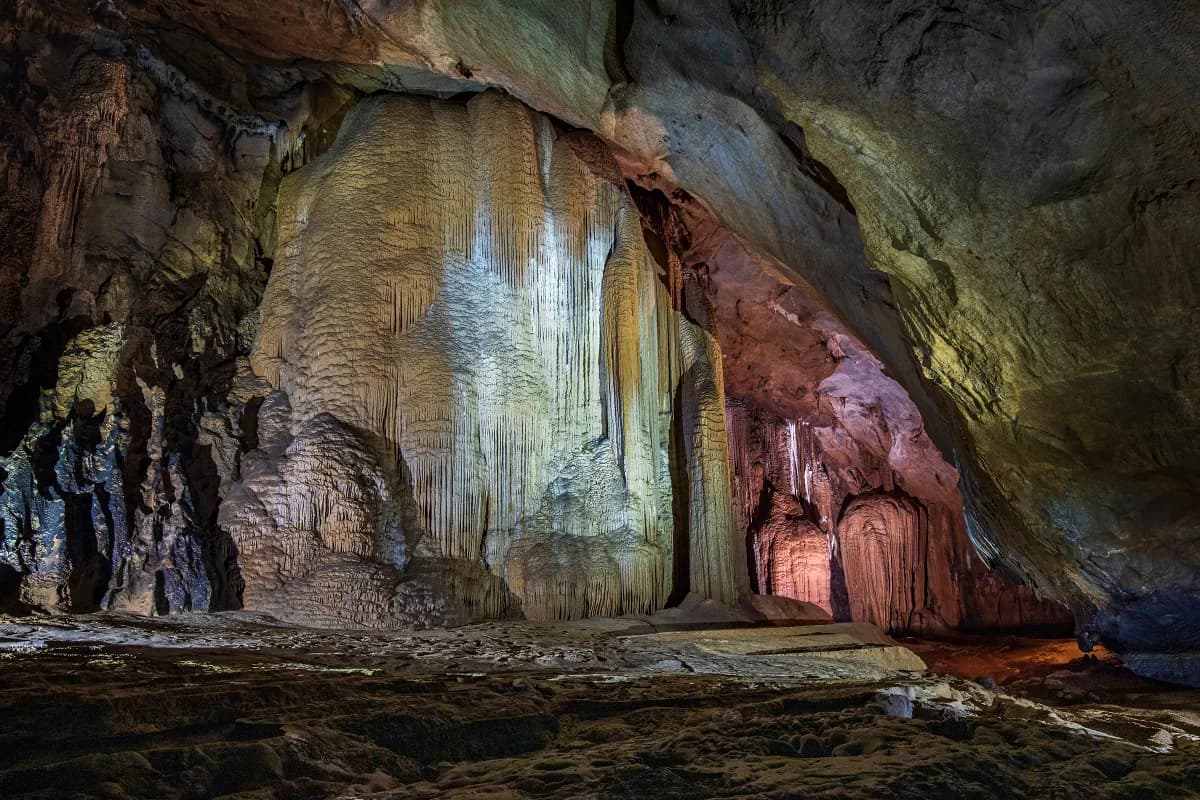
Nuoc Nut Cave was first discovered in 2003, and the cave entrance was discovered in 2012. The cave's large dome and giant stalagmite wall in Nuoc Nut Cave. Cave experts said that based on geological survey results, Nuoc Nut is 2.2 km long and is about 2 million years old. The cave is currently exploited for tourism from February to the end of August every year. Inside Nuoc Nut Cave, there are sandbanks and stalactites of many different shapes.
After exploring Nuoc Nut Cave, Trung's group camped overnight above the cave entrance and continued trekking Va Cave the next day. In the photo are stalactites of many shapes in Va Cave. The two caves have a special structure thanks to the water veins connecting to Son Doong Cave.
In 2012, Mr. Ho Khanh brought a group of British cave experts to the entrance of the cave. The total length of Va Cave was surveyed and recognized as 1.6 km. During the exploration of Va Cave, the group used safety belts with buckles and specialized pulleys to move through stalactite walls that were tens of meters high. The journey requires visitors to be in good health and have some basic climbing skills.
Mr. Trung said that all feelings of fatigue disappeared when the Thap Non stalactite lake in Va cave appeared before his eyes. Hundreds of these stalactite blocks grow like bamboo shoots, with quite uniform sizes, and a height of about 2 m.
Experts say the stalactites here are rare and unique, almost nowhere else in the world, so the Thap Cone stalactite lake is also called "stalactite cave".
Scientists have not yet discovered the formation of the conical stalactites. They are “living” in water, growing from the bottom of the lake, not formed by small streams of water from above like in other caves.
At the end of the trip, Mr. Trung compared the scenery in Va and Nuoc Nut caves to paradise. The trip is suitable for those who love sports, nature and photography.
Keep reading
 Related
%201.webp&w=3840&q=75) Related
Related Related
 Related
 Related
 Related
 Related
 Related
Log in to leave a comment. Log in
Be the first to comment.
React to this story