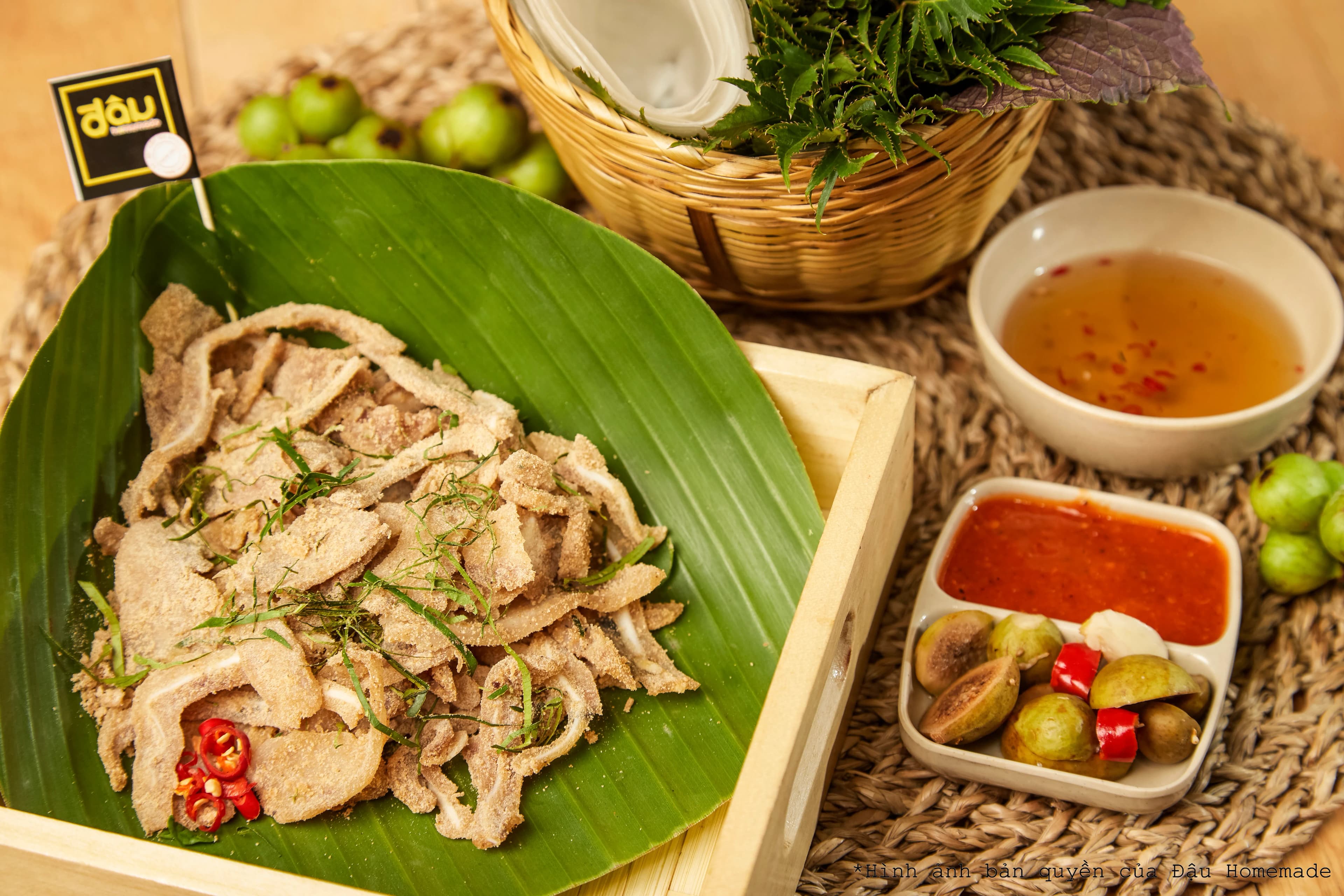
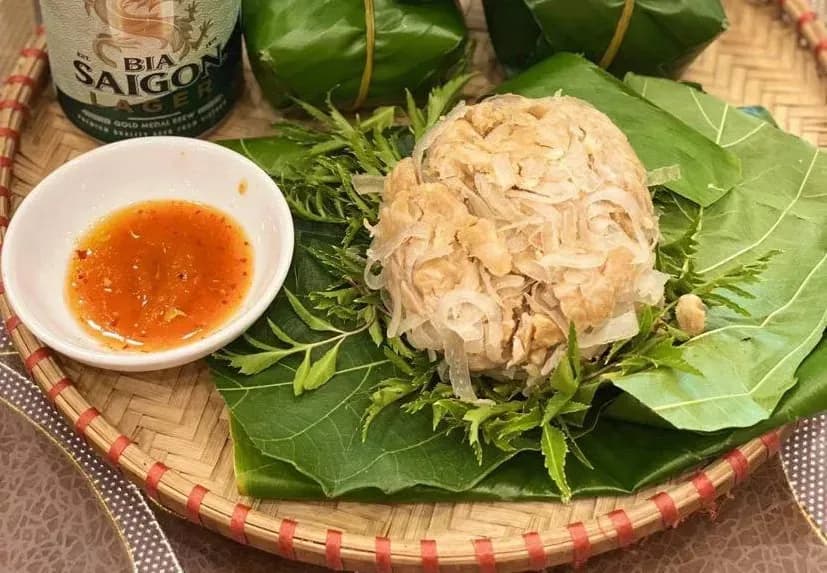
Nem Phung is likened to a blooming flower because when peeled, the banana leaf will slowly open and then the fig leaf, the pistil is the yellow part of the nem that is tightly woven together. The flavor of nem is a unique combination of the rich taste of meat, the aroma of rice powder and the astringency of fig leaves. Nem is often dipped in yellow sauce or chili sauce.
Dec 25, 2024 · 3 min read
Nem Phung originated from Dan Phuong, and is one of the most favorite "nem thinh" dishes of Hanoians, Vietnam.
Share
Keep reading
You might also like
"Nem Phung eaten with fig leaves/ For people from all over to remember a time", that is a folk song about the "nostalgia" of nem dish for tourists who have tried it. Not sold as widely as other "nem thinh" specialties, the rustic nem Phung dish still permeates the lives of Hanoians, on feasts, drinking tables... The reason the dish is called nem Phung is because it originated from Phung town, now in Dan Phuong district, Hanoi, Vietnam.
Nem Phung is essentially a rustic dish, so all the ingredients are simple and rustic, but the meticulous preparation is the key to the success of this specialty.
The ingredients for nem include pork and pork skin, sticky and regular rice, soybeans, fig leaves. The meat chosen to make nem must be soft, with both lean and fat. The rice chosen to make the powder must also be good quality rice and a little bit of yellow sticky rice. The pork is cut into bars and then steamed, the skin, fat and lean meat are filtered separately, then sliced into strips. The meat is cooked until rare, then the powder is used to cook it thoroughly. The powder is made in a ratio of seven parts rice, one part sticky rice and two parts soybeans. When roasted, it must be done evenly and over a steady heat to dry and have an attractive light brown color. The roasted rice is put into a mortar and ground until it is smooth and fluffy, until it gives off a fragrant aroma, which is the requirement for a batch of powder.
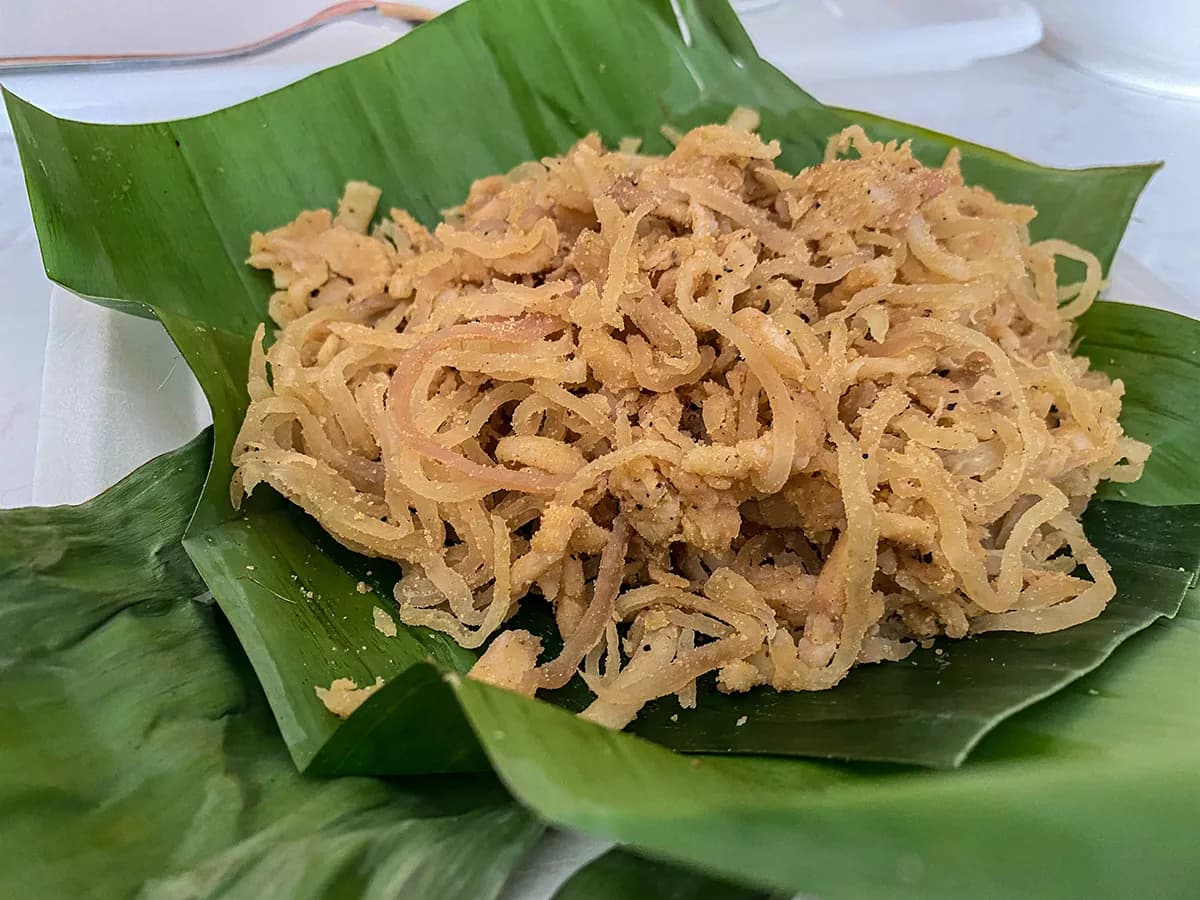
After that, the person making the nem mixes the powder with the skin and pork that have been filtered and chopped separately, then wraps it in fig leaves, then wraps it in banana leaves and ties it with string to form a "nem". Therefore, when peeled, the nem is often tightly woven together, and when eaten, it is gradually separated to become loose.
What makes Phung nem famous is the combination with fig leaves. The flavor of the spring rolls becomes more complete if rolled with this type of leaf, fragrant, astringent and crispy. Fig leaves are also carefully selected. Leaves that are too small will not be enough to wrap the spring rolls, old leaves will be tough. Spring roll makers often choose fig leaves as big as half a hand, if there are more rough spots, the taste will be more delicious.
Nem Phung is likened to a blooming flower because when peeled, the banana leaf will slowly open and then the fig leaf, the pistil is the yellow part of the spring rolls that is tightly woven together. The flavor of the spring rolls is a unique combination of the rich taste of meat, the aroma of rice powder and the astringent taste of fig leaves. Spring rolls are often dipped in yellow sauce or chili sauce.
Currently, Nem Phung has become more popular and is no longer as hard to find as before, even sold in many provinces and cities, at drinking establishments as a snack, appetizer. Diners who want to enjoy it can go to Dan Phuong, if you are in Hanoi, visit the spring roll shop in Hang Bun or some supermarkets and convenience stores. Thank you for choosing iguide.ai to accompany your interesting experience!


.webp&w=3840&q=75)
.webp&w=3840&q=75)