authenticated by

Share
Sand Dunes
Dec 25, 2024 · 6 min read
When mentioning the Easternmost Cape of the country, most people will immediately think of Mui Dien in Phu Yen, while few people know about the existence of the Easternmost Cape in Dam Mon, Khanh Hoa. To get here, visitors will have to overcome white sand dunes, coastal forests and jumping rocks, creating a fascinating and exciting journey.
Where is the Easternmost Cape?
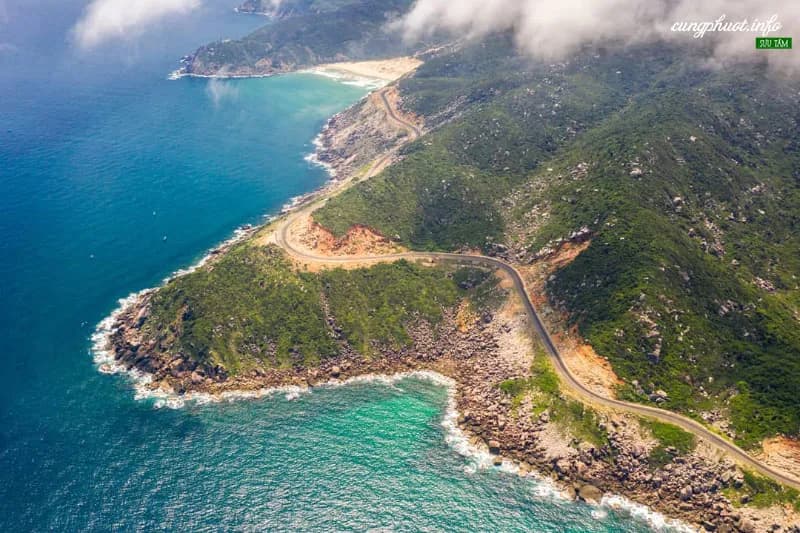
The Easternmost Point is located on Hon Gom Peninsula, in Van Phong Bay, Van Thanh Commune, Van Ninh, Khanh Hoa Province. This name comes from a unique feature, when two rocks jutting out towards the East Sea appear at a single location. According to the Vietnam Association of Geophysical Science and Technology, the exact coordinates of the Easternmost point on the mainland are 12˚39'0" north latitude - 109˚28'0" east longitude.
The period from January to May is considered the most ideal to explore the Easternmost Cape. During this period, the temperature is not as harsh and not as difficult as the period from June to August, when the temperature can reach 35-39 degrees Celsius and make the path more difficult for walking. However, from September to December is the storm season, not a suitable time to trek on this route.
How to get to the Easternmost Cape
To get to the Easternmost Cape, there are several means of transportation you can choose from:
Fly to Phu Yen and rent a motorbike: A popular option is to fly to Phu Yen airport, then rent a motorbike to travel to Mui Doi Cuc Dong. This saves time and is convenient for exploring the area.
Fly to Nha Trang and take a bus to Dam Mon: Another option is to fly to Nha Trang airport, then take a bus to Dam Mon. However, this distance will be further than flying to Phu Yen and may take more time. Therefore, you should consider your schedule and health to choose the right option.
Depending on your convenience and personal preferences, you can choose the appropriate means of transportation to get to the Easternmost Cape.
What to bring when trekking Mui Doi, the Easternmost point
Below is a list of items to prepare for climbing the Easternmost Double Cape:
Raincoat and gloves: Make sure to bring a raincoat and gloves to protect against inclement weather.
Trekking poles: Assist in climbing slopes and moving on difficult terrain.
Water: Bring three 500ml bottles of filtered water and two 500ml bottles of Pocari Sweat mineral water to maintain water and electrolyte balance between activities.
Backpack with capacity of 30-40 liters: Used to carry things and convenient when moving.
Thin, sweat-absorbent shirts: Choose shirts that absorb sweat well to keep your body dry and cool.
Thick and long socks: Bring thick and long socks to protect your feet from tears and abrasions when climbing steep slopes.
Sunscreen and sunglasses: Protect your skin and eyes from the harsh effects of the sun.
Headlamp: Provides light in low light conditions or when climbing Eastern Cape at night.
Mini medical kit (including insect repellent): Make sure to bring a mini medical kit with necessary medications and insect repellent.
Snacks: Bring along cookies, energy gels or other light foods to replenish energy on the go.
Sunscreen: Protects skin from the effects of UV rays.
Hats and sun protection: Be sure to bring a hat and sun protection to protect your head and skin from the sun.
Spare T-shirts and Pants: Prepare spare T-shirts and pants to change into after swimming and keep them dry.
Make sure you bring all of the above items to ensure safety and comfort during your journey to climb the Easternmost Double Cape.
Trekking to the Easternmost Cape
The trekking route to Mui Doi Cuc Dong is about 12km long. Below is the itinerary description:
Day 1
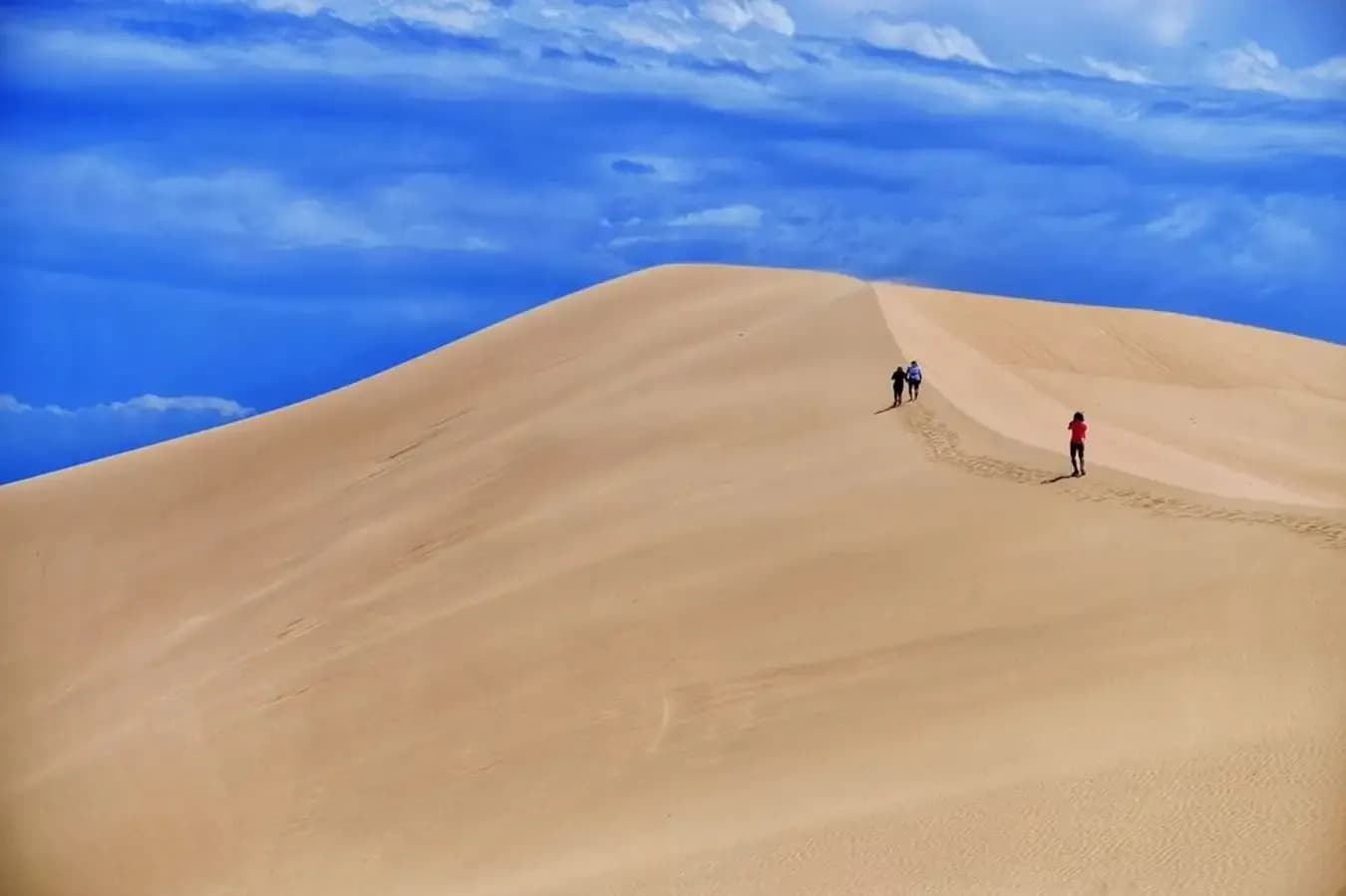
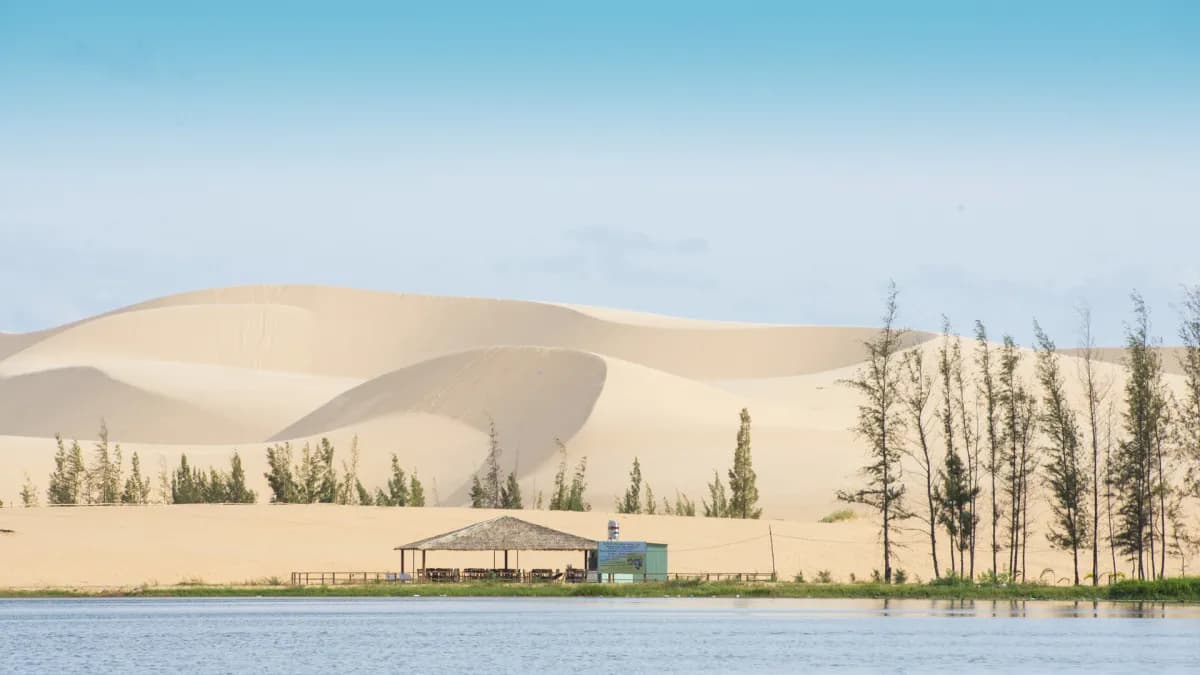
From the tea shop at the intersection to Dam Mon market, visitors will go to the overnight camping site. Visitors should warm up before starting the journey. Right from the start, visitors will go through a beautiful road next to Van Phong bay, with fine white sand beaches on both sides. This scene is a bit similar to Bau Trang and creates a wonderful image.
Next, visitors will go through the sand dunes to Uncle Nam's tea shop. If you do not want to walk, you can rent a pickup truck to continue to the resting place. After about an hour of walking, we will arrive at Bai Rang, a beautiful beach.
There is a tea shop under the shade of the trees with hammocks ready for us to rest. Let's lie down and enjoy a cool glass of lemonade or pineapple juice. Before continuing the journey, enjoy changing clothes and swimming at Bai Rang. Then, put on your backpack and continue conquering the road.
The typical scorching and scorching sun of the Central region will continue to welcome visitors. The harsh sunlight will certainly make everyone feel tired, but eventually visitors will reach the edge of the forest with cool tree canopies. Everyone can find a tree to rest.
Under the shade of the tree, visitors will feel the cool breeze, making their spirit more refreshed. Choose a large shade of the tree, visitors can spread a tarp to use as a place to have lunch.
Continuing to walk under the trees, the cool breeze occasionally blowing will make visitors feel more refreshed and excited.
Continuing forward, at around 3:00 p.m., visitors will arrive at the campsite after a period of struggling with sand, sun and wind. The porters will arrive first by boat, carrying tents and necessary items. Colorful tents will also be set up.
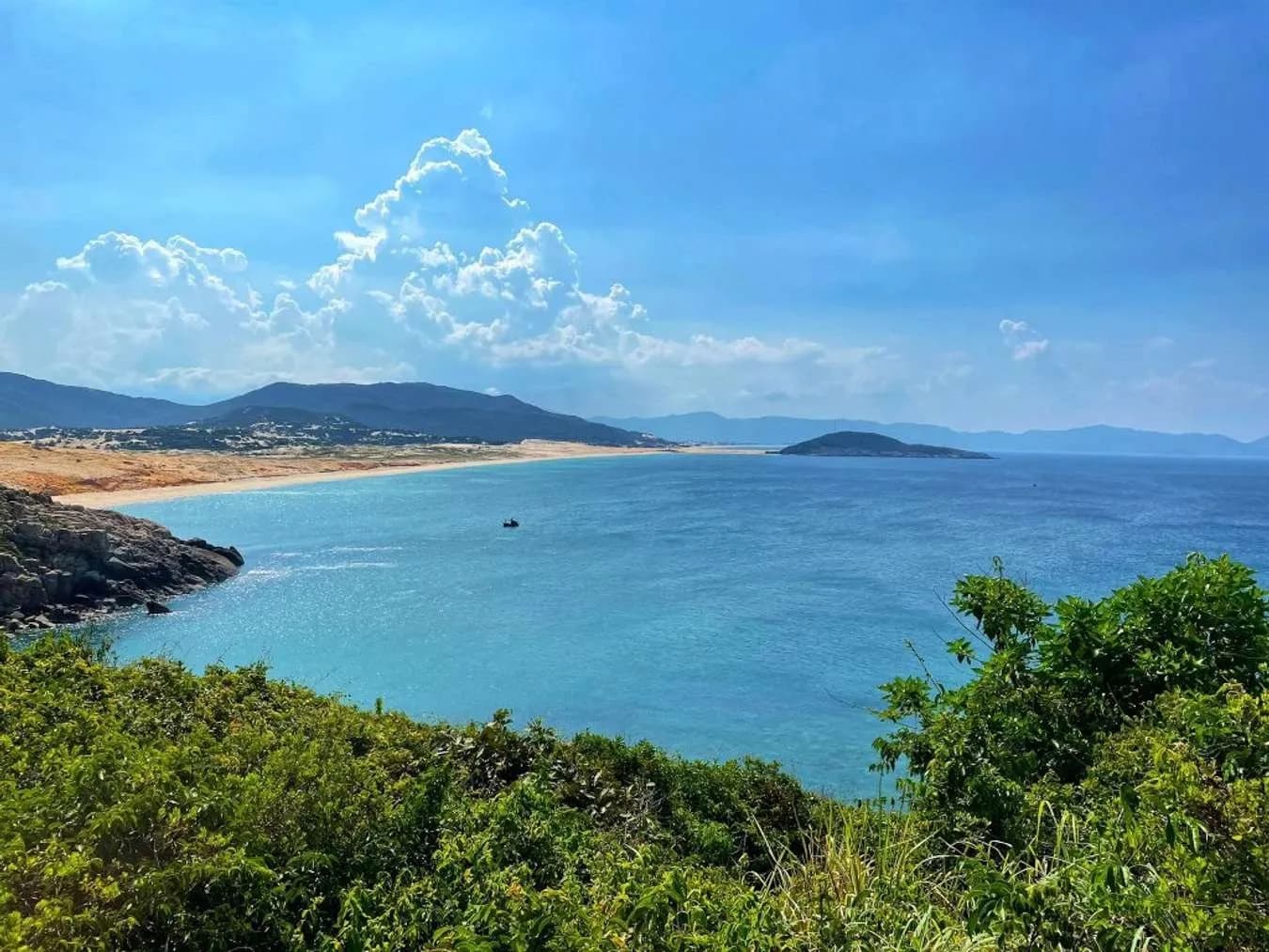
The view from the campsite is truly stunning. Just open the tent door and you can see the clear blue sea and a few fishing boats in the distance. Soaking in the cool water will be a refreshing feeling.
Visitors can also enjoy seafood in Van Phong Bay - known as one of the best fishing spots in the country.
Day 2
At 4:00 am, visitors should start the next day's journey and it will take about 30 minutes to reach the destination.
The first part of the path will take you past countless dead corals washed up on the beach. Next is the jumping rocks section, where you have to walk on rocks and cross crevices by turning sideways to pass. You will need to be very careful when going through the jumping rocks section because it is very easy to slip.
Finally, visitors will reach the most difficult part. To reach the top of Mui Doi, the easternmost point, people have to climb up by rope ladder. The rope ladder is made of rope, about 3 meters long. Climbing up requires great care, visitors should wait for the porter to come up first to support. The stone peak with the top can accommodate about 30 people sitting. Visitors will sit there to wait to watch the sunrise.
Climbing up the rope ladder is dangerous, but going down is even more dangerous. Therefore, visitors should fasten their safety ropes before going down.
Conquering the Easternmost Double Cape is a truly impressive and exciting experience. Hopefully you will have wonderful moments on your journey to discover the Easternmost Double Cape.
Keep reading
 Related
 Related
 Related
 Related
 Related
 Related
 Related
 Related
Log in to leave a comment. Log in
Be the first to comment.
React to this story