authenticated by

Share
Pho, Vermicelli, Noodles
Dec 25, 2024 · 3 min read
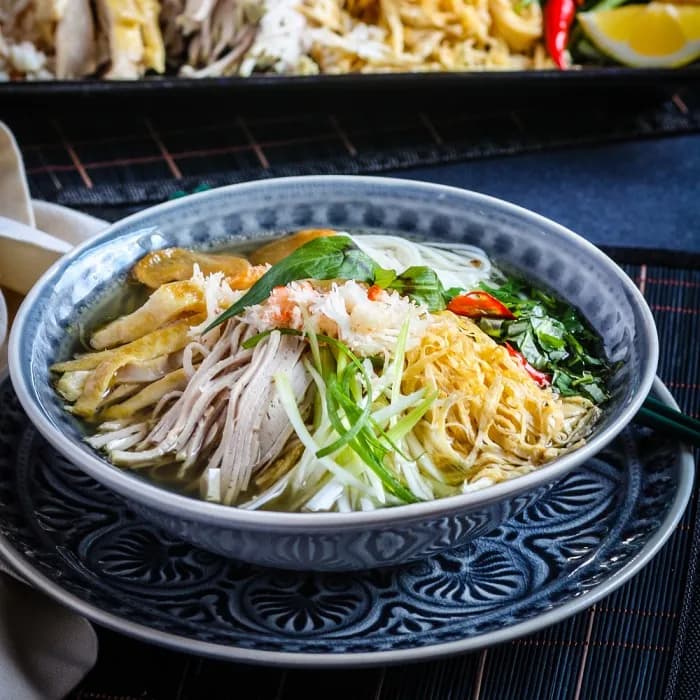
Bun thang has long been an indispensable part of the culinary culture of Hanoians, Vietnam. Originating from the traditional soup of thang thang, bun thang utilizes traditional ingredients of Tet holiday such as dried shrimp, chicken, chicken bones, pork roll, salted eggs, pickled radish... to create a sophisticated dish, combined with the ingenuity and thrift of the women of Hanoi in the past.
With the meaning of this name, culinary researchers believe that "Thang" in Chinese means soup. Bun thang can be understood as "noodles served with soup". Although simple, it brings excitement. From this name itself, it shows the secret and essence of traditional noodle dish, with the broth playing a central role. The main ingredients for the broth are chicken or pork bones and shrimp, simmered to create a unique flavor.
During the cooking process, the Bun Thang cook must skim the foam continuously and evenly to ensure the broth is clear and not cloudy. The perfect broth must be clear, sweet and have a little aroma from shrimp and dried mushrooms.
The complexity of making Bun thang also lies in the selection of ingredients, the processing and the presentation. It is estimated that up to twenty ingredients are needed to make a bowl of Bun thang. The noodles are chosen to be tangled noodles, which are broken into small, smooth and white strands like cotton. The chicken must be local chicken, soft, shredded and still have a little shiny skin like golden leaves. The pork roll is also carefully selected, thinly sliced and must have a light pink color in the middle to bring out the delicious flavor. Shrimp floss must be sweet and not have a fishy smell, and be made into soft cotton. The dried radish is shredded and pickled in a sweet and sour sauce, with an attractive golden brown color.
A special process is the beating of the eggs. To make the omelette thin, a little white wine is added before beating thoroughly. Then, a cotton swab is dipped in the oil and then spread evenly around the pan. When the eggs are added, the pan must be rotated quickly to ensure that the eggs are evenly distributed. After frying, the eggs are cut into thin strips, soft and smooth. In addition, ingredients such as shiitake mushrooms, green onions and chopped Vietnamese coriander are indispensable.
All these ingredients are skillfully arranged on a bowl of noodles, creating a work that resembles a five-color flower, with the deep yellow fried egg like the pistil. As the writer Vu Bang described, when looking at a bowl of noodles, we feel like we are looking at a clear landscape painting of the Steben River, with bright colors arranged close together but not blending together.
It would be a big mistake not to mention the spices considered the soul of Bun thang. First, it is shrimp paste, an indispensable element. A diner once commented that Bun thang without shrimp paste is equivalent to eating Pho without broth. In addition, it is impossible not to mention the essential oil of water beetles, a special and most delicate feature of this noodle dish. With just a little bit of toothpick, the scent of cinnamon will blend into the bowl of noodles, creating an indescribable delicious flavor. It is a pity that today, along with the gradual disappearance of water beetles, that flavor only exists in the memories of Hanoians, making diners regretful.
Bun thang was previously only enjoyed on special occasions such as the 4th day of Tet. Nowadays, bun thang has become an everyday dish and no longer uses all the traditional ingredients as before. However, with the basic ingredients available, this dish still evokes memories in the hearts of those who have enjoyed it at least once.
Thank you for choosing iguide.ai to accompany your exciting experience!
Keep reading
 Related
 Related
 Related
 Related
 Related
 Related
 Related
 Related
Log in to leave a comment. Log in
Be the first to comment.
React to this story