authenticated by

Share
Pho, Vermicelli, Noodles
Dec 25, 2024 · 4 min read
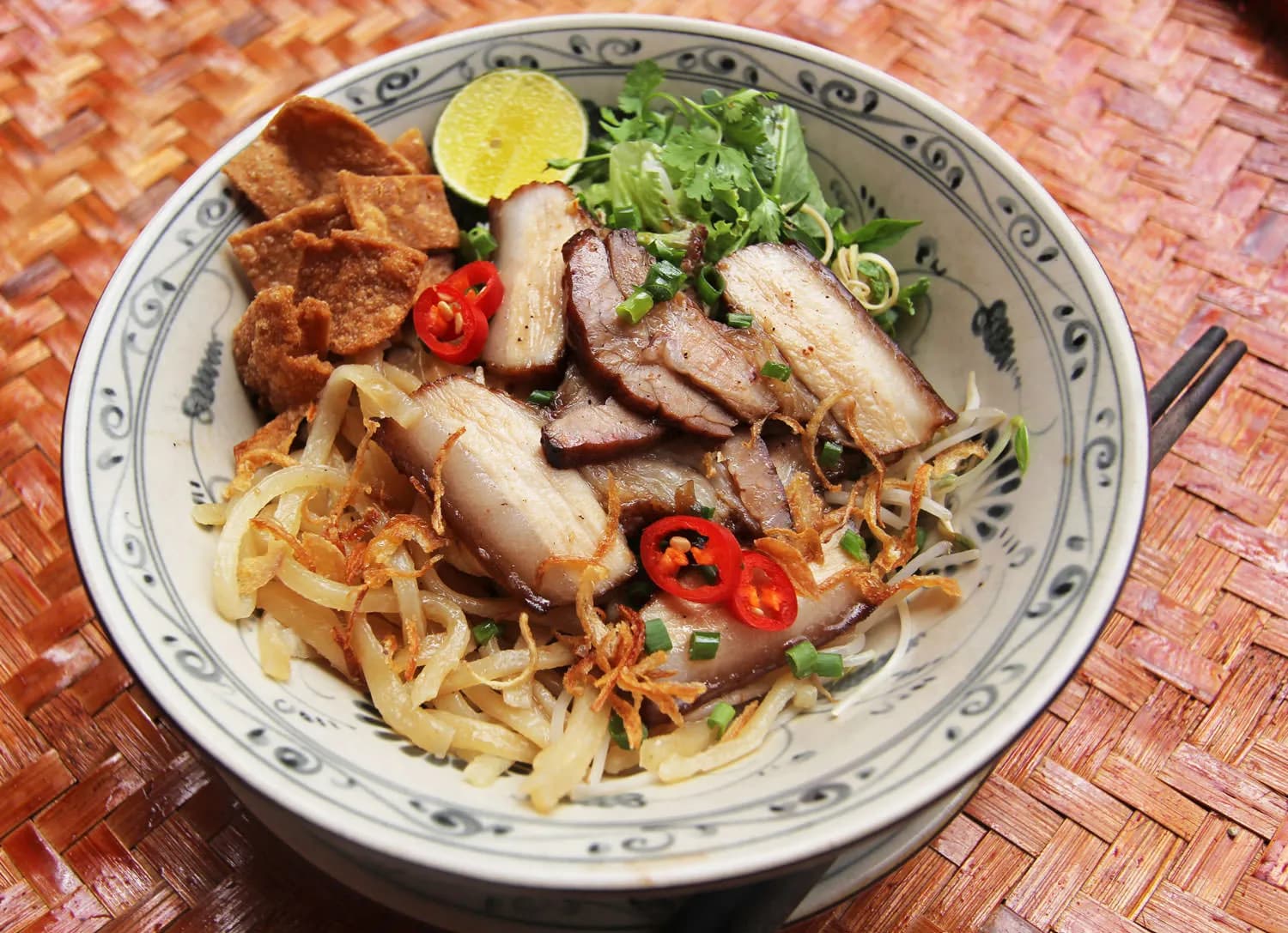
Cao Lau Hoi An has been considered a specialty dish since ancient times, and the folk songs of Quang Nam, Vietnam have passed down the folk song:
"Who passes through Hoi An ancient town
Visit Fujian and eat Cao Lau"
Although Quang noodles, chicken rice, Banh To, Banh Bot Loc, Banh Beo... can be enjoyed in many provinces and cities in the Central region, Cao Lau only exists in Hoi An. In the 17th century, when Lord Nguyen opened the port of Hoi An for trade and commerce, Chinese and Japanese people came here to do business and live. At the same time, the "delicacy" called Cao Lau was also born from that time.
The process of making Cao Lau noodles requires a lot of effort. Unlike Pho noodles, to make Cao Lau, the chef must choose pure rice from Quang Nam. In particular, the locals do not choose old rice, but they also do not use new rice. When this standard is met, Cao Lau noodles will become soft, chewy and have the typical flavor of Central rice. The rice needs to be soaked in ash water from Cu Lao Cham, which gives Cao Lau noodles a light yellow color similar to turmeric.
The water used to knead the dough to make Cao Lau must be taken from the ancient Ba Le well, because the alum content in this water contributes to making the Cao Lau noodles soft and elastic. Many people have left Hoi An and wanted to make Cao Lau to sell, but could not because of the lack of that unique well water. In the process of making Cao Lau noodles, the most important secret is how to knead the dough so that it is soft and smooth but not dry, which determines the quality of the product. Unlike other types of noodles, pho, and rice paper, people do not coat the dough to make Cao Lau, but after kneading, the Cao Lau dough will be rolled out thinly and then steamed with water. When cooked, the dough is cut into large strands.
An extremely important thing when enjoying Cao Lau is the indispensable salad. In Cao Lau, there are up to 12 different types of salad such as Herbs, Basil, Chrysanthemum, Bitter Vegetable, Coriander, Bean Sprouts, Lettuce, Fish Mint, Young Cabbage, Banana Blossom, Cucumber, and Sour Star Fruit. However, among them, there are 3 basic types of vegetables that are indispensable: Chrysanthemum, Bitter Vegetable, and Basil.
Char siu in Cao Lau is also made from whole pieces of lean pork, and the meat selection process is also carried out carefully. The pork is marinated with fish sauce, salt and five-spice powder to absorb evenly, then simmered until cooked. After the meat is cooked, the chef will take the meat out and continue to add tomatoes, minced onions and oil to the broth, then continue to boil the above mixture to create the sauce. In particular, char siu is the characteristic element that makes Cao Lau special. The meat is cooked just right, soft and has a brick red color, creating an irresistible appeal.
When enjoying, users can feel the flavor of this meat is not completely Vietnamese, but also not like dishes from Guangdong, Fujian, Chaozhou or Japan. That can be considered a unique flavor of Hoi An Ancient Town.
To prepare a delicious bowl of cao lau, the chef will cut a portion of the cao lau noodles into short pieces and deep-fry them to form “shrimps”. They will then fry the shrimps until golden brown, combine them with peanuts, and then spread them over the thick cao lau noodles in the bowl. Next, the chef will arrange thin slices of fresh pink char siu around the rim of the bowl and pour the sauce over them.
When enjoying Cao Lau, it is important to mix well so that the spices are evenly absorbed. Usually, Cao Lau is eaten with grilled rice paper (Hoi An people often choose thick rice paper, sprinkled with white sesame on top). The special thing about Cao Lau is that this Hoi An specialty does not use broth, only two or three spoons of sauce, helping to keep the rich and fatty flavor. People who like strong flavors can add fish sauce or soy sauce.
Enjoying Cao Lau awakens all the senses of diners, from the crunchy sound of noodles, the aroma of fish sauce and soy sauce, the rich smell of shrimp fat mixed with the sweet aroma of shrimp and char siu, along with the spicy, bitter, astringent taste of mixed vegetables. It is a unique taste that can only be found in Cao Lau Hoi An.
In the past, Cao Lau was considered a luxury dish. People in the countryside of Quang Nam, whenever they had the opportunity to visit Hoi An, always wished to enjoy Cao Lau Hoi An once and bring it back for their relatives to enjoy. Nowadays, this dish has become very popular in restaurants in Hoi An, from high-class places to popular restaurants. After exploring and learning about Hoi An, visitors should take some time to experience this delicious and unique dish.
Thank you for choosing iguide.ai to accompany your exciting experience!
Keep reading
 Related
 Related
 Related
 Related
 Related
 Related
 Related
 Related
Log in to leave a comment. Log in
Be the first to comment.
React to this story