authenticated by

Share
Vegetarian Food
Dec 25, 2024 · 8 min read
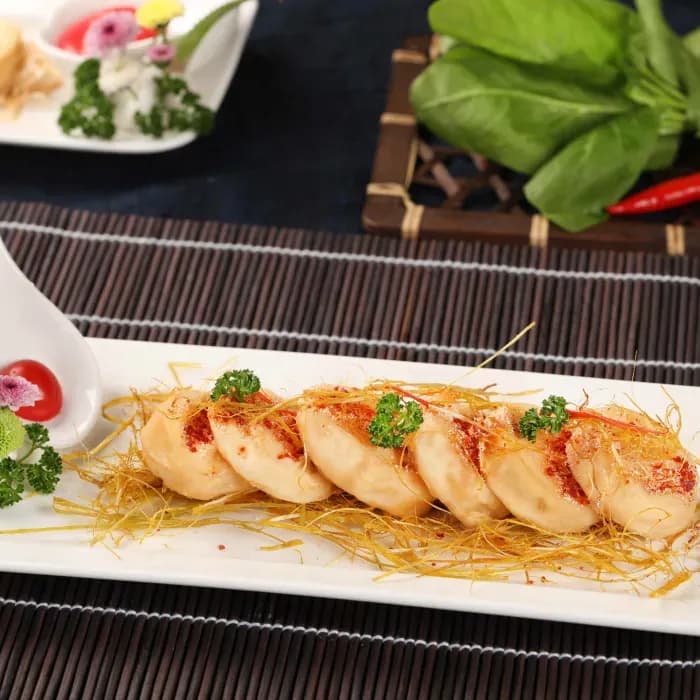
Hue vegetarian cuisine always carries the rich flavor of the fiery Central region, but is also no less sophisticated in each dish. From dishes such as vegetarian spring rolls, vegetarian Hue beef noodles; to hot bowls of vegetarian banh beo; etc., everything is carefully prepared from appearance to flavor. It seems that Hue vegetarian cuisine satisfies both the "taste" and "vision" of diners, making them unconsciously linger in the historic land of Hue.
People always call it “Hue Capital”, but it would not be wrong to call it “Vegetarian Cuisine Capital”. In the poetic land of Hue, vegetarian dishes appear everywhere and you will not have difficulty finding a restaurant serving vegetarian food.
When it comes to Hue cuisine, many people cannot help but be amazed. Among them, Hue vegetarian cuisine is also a special highlight. For Hue people, vegetarianism is like enjoying a special culinary feature, to purify the soul after the hustle and bustle of life, to find a gentle culinary pleasure to help support the soul and to protect and maintain health when more and more diseases are clinging...
Because they understand the meaning of vegetarianism, Hue people are meticulous in every step of preparing and enjoying food. This article will share in detail the unique and sophisticated features of vegetarian food in Hue!
1. Meticulous from the stage of choosing vegetarian ingredients
Regarding the selection of ingredients and food, in the pagoda in particular and in Hue people in general, there is a similarity in following the principle of "each season has its own food". In spring, there are fruits such as eggplant, beans, squash, pumpkin, squash, chayote, lettuce, tomatoes, mushrooms... In summer, there are vegetables such as sweet potatoes, taro, corn, watermelon, cantaloupe, bamboo shoots, lotus, royal beans... In autumn, the menu often has purple potatoes, cassava, lotus root... In winter, it is associated with radish, kohlrabi, beans, lettuce... With those familiar and simple ingredients, vegetarian dishes with rich Hue flavors were born. According to researcher Ton Nu Khanh Trang, the "seasonal" menu of Hue people is a convergence of factors: simple and reasonable, frugal but diverse, sophisticated and delicate.
2. Unique in the use of vegetarian spices
In terms of the use of spices, Hue vegetarian cuisine also has its own unique features. Over the centuries, accumulating the humanistic elements of many regions of the country, Hue cuisine contains the tastes of all regions: salty, sweet, fatty, rich, sour, bitter, astringent, spicy... Hue people like to enjoy all the flavors, but each flavor is clearly defined. They eat as if they are alive, must taste all the joys and sorrows, happiness and suffering, sometimes must accept the challenge of tearful spiciness.
Hue people often call spices “colorful things”. “Colorful things” play the role of harmonizing the colors in dishes and are often reduced to a light and simple style. Spices used in vegetarian dishes include two main groups: spices that create flavor and spices that create color.
It can be said that the roots of these aromatic spices are from plants, which are products of natural flowers and fruits. The way of seasoning "strongly" and mixing many different spices in the dish makes Hue dishes more attractive and rich. However, vegetarian dishes often have a light taste, so spicy spices such as chili and pepper are seasoned at a moderate level, not too harsh like salty dishes, and the chili used is often dried chili, when the spiciness has been reduced somewhat.
Vegetarian dishes are often more diverse than meat dishes because vegetarians can imitate meat and create their own dishes. In Buddhist terms, compared to meat dishes, vegetarian dishes are more numerous because they originate from the spirit of wisdom - the wisdom that creates dishes from nature and plants.
For colorants, “coloring” a dish is part of the culinary art. Cinnamon, chili powder, thyme powder or rosemary are all “strong” spices and have the ability to add color to a dish. For vegetarian dishes in Hue, color is very important, because most of the main ingredients are made from flour and beans, which are usually only milky white. Vegetarian dishes that are shimmering with red and gold, with a pure aroma, are still more attractive than dishes that are monotonous in color. Vegetarianism is frugal but still requires sophistication.
3. The art of preparing exquisite vegetarian dishes
Regarding the cooking method, Hue people call the art of cooking with two simple words: “seasoning” and “cooking”. “Seasoning” (mixing spices) is the first important step to create the delicious taste of the dish. Finally, to properly evaluate the quality of the dish, chefs have no other way but to use their tongue, that is, to taste it.
Hue vegetarian dishes are served with many types of dipping sauces. For example, banh beo has a slightly sweet dipping sauce, lotus rice is dipped in pure soy sauce, and banh cuon van hoa and am phu rice are dipped in sweet and sour soy sauce.
In Hue vegetarian culinary culture, rice can be processed into many delicious and unique dishes with different styles. Among them, we cannot fail to mention vegetarian lotus leaf rice, the most delicious and sophisticated rice dish, ranked as the Royal Food under the Nguyen Dynasty. Lotus leaf rice requires many ingredients and processing experience, demonstrating the culinary talent of Hue people.
4. Delicate in the presentation of vegetarian dishes
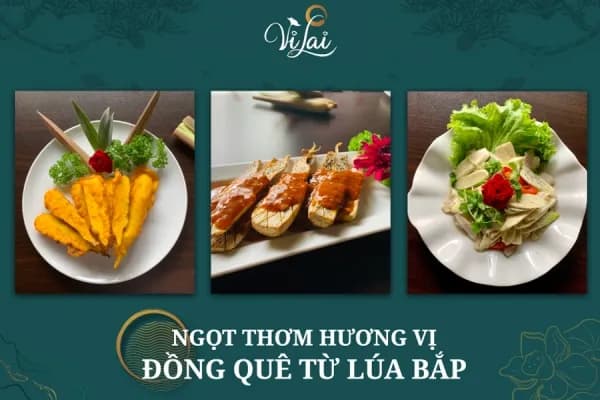
Regarding presentation, with the concept that “eating” is first and foremost “eating with the eyes”, Hue chefs pay great attention to shaping and presenting dishes artistically, creating a strong emotional impact. Therefore, Hue vegetarian dishes are presented elaborately and delicately like a meticulously crafted art. Vegetables, fruits and tubers are delicately carved into vivid shapes.
Vietnamese literature has described that Hue people eat with their eyes and nose before eating with their mouths. For example, vegetables and melons are carved into flowers, raw water spinach must be chopped into small pieces like vermicelli, green bean cakes are molded into fruit shapes with realistic colors, striped snakehead fish (snakehead fish) looks realistically carved and processed from green bananas seasoned with spices, young jackfruit is also turned into chicken mixed with Vietnamese coriander just like the real thing. The vegetarian banh beo dish on the banquet table is decorated with chili peppers, onions, carrots carved into chrysanthemum petals, and gerbera flowers arranged around the plate, looking very appetizing.
Especially when presenting the dish, the chef must pay attention to the harmony of color, flavor, harmony of yin and yang, hot and cold, harmony in the layout of bowls, chopsticks, plates. That color both embodies the beauty of the ingredients themselves and contains the magical romantic beauty created by the dreamy soul of Hue people.
In addition to aesthetic factors, according to Oriental medicine, the color of food is also closely related to the five internal organs of the person eating it. White is related to the lungs, green is related to the liver, black is related to the kidneys, red is related to the heart and yellow is related to the spleen.
In a meal, if we know how to combine enough colors, it will create a balance of yin and yang for the body. When looking at a Hue vegetarian meal, we will see the combination of these colors in an extremely delicate and scientific way. Sometimes the colors are added with the colors of some plants in nature such as gac fruit, cotton leaves, pandan leaves, ramie leaves, purple sweet potatoes... to sublimate the colors of the main ingredients that we have enjoyed such as gai leaf cake, purple sweet potato cake, gac cake, rose cake...
The decoration and color arrangement for a vegetarian party in Hue is considered a culinary art, as well as a colorful visual art, all originating from flowers, fruits, and plants, demonstrating the talent and ingenuity of Hue chefs. The appetizer for a vegetarian party in Hue is usually carrots and papaya, skillfully carved to decorate around slices of cha phu made from apricot-yellow phu chuc leaves, mixed with crispy fried rice paper-wrapped noodles for spring rolls or crab and bamboo shoot soup made from young corn, straw mushrooms, lotus seeds, etc., served in a bowl sprinkled with a few green coriander leaves, looking very beautiful.
5. Enjoying Vegetarian Food is an Art
Regarding the art of enjoyment, Hue culinary philosophy focuses on people. People create dishes to serve their lives. Therefore, cooking is an art creation and eating is a way to enjoy art.
Like meat dishes, Hue vegetarian dishes are not only eaten with the mouth (“mouth food”) but must first be enjoyed with the eyes (“eye food”) to see the elaborate beauty, the nose must smell the fragrance, the feeling of craving, the ears must hear the admiring exclamations from the people around and especially the mind must be directed towards sacred things (“mind food”). That means using all five senses to enjoy the harmony of colors and flavors. The harmony like nature is the characteristic of Hue culinary culture.
When eating, you should eat slowly and savor it. When serving guests, dishes are never served all at once but are served several times to avoid the feeling of having too much food and to keep the food hot throughout the meal. In particular, meals must be quiet, with clean dishes and sitting upright. Do not be fidgety or noisy while eating. Sit down to eat naturally, politely, and slowly.
Hue vegetarian culinary culture has guided a way of behaving and a philosophy of life for Hue people: Frugal eating is a beauty, eating to respect all life, eating to nourish the spirit and temperament...
Thank you for choosing iguide.ai to accompany your exciting experience!
Keep reading
 Related
 Related
 Related
 Related
 Related
 Related
 Related
 Related
Log in to leave a comment. Log in
Be the first to comment.
React to this story