authenticated by

Share
Fish Sauce
Dec 25, 2024 · 3 min read
For the people of Phu Quoc, Kien Giang province, Phu Quoc fish sauce is not simply a dish or spice, but also carries deep symbolism and meaning. Phu Quoc fish sauce is considered the "soul" of this pearl island, a typical symbol that creates the reputation of this city. Recently, the fish sauce making profession in Phu Quoc has been recognized by the Ministry of Culture, Sports and Tourism and included in the List of National Intangible Cultural Heritage, further affirming the value and importance of this traditional profession.
Phu Quoc fish sauce has a history of development spanning over 200 years, having undergone a processing process from the abundant anchovy raw material source along the island in the Kien Giang - Ca Mau sea area. Initially, fishermen used simple manual exploitation methods and technology, then switched to using modern means. Before 1945, fish sauce production activities were mainly concentrated in Duong Dong and Cua Can. From 1946 to present, fish sauce factories were concentrated in Duong Dong Ward and An Thoi Ward.
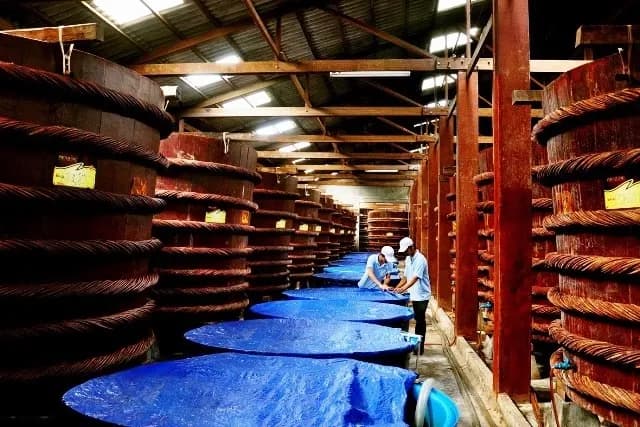
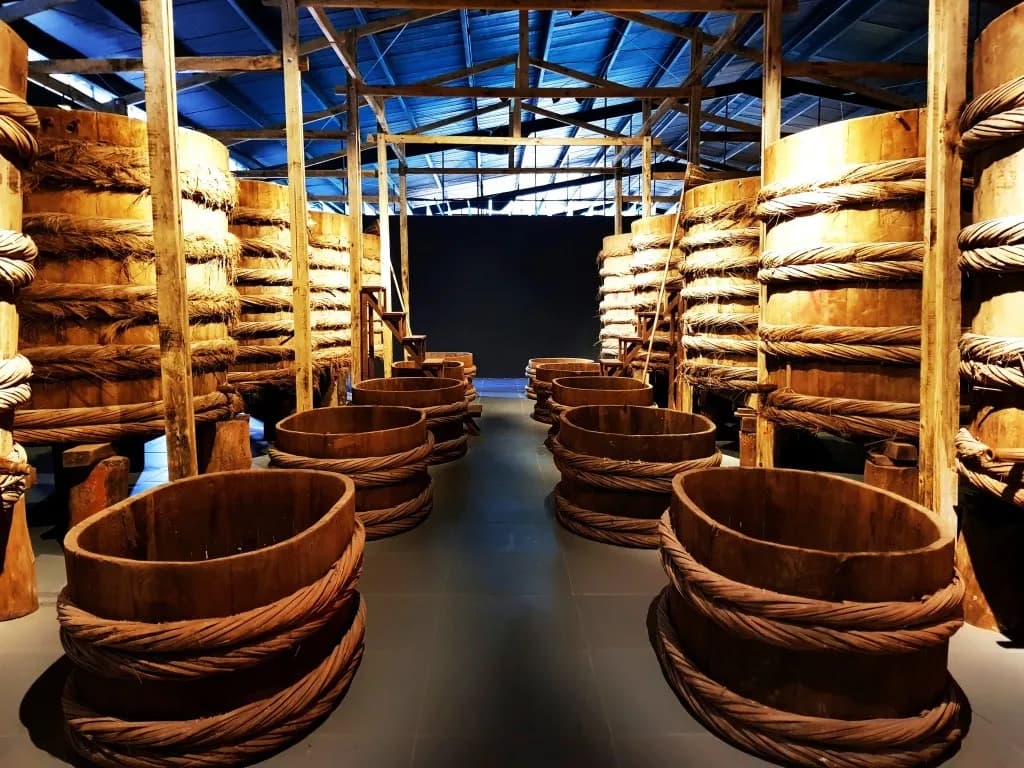
Phu Quoc fish sauce is processed in wooden barrels made from the Boi Loi, Voong Voong, and Ho Phat trees (the name of this type of wood needs to be reviewed), with barrel rims made from rattan from Phu Quoc forests. Previously, the capacity of the barrels was small, only holding about 3-5 tons of fish, while now, the barrels can hold 12-15 tons of fish.
Although any type of fish can be used to make fish sauce, Phu Quoc fish sauce producers only use fresh anchovies caught in the sea as raw materials. There are many types of anchovies such as striped pepper, chalk, red anchovies, flat anchovies and charcoal anchovies. The means of exploiting anchovies have undergone development from primitive to modern means.
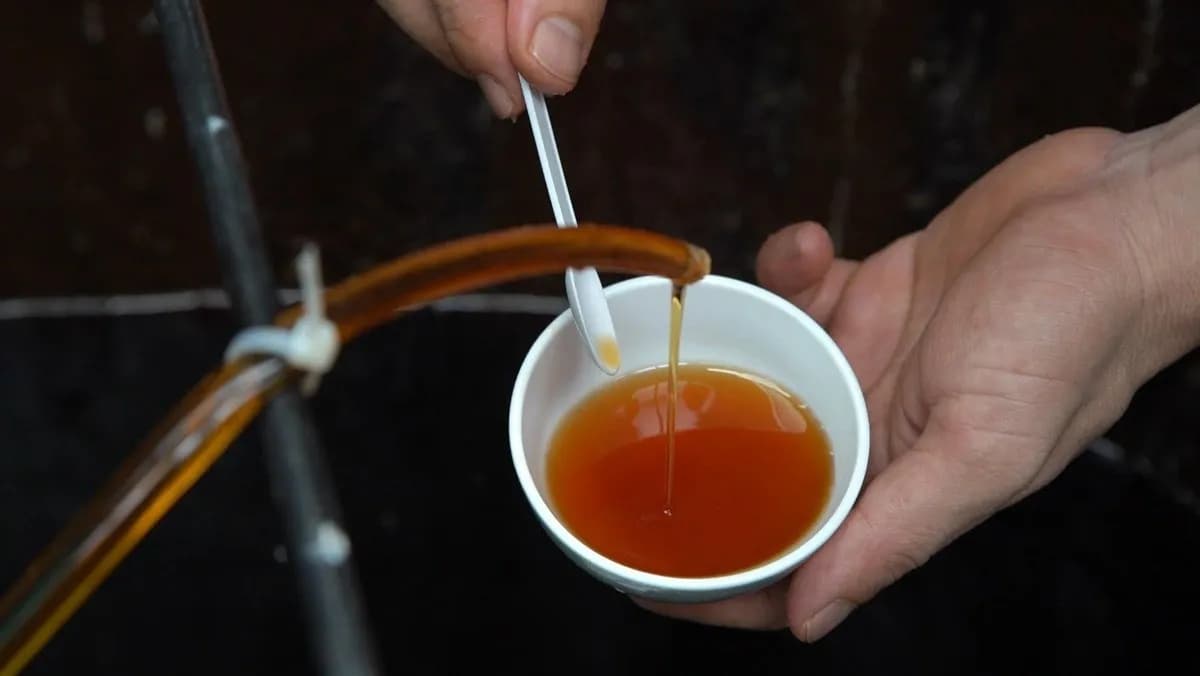
The processing begins on board, when two or three parts of fish are mixed with one part of salt. The fish are then transported to the barrel house, poured into wooden palanquins and shields, and left to ferment in barrels for over 10 months. This process takes a long time for the fish sauce to mature. The first drawn fish sauce is called nuoc mam cot, and the subsequent draws are called nuoc mam long. In addition, people also bury the fish sauce underground for a few years, when the fish sauce turns black and is called nuoc mam Lu, which is used by locals for medicinal purposes.
Initially, Phu Quoc fish sauce was mainly consumed locally, then gradually expanded to the domestic market and neighboring countries such as Cambodia and Thailand. In the 1950s, Phu Quoc fish sauce was exported to France and some European countries.
Since its inception, the Phu Quoc fish sauce industry has gone through many ups and downs in history. It is a process of continuous research, learning and technical improvement from primitive to modern methods, from low quality to high quality. The combination of the tradition of "Father to Son" and the accumulation of many experiences has helped the Phu Quoc fish sauce industry develop continuously.
However, after 1975, due to the influence of the market mechanism, the Phu Quoc fish sauce industry encountered many difficulties and obstacles, leading to a temporary decline. From 1986 to present, the Phu Quoc fish sauce industry has stabilized and developed strongly, not only domestically but also expanding abroad.
Log in to leave a comment. Log in
Be the first to comment.
React to this story
Keep reading
 Related
 Related
 Related
 Related
 Related
 Related
 Related
 Related