authenticated by

Share
Mountaineering
Dec 25, 2024 · 5 min read
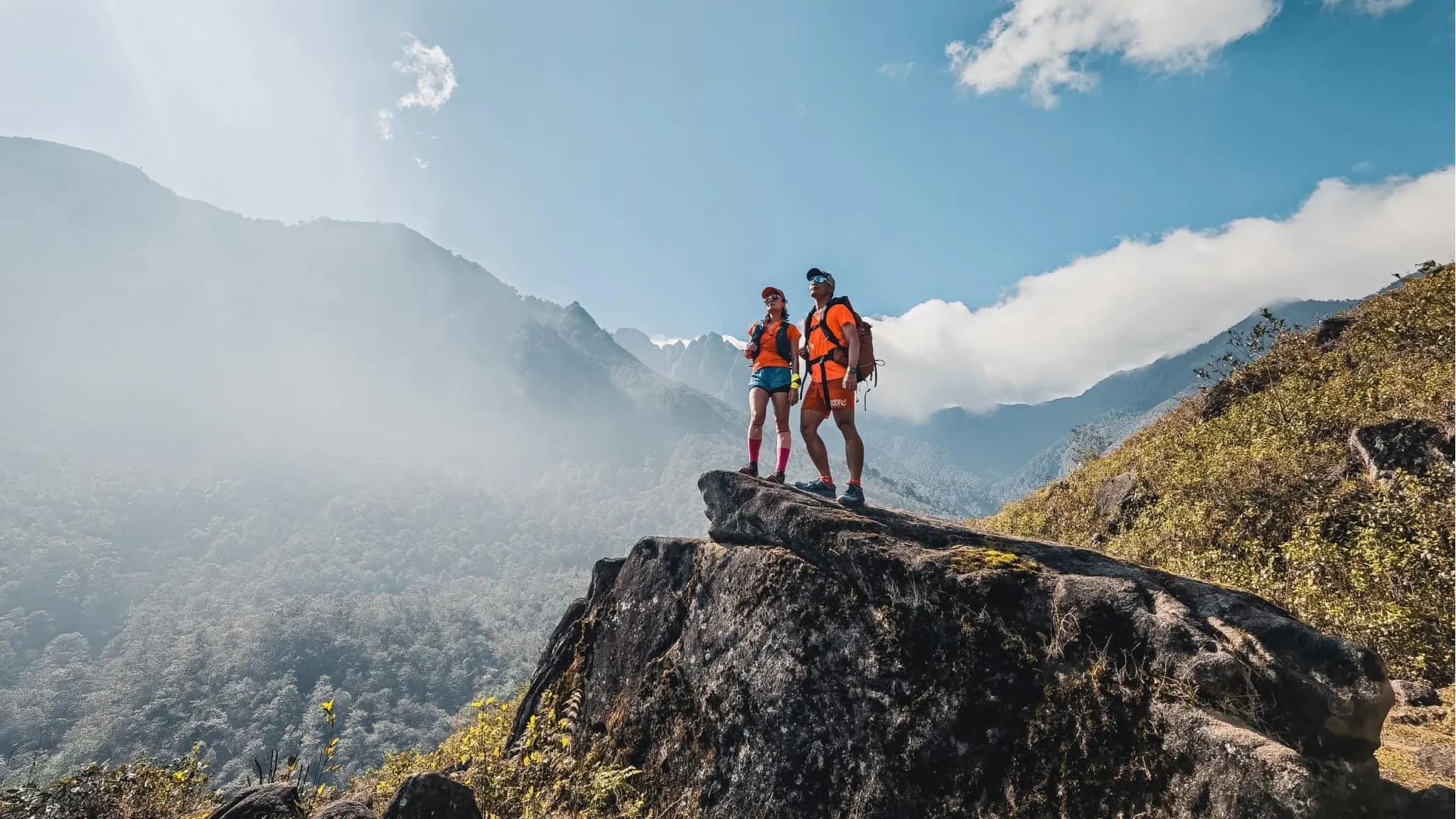
To climb safely, you need to practice well to have good physical strength, bring necessary support equipment, go with locals and not be subjective. Let's explore the safe mountain climbing journey with iguide!
1. Prepare your physical strength and endurance before going
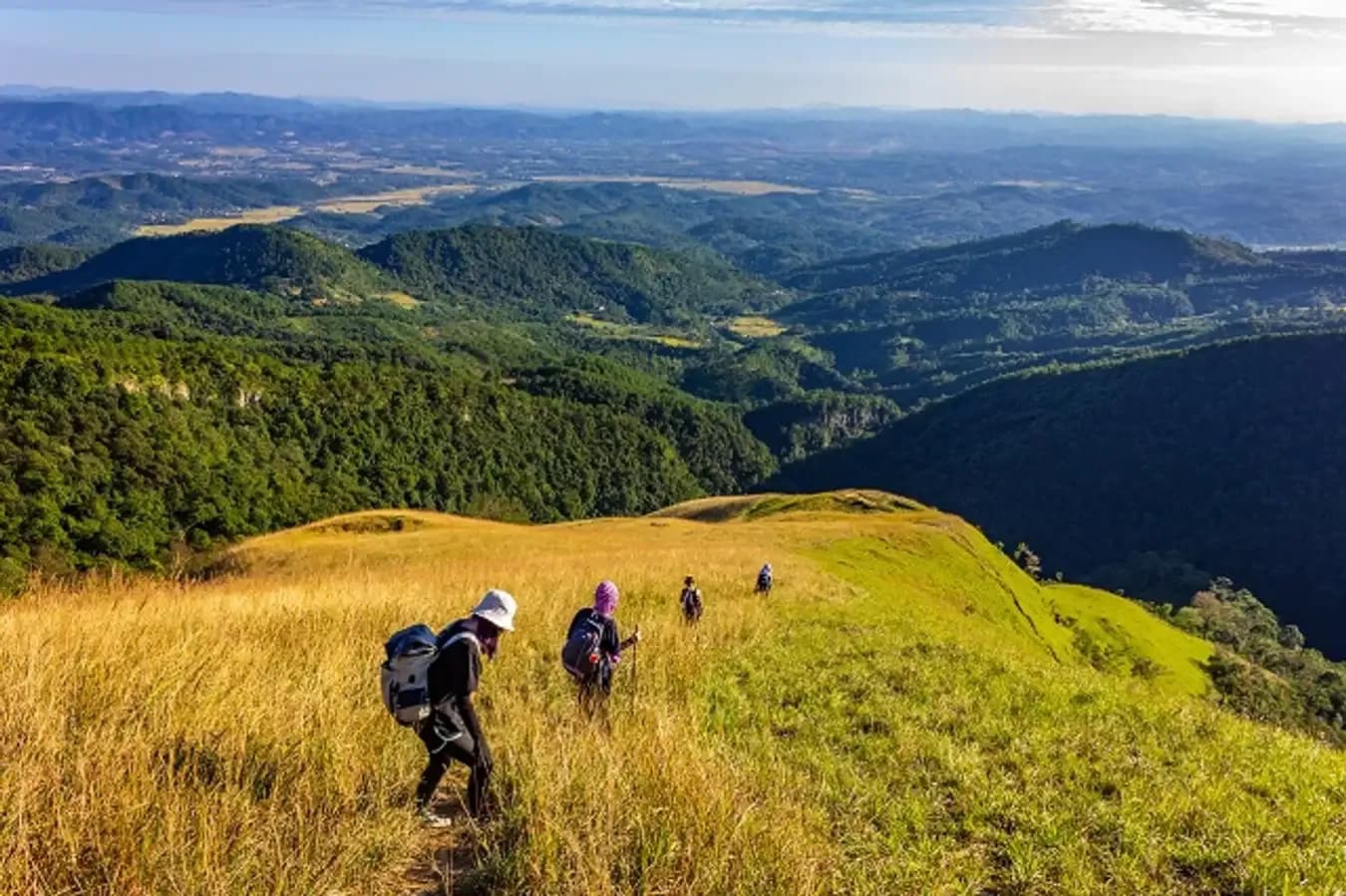
Mountain climbing is not a sport for those with poor health or those with bone, joint, cardiovascular or blood pressure diseases. People with good health still need to jog, especially climb stairs or practice standing up and sitting down exercises every day from 3 weeks to 1 month before the trip to get their bodies used to being constantly pressed when climbing. I have seen many cases of young and healthy people but got knee, ankle or calf inflammation when climbing because they did not practice well before. Many people could not continue climbing and had to be helped down the mountain.
Before going, you need to eat enough nutrients and get enough sleep. The northern mountain climbing routes are often located in remote areas, taking many hours by car to reach the starting point. For the Pusilung climbing route, the travel time by sleeper bus from Hanoi to the starting point in Pa Ve Su commune (Muong Te district, Lai Chau) takes 13-14 hours. Therefore, for the distant routes, you should move closer to the starting point and sleep there overnight to have the best physical condition for the trip the next day.
2. Don't be subjective
According to Mr. Nguyen Hoang Bac, a specialist in Northwest mountain climbing tours, all the climbing routes have been introduced in detail by previous backpackers. However, those who come after must not be subjective. In particular, during the climbing process, do not separate from the group and always follow the porters to avoid getting lost or encountering snakes or wild animals. In case you get lost, find the nearest trail or stay where you are and find a way to light a fire or smoke to signal other members to find you.
If you are not used to cold showers, you should not shower in streams because the water in the northern mountains is very cold and you can easily catch a cold. Personally, I often shower in cold water at home, so I can shower in streams, but I usually shower very quickly when my body is still warm and immediately put on warm clothes and rest in a tent or shelter that is sheltered from the wind.
When you have to sleep in a tent, you need to set up the tent in a high and dry place, use a heat-insulating mat to prevent your body from getting cold when in contact with the ground. You can use dry leaves to spread under the tent in case there is no heat-insulating mat. Especially do not drink alcohol before and during climbing to avoid muscle weakness and loss of alertness. After drinking alcohol, the body is also susceptible to colds when exposed to rainy or hot weather.
If you feel you cannot continue, do not try. Immediately notify the team leader or other members of the group for timely support.
3. Learn about Leo in advance
Before the trip, backpackers need to carefully research the route and the mountain they are about to conquer, from the terrain, geography, flora and fauna... This is very important because it will help us know what difficulties we will face in order to overcome them.
In addition, you should also closely monitor the weather forecast for the days of your trip. You should not climb some trails with many streams and steep slopes if it is raining or forecasted to rain.
"If it rains heavily, I will not take my guests to conquer Pusilung or Nam Kang Ho Tao peaks because it is very dangerous," said Nguyen Trung Kien, who regularly organizes mountain climbing trips in the Northwest.
Pusilung trekking route has a total of 11 large and small streams. A heavy rain will cause the stream water to rise, possibly causing floods or cutting off the road, leaving hikers stuck in the forest for days. Nam Kang Ho Tao route has many steep cliffs, when it rains the mossy cliffs will be slippery, and if climbers fall, they may fall into deep abysses.
4. Prepare necessary personal items
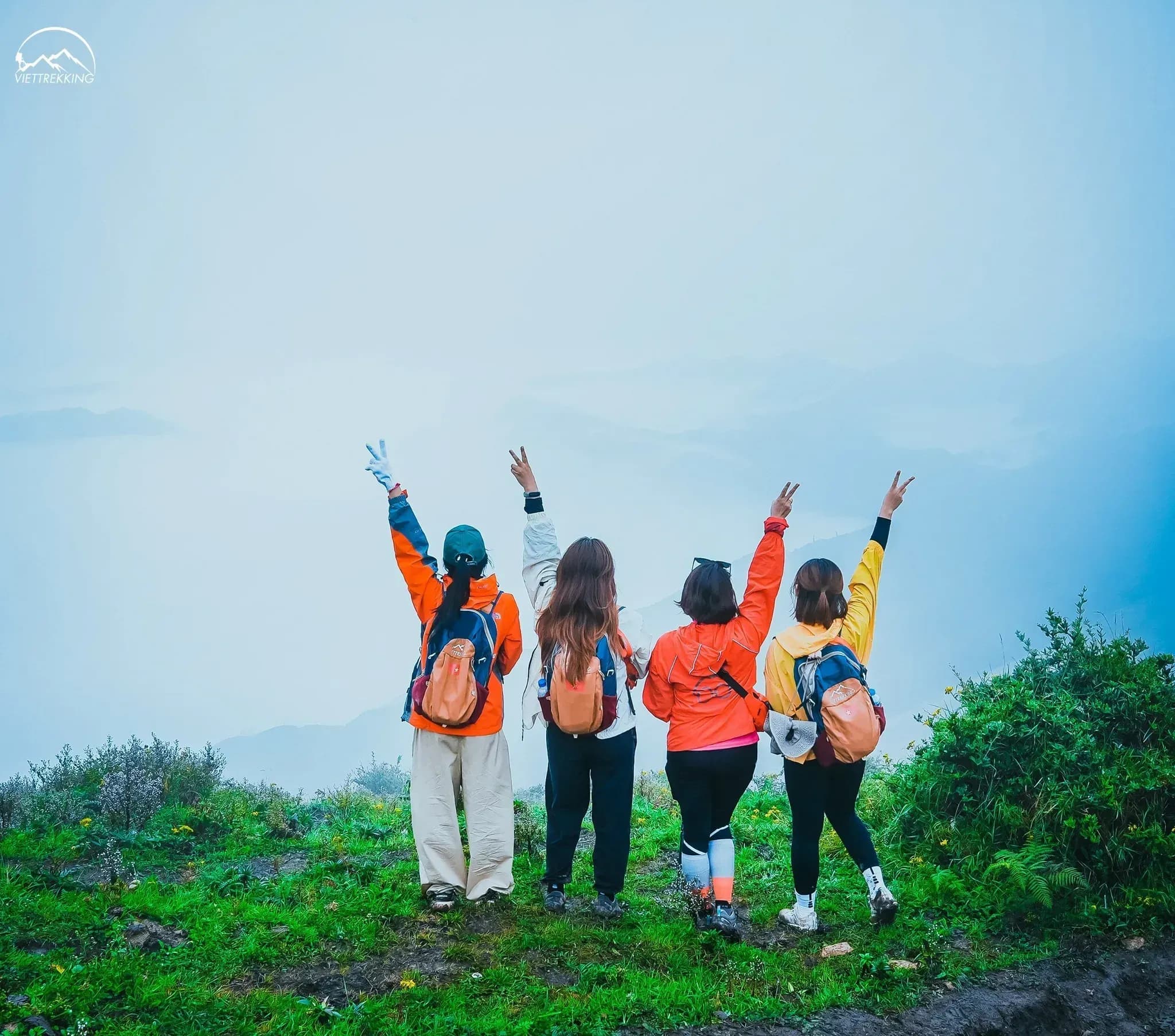
On every mountain climbing trip, my outfit includes: a light cotton inner shirt, a light jacket, quick-drying pants, a sun hat, gloves, sunglasses, knee pads, and ankle pads to help minimize impact on the knees and ankles.
In addition, there is a small backpack (with snacks, warm and dry jackets, scarves, raincoats, cold medicine, drinking water, lighters, etc.). Even though it is hot, I still have to bring a warm jacket in case of weather changes. When climbing in mountainous areas or bare hills in hot weather, you need to wear sun-protective but cool clothes to prevent heat stroke. Hiking shoes with good drainage capacity, trekking poles are also very necessary.
It should be noted that on high mountains, although it is sunny and people are very hot when climbing, the temperature outside is always low and there is strong wind. Therefore, every time you stop to rest, you need to use a dry towel to wipe the sweat on your body and put on a jacket to avoid catching a cold. If it rains, you need to change into dry clothes and wear a warm jacket and a raincoat outside to avoid getting wet and losing heat.
5. Must have a local guide
According to the administrator of the Mountaineering Passion Forum with more than 45,000 members, for the dangerous climbing routes in the Northwest, you should go with experienced organizers or hire a team leader and a local leader and porter who are experienced and have climbed those routes.
Experienced team leaders or guides will assign tasks to each member, anticipate difficulties and know how to handle situations when problems arise. Climbing routes like Pusilung are very long and dangerous, without them, the trekkers may get lost or not conquer the mountain due to unreasonable time arrangement.
For difficult climbs without shelters, you should hire multiple porters, one porter for every two people to avoid having to carry tents, cooking equipment and food yourself, which can lead to a decrease in physical strength.
Thank you for choosing iguide.ai to accompany your exciting experience!
Log in to leave a comment. Log in
Be the first to comment.
React to this story
Keep reading
 Related
 Related
 Related
 Related
 Related
 Related
By Admin
By Admin