authenticated by

Share
Coffee
Discover the essence of tea coffee, from the highlands of Vietnam. A natural flavor experience not to be missed.
Dec 25, 2024 · 3 min read
Arabica coffee originates from the Jimma Plateau in southwestern Ethiopia and the Boma Plateau in southeastern Sudan. The name Coffee Tea comes from its low-cut shape resembling a tea tree with small leaves. Coffee is often used as a favorite beverage spice of Vietnamese people and also has medicinal properties. Let's explore this unique tropical plant with iGuide.ai!
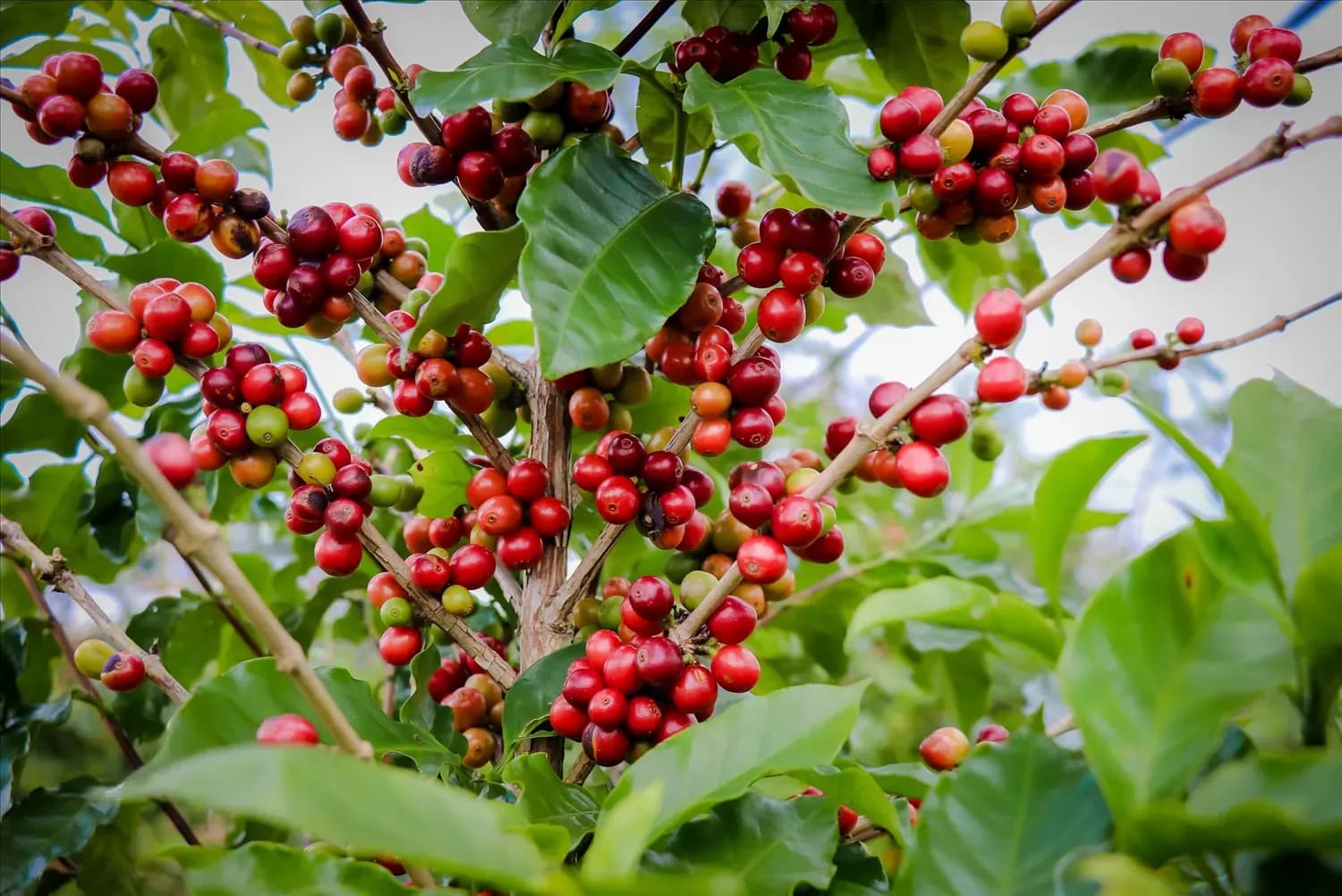
Arabica coffee, also known as Arabica coffee, has the scientific name Coffea arabica L.. This is a species of tree in the Rubiaceae family, standing out with its modest height of 6 to 10 meters, growing in lush green bushes. The elegant, symmetrical branches combined with the pointed oval leaves, short petioles create an image that is both beautiful and characteristic. The leaf surface is glossy, dark green on the upper surface and lighter on the lower surface.
Arabica coffee is brilliant with white flowers from late February to the end of April. The flowers grow in the leaf axils, blooming like chrysanthemum petals, spreading a gentle fragrance. The coffee fruit is oval in shape, changing color from light green to yellow, then bright red, containing two beans with a caffeine content ranging from 1 - 2%. The fruiting season lasts from November to April.
The genus Coffea L. contains nearly 100 species, mainly concentrated in tropical Africa. Currently, the three main coffee varieties widely grown are Arabica coffee, Robusta coffee (Coffea robusta) and Liberica coffee (Coffea liberica). Arabica coffee originates from the southwestern highlands, with small canopy and green tea-like leaves, mainly varieties such as Mocha and Catimor. Meanwhile, Robusta coffee and Jackfruit have different leaf characteristics, such as the leaves of ...
Arabica coffee prefers light and is suitable for altitudes of 1,000 - 1,500 m. Although it can grow well on many types of soil, the most ideal is still red basalt soil or soil weathered from volcanic lava. Usually about 3 - 4 years after planting, the tree begins to bear fruit, creating conditions for bumper harvests in areas such as Dak Lak and Lam Dong.
Arabica coffee flowers bloom for 15-20 days, mainly pollinated by insects, with self-pollination accounting for only 10%. Seeds have a high germination rate, maintaining best within 3-6 months and can be longer under storage conditions at 15°C.
Arabica coffee mainly uses seeds and leaves. Raw coffee beans contain carbohydrates, lipids, and organic acids, of which carbohydrates account for more than half of the dry medicinal material. When roasted, coffee undergoes chemical changes such as reducing water content and changing carbohydrates, creating new chemicals.
Coffee and tea are not only a drink that helps you stay awake and reduce fatigue, but also have medicinal effects such as diuretics and digestive aids. However, drinking too much can cause digestive disorders due to the caffeotoxin produced during the roasting process. In oriental medicine, raw coffee is soaked in wine to treat rheumatism, while roasted coffee helps reduce fat and sober up. People with insomnia should avoid consuming coffee due to the effects of caffeine.
Thank you for choosing iGuide.ai to accompany you on your exciting experiences!
Log in to leave a comment. Log in
Be the first to comment.
React to this story
Keep reading
 Related
 Related
 Related
 Related
 Related
 Related
 Related
 Related