authenticated by

Share
Temples
Phu Day is an ideal destination for tourists to learn about spiritual culture and admire mysterious and attractive ancient architecture.
Dec 25, 2024 · 5 min read
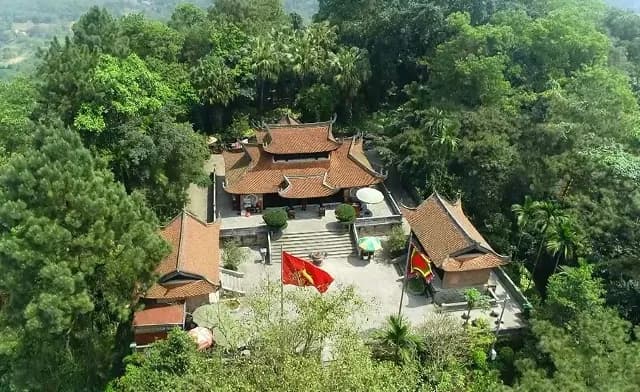
Phu Day (also known as Phu Giay, Phu Giay) is a complex of spiritual relics of the Mother Goddess religion in Kim Thai commune, Vu Ban district, Nam Dinh province. In which, the most important architecture is the temple of Lady Lieu Hanh right next to Vieng market. In the past, this place was known as the big temple in Ke Day village. Until Holy Mother Lieu Hanh was conferred the title of "Princess Lieu Hanh", it was renamed Phu Day. Because "Phu" is a noun referring to the residence of princes, and Holy Mother is also a princess, the place of worship will also use the word Phu.
Moreover, there are other stories for the name of this place. Originating from the legend that Lady Lieu Hanh missed her family so much that she left a shoe on earth before returning to the upper world. Or there is a legend: The King passed through this area and stayed overnight at Lady Lieu Hanh's shop, then was given a pair of shoes so he established a place of worship called Phu Giay. And when it was called Phu Day because this place has famous banh day, some people believe that Ke Giay originated from the place where there was a mound of earth shaped like a banh day in front of the palace. All of these stories, although not clearly confirmed, have contributed to the mystery and attraction of the relationship between Phu Day and Saint Mother Lieu Hanh.
The Phu Day complex has more than 20 unique architectural works, of which 3 are closely associated with the life of Holy Mother Lieu Hanh in her second birth, namely Tien Huong Palace (main palace), Van Cat Palace and Lord Lieu's tomb.
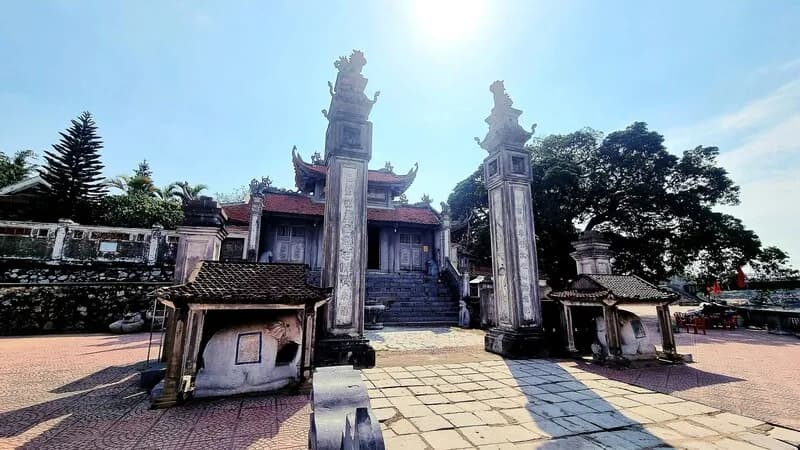
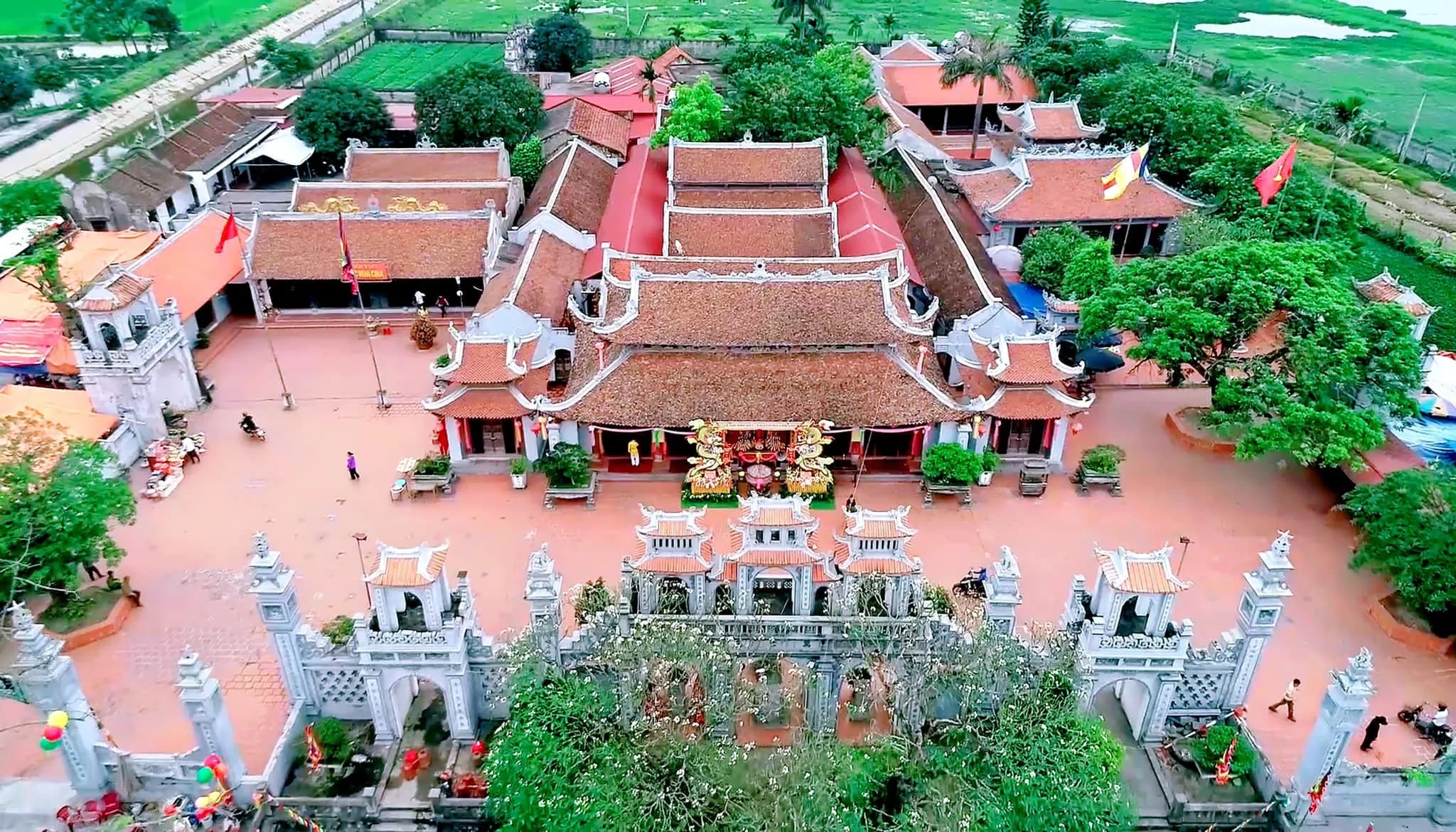
Tien Huong Palace (main palace) is a beautiful architectural work built during the Canh Tri period of the Le Dynasty (1663 - 1671), and has been renovated many times. Tien Huong Palace has 19 buildings with 81 large and small rooms, the front of the palace faces southwest, looking towards Tien Huong mountain range.
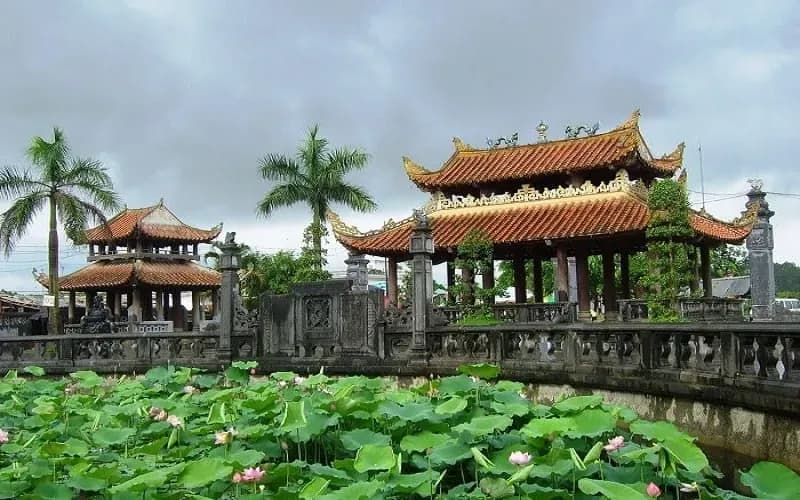
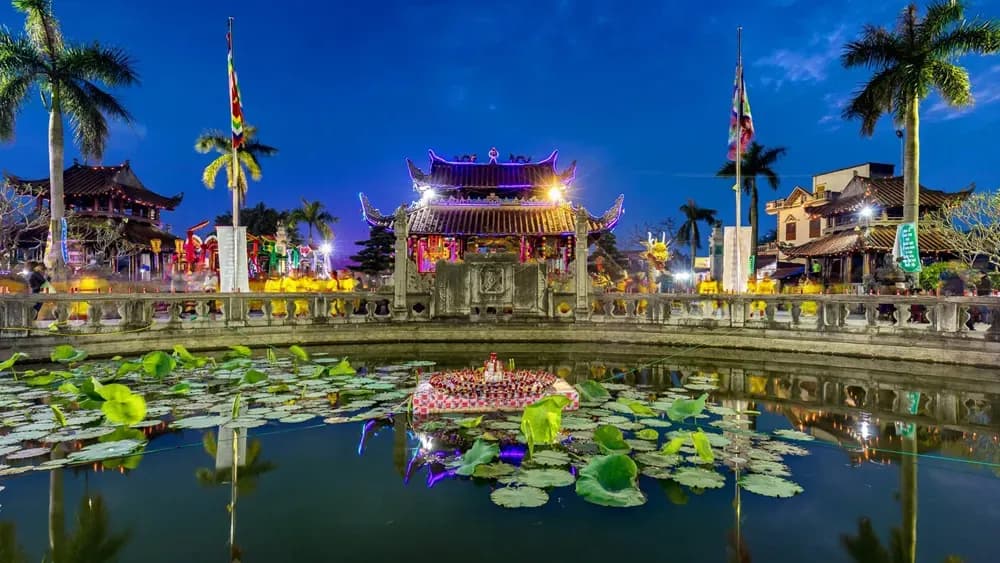
In front of the palace is a round lake, then a large yard, then three buildings arranged in a two-story row with separate roofs: the stele house, the drum house, and the gong house, which are places to welcome pilgrims. A semicircular lake surrounded by low railings, has a screen and two stone overpasses carved with dragons and delicate lines. The main shrine of the palace has four layers of worship (four palaces): the first, second, third, and fourth. The palaces are all elaborately carved with images of dragons, phoenixes, tigers, etc. The main shrine (the first palace) has a mother-of-pearl inlaid altar, majestic and delicate.
Van Cat Palace is not far from the Government Palace and also has a temple to worship the Holy Mother. The palace was built on a land area of nearly 1 hectare, facing the Northwest. Van Cat Palace currently has 7 buildings with 30 large and small rooms. In front is a crescent lake, in the middle of the lake is a water tower, 3 rooms, curved roof, behind the lake is the Ngo Mon gate system with 5 lofts. Van Cat Palace also has 4 palaces like Tien Huong Palace. The center is the place to worship Lord Lieu, on the left is a pagoda to worship Buddha, on the right is the temple to worship Ly Nam De.
The Mausoleum of Lady Lieu is located next to the Government Palace and was built in 1938. The mausoleum is built entirely of green stone, with beautiful and sophisticated carvings. It is a rectangular area with a total area of 625 square meters, including entrances to the mausoleum in the east-west, south-north directions. The gates all have pillars on them shaped like lotus buds. In the middle of the mausoleum is an octagonal tomb, each side is about 1 meter long. The entire mausoleum has a total of 60 lotus buds, creating a unique impression for the mausoleum of the main deity in the Mother Goddess worship.
Every year on the 3rd day of the 3rd lunar month, the Phu Day festival takes place, bustling throughout the region. This festival is considered one of the 10 unique early-year festivals in Vietnam. The main purpose of the festival is to express gratitude to the holy mother Lieu Hanh. The Phu Day festival has three main rituals, including:
- The Procession of the Mother Goddess to Receive the Scriptures
- Torch Relay
- Hoa Truong Hoi letter pulling ceremony
Besides the three main ceremonies, during the Phu Day festival, there are also many interesting traditional games such as: singing contest, cheo singing contest, water puppetry, wrestling, human chess, rice cooking contest... In particular, there is also a spirit medium ceremony taking place throughout the festival.
This is an indispensable ritual in folk beliefs and especially Mother Goddess worship. The festival takes place in a jubilant and exciting atmosphere, from young to old, everyone eagerly participates in the festival. To express respect to the Mother Goddess as well as pray for favorable and lucky things for an exciting new year.
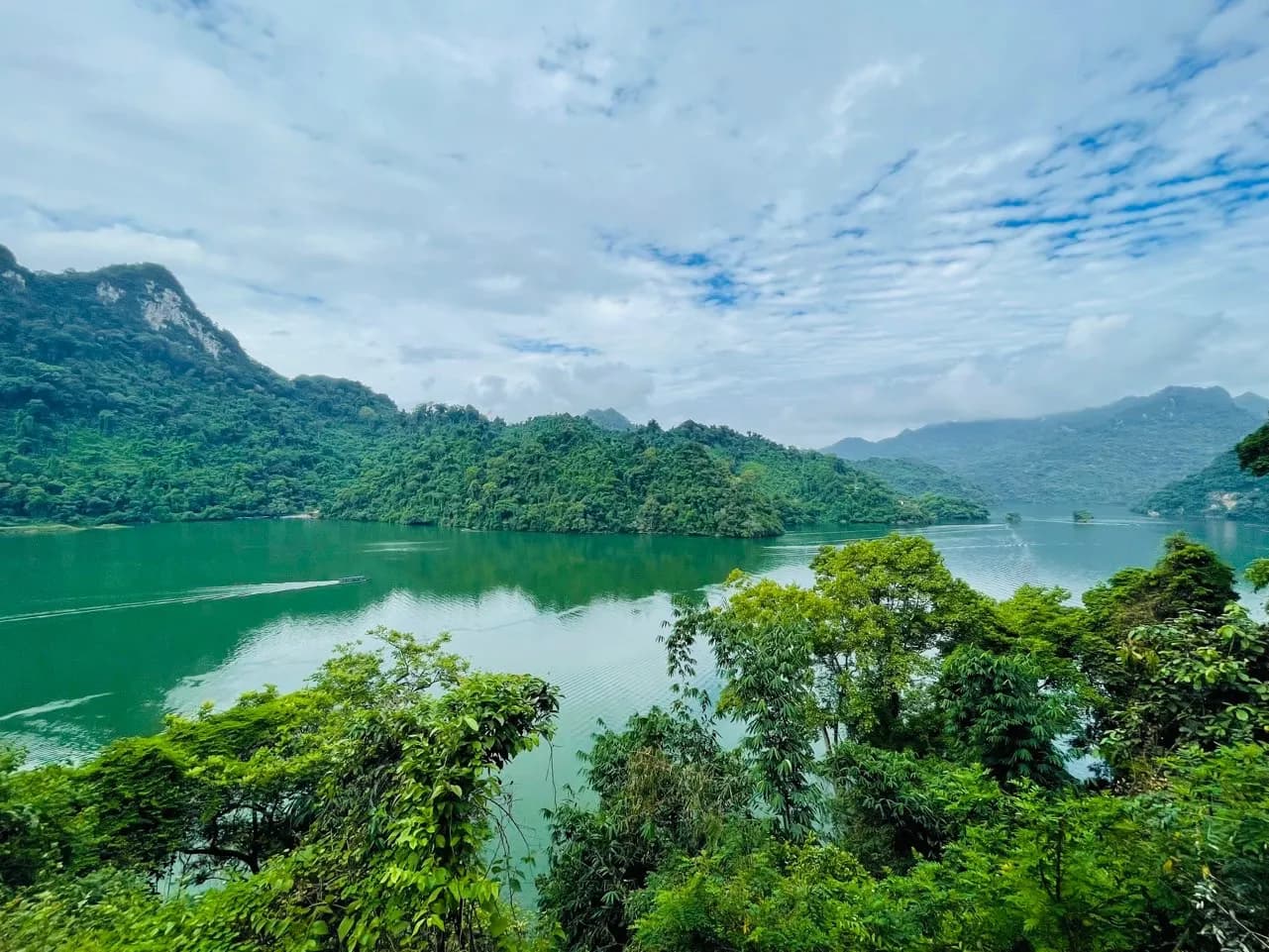
Phu Day is not only famous for the relics associated with the Holy Mother Lieu Hanh, but also for the charming landscape of this place, which is a beautiful impression in the hearts of tourists. Both worshiping the Holy Mother and enjoying the nature will be a wonderful experience that Phu Day brings to tourists who believe in the Mother Goddess religion.
Thank you for choosing iGuide.ai to accompany you on your exciting experiences!
Keep reading
Log in to leave a comment. Log in
Be the first to comment.
React to this story