authenticated by

Share
Temples
Dec 25, 2024 · 5 min read
Van Lam (Hung Yen) is a famous tourist area with many valuable historical and cultural relics. Let's check out some hot spots here with iGuide!
1. Overview of Van Lam
Van Lam, Hung Yen, Vietnam is a land with rich tourism potential, located in the North of Hung Yen province. This land is famous for domestic and foreign tourists because of its historical relics and national-level scenic spots. In addition, the flat terrain and mild climate are also an advantage when wanting to experience Van Lam when traveling to Hung Yen.
2. Top 5 beautiful tourist destinations in Van Lam, you must visit
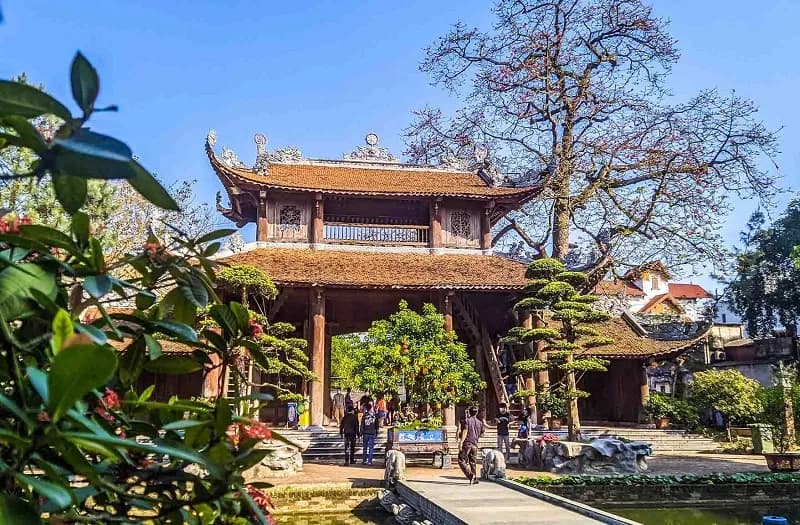
Nom Pagoda
Nom Pagoda is also known as Linh Thong Co Tu, located in Nom village, Dai Hong commune, Van Lam district, Hung Yen province. The west of the pagoda borders Gia Lam district, Hanoi; the south borders Hai Duong province and the north borders Bac Ninh province, so it is very convenient to travel here. Because it belongs to Nom village, the pagoda also has the rustic beauty of Vietnamese villages for many generations, especially the architecture still has strong Buddhist features from the 18th century. Currently, the pagoda still preserves many of the oldest statues in Vietnam.
Huong Lang Pagoda
Huong Lang Pagoda, originally named Thach Quang Tu, is now also known as Vien Giac Tu. The main direction of the pagoda is to the South, overlooking Lang River. The pagoda not only worships Buddha but also worships Queen Mother Y Lan - a woman who was good at both state affairs and housework during the Ly Dynasty. She was also the one who built this pagoda.
Located in Chua village, Minh Hai commune, Van Lam district (Hung Yen), Huong Lang pagoda, whose Chinese name is Thach Quang Tu, also known as Lang pagoda, is one of the oldest pagodas in Vietnam. Through the ups and downs of time and history, the pagoda still preserves a number of typical artifacts with architectural and artistic characteristics from the Ly dynasty.
Phap Van Pagoda
Phap Van Pagoda is located in Cau village, Lac Dao commune, Van Lam district, Hung Yen province, located on a large plot of land in the northwest of the village, the front facing south creating an ancient and quiet space.
The pagoda is a place to worship Buddha and Mrs. Phap Van - one of the four gods of Tu Phap religion including: Phap Van, Phap Vu, Phap Loi, Phap Dien. These are the four magics that create clouds, rain, thunder, lightning, these gods are influenced by Buddhism and were transformed into Buddha. The pagoda is a place of revolutionary activities during the anti-French period, especially where the Hoang Ngan female guerilla team fired the first shot, the workplace of the Ministry of Culture - Information during the resistance war against the US. The pagoda was built in the shape of the letter "Cong" (X), including: The front hall has 5 compartments, 2 wings, roof covered with conical tiles, on the ridge of the roof is inscribed "Phap Van Tu".
Phap Van Pagoda is a relic bearing many historical events of the local people in the two resistance wars against France and America. The pagoda is also a place for cultural and religious activities of the people, contributing to the education of moral traditions and making an important contribution to preserving the national cultural identity. Visiting the pagoda, visitors will be able to shed the burdens of everyday life, return to a peaceful space, learn about the spiritual and cultural values, as well as the historical and unique architectural and artistic values of the pagoda.
Ghenh Temple
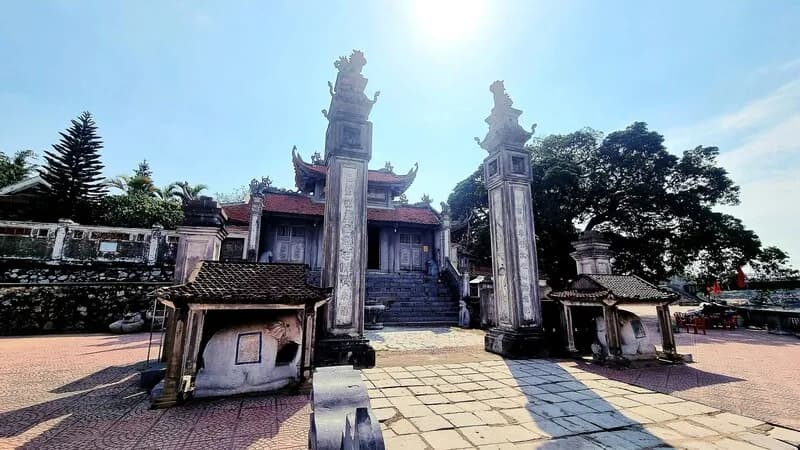
Ghenh Temple is located in Ngoc Quynh village, Van Lam town, Hung Yen. The temple was built in 1115 and became a place to preserve the historical mark of Queen Mother Nguyen Phi Y Lan. She was a virtuous and talented woman, a mother of the world who was worshiped by many people because she spent her whole life caring for the country and the people.
Ghenh Temple in Hung Yen currently preserves relics such as: the statue of the Queen Mother, Thach Sang, the sky mirror, ancient vases, and a stone stele recording the years of temple restoration. In addition, relics from the Ly Dynasty such as: mandarin duck statues, stone pillars, Sui gate, traces of Shintoism, etc. discovered by the Exploration Team of the Institute of Archaeology have confirmed that Ghenh Temple was built during the Ly Dynasty.
Ghenh Temple was recognized as a national historical relic in 1993 and was rebuilt on a larger scale in 1999. This place that has gone through many historical ups and downs is worth a visit when you come to Van Lam.
Chrysanthemum garden
Chrysanthemum is a prominent feature of Pho Hien land, especially at the end of the year. This flower has a bright yellow color, creating a beautiful landscape and attracting many tourists to visit.
When coming to the chrysanthemum garden, visitors will be immersed in a field of brilliant flowers, creating a beautiful scene for taking pictures. The immense yellow flower picture will create bright and romantic images.
In addition to enjoying the beauty of chrysanthemums, visitors also have the opportunity to experience the lives and activities of local people. They can participate in traditional activities such as picking flowers, planting flowers, making cakes, and participating in local festivals. This helps visitors better understand the culture and life of the people here.
With such diverse experiences, the chrysanthemum garden in Pho Hien is an attractive destination for tourists who want to explore the culture and nature of Vietnam.
Thank you for choosing iguide.ai to accompany your exciting experience!
Keep reading
 Related
 Related
 Related
 Related
 Related
 Related
 Related
 Related
Log in to leave a comment. Log in
Be the first to comment.
React to this story