authenticated by

Share
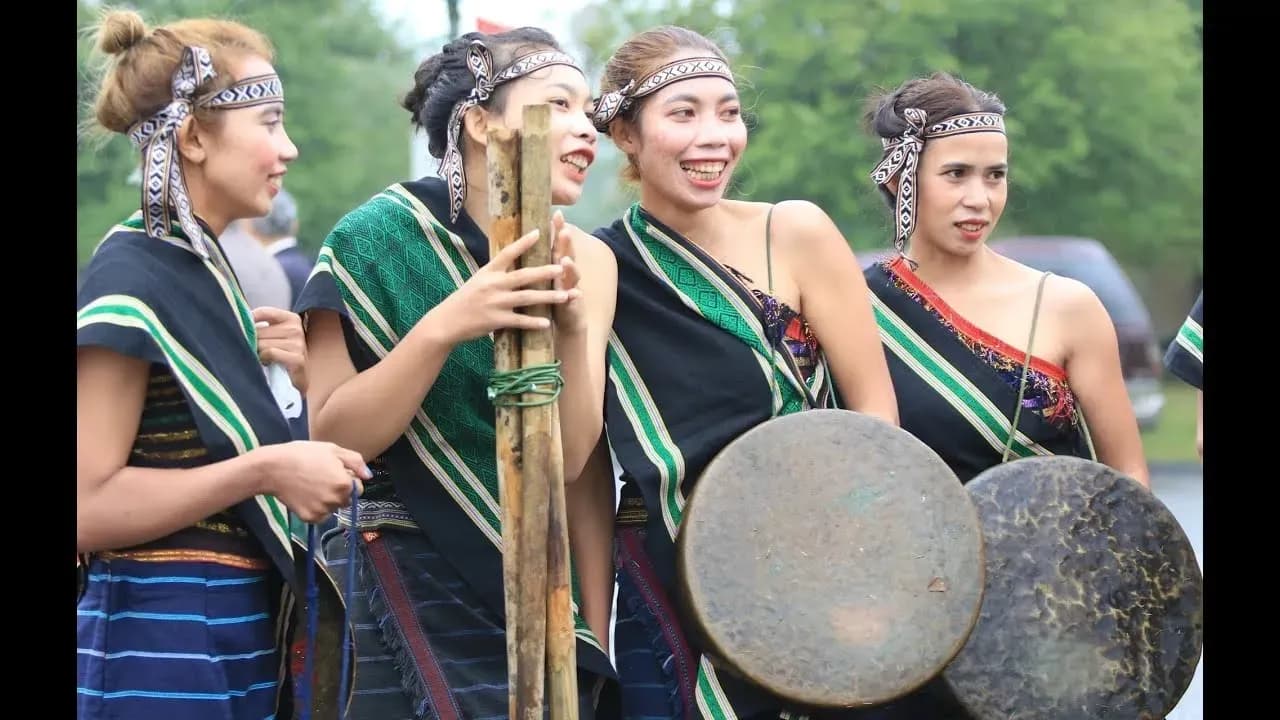
Vietnamese ethnic groups
The article explores the culture of the Co-ho ethnic group, an ancient community in the Central Highlands with many unique features in beliefs and life.
Dec 25, 2024 · 6 min read
As co-owners of the Sa Huynh culture, the Co-ho ethnic group has long lived in the Central Highlands and created a unique and distinctive cultural tradition. Let's join iGuide.ai to learn about the Co-ho ethnic group in Vietnam according to reference information from the Vietnam Ethnic Committee!
According to scientists, the Co-ho people belong to the Indonesian race and are co-owners of the Sa Huynh culture, the southern part of the Dong Son culture. The Co-ho people have existed for about 2,500 years and are long-standing indigenous people living in the Central Highlands.
This ethnic group has a common name "Co-ho".
The residential areas of the Co-ho people are located in many regions, from the southernmost Central Highlands, Lam Dong to some mountainous areas of Binh Thuan, Khanh Hoa, Ninh Thuan, Dak Lak and Dong Nai provinces.
- Population: According to the survey data of 53 ethnic minorities on April 1, 2019, the total population of the Co-ho people: 200,800 people; male population: 98,569 people; female population: 102,231 people; household size: 4.5 people/household; proportion of population living in rural areas: 88.9%.
- Language: The Co-ho speak Southern Bahnaric, a language in the Mon-Khmer group, South Asian branch.
- Social institutions: The Co-ho people live in villages (bon/bon). They live in long houses (hìu jòng) built next to each other in the village. The village style of the Co-ho people is a densely populated village, headed by a village chief (kuang bon/quang bon/khoa bon), who is a person of high prestige and is obeyed by everyone.
In addition, in densely populated areas, a voluntary alliance was formed between Co-ho villages and the leader of the alliance was called M'drong.
In the social life of the Co-ho people, there are two forms of family: large family and small family. Families are organized according to the matriarchal system.
- Housing: The Co-ho people live in long stilt houses and earthen houses.
- Religion and beliefs: The Co-ho believe that all aspects of life are determined by supernatural forces, so in their concept, there is a side of the gods (Yang) who always bless people and a side of the devils (Cha) who often cause disasters, so almost anything such as farming, weddings, funerals, illness..., the Co-ho organize worship to the gods to pray. Supernatural beliefs in the Co-ho concept are polytheistic...
However, like many local ethnic groups in the Central Highlands, since adopting Catholicism and Protestantism, the Co-ho people no longer worship the rice god and other gods as much as before. Therefore, some traditional beliefs have been eliminated.
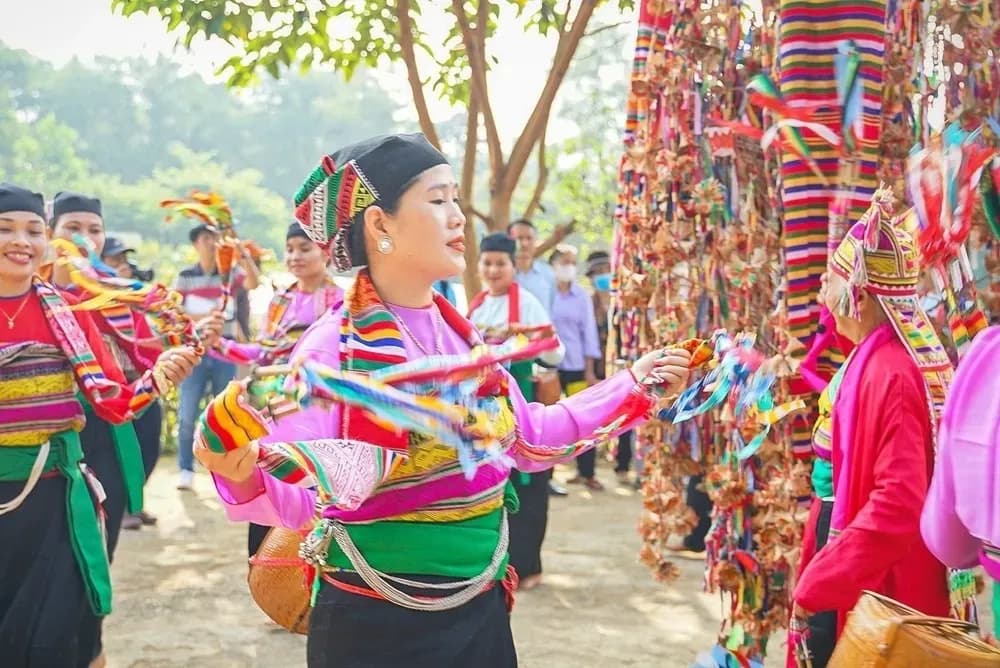
- Clothing: Co-ho men usually wear loincloths, while women wear short skirts. The loincloth is a piece of cloth 1.5 to 2 meters long and wide, with vertical strip patterns. The skirt is a piece of cloth wrapped around the body and tucked into the waistband. The skirt is black with white strip patterns along the skirt. When it is cold, the Co-ho people wrap themselves in a blanket (hui).
The Co-ho people like to stretch their ears with wooden rings (rings), and rich women stretch their ears with ivory. The custom of blackening teeth is also quite popular among Co-ho women.
- Cuisine: The main food used to cook rice every day of the Co-ho people is sticky rice and regular rice. On festivals, people often cook mixed dishes by putting the meat, bones, intestines, and liver of the sacrificial animal in a large copper pot, mixing them with spices and then cooking. Can wine is widely used by the Co-ho people, especially during holidays. In addition, the Co-ho people also have the custom of chewing betel and smoking.
- Education: In the early 20th century, the Co-ho people had a written language built using the Latin alphabet system, but this type of writing was not yet widely popular.
According to the survey data of 53 ethnic minorities on April 1, 2019: the rate of people aged 15 and over who can read and write is 75%, the rate of people attending primary school is 99.8%, the rate of people attending lower secondary school is 80.3%, the rate of people attending upper secondary school is 34.3%, the rate of out-of-school children is 22%.
- Festivals: In a year, the Co-ho people organize many festivals, the biggest of which is the festival to celebrate the rice entering the warehouse (li ro bong). In addition to this festival, the Co-ho people also have a buffalo stabbing festival held after 3 or 7 crop seasons.
According to the survey data of 53 ethnic minorities on April 1, 2019: The Co-ho ethnic group has: Unemployment rate of 0.64%; Rate of trained workers with degrees and certificates: 6.1%; Rate of workers working in the non-agricultural sector: 8.8%; Rate of workers working in management or high and medium-level technical and vocational training: 2.0%; Rate of poor households: 12.1%; Rate of near-poor households: 11.7%; Rate of households using clean water sources: 90.2%; Rate of households using grid electricity for lighting: 99.8%.
The main economic activity of the Co-ho is farming, except for the Xre group who cultivate wet rice. In general, the techniques and tools of the Co-ho are not different from those of other ethnic groups in the Central Highlands. The Co-ho mainly cultivate, but on some sections of the fields, people also grow corn, cassava, squash, pumpkin, squash, beans, etc.
In addition, the Co-ho people also practice animal husbandry, hunting, fishing, gathering, ... and have a number of handicrafts such as weaving bamboo and rattan products, weaving brocade, forging agricultural tools and traditional weapons, making pottery... Of which, pottery is the most popular and prosperous profession.
According to the survey data of 53 ethnic minorities on April 1, 2019: The Co-ho ethnic group has: Unemployment rate of 0.64%; Rate of trained workers with degrees and certificates: 6.1%; Rate of workers working in the non-agricultural sector: 8.8%; Rate of workers working in management or high and medium-level technical and vocational training: 2.0%; Rate of poor households: 12.1%; Rate of near-poor households: 11.7%; Rate of households using clean water sources: 90.2%; Rate of households using grid electricity for lighting: 99.8%.
Above is some interesting information about the Co-ho ethnic group, Vietnam. Let's plan to explore, meet and experience the culture with the Co-ho people in the near future with iGuide.ai!
Source:
- Ethnic groups in Vietnam (National Political Publishing House Truth)
- Basic characteristics of 54 ethnic minorities in 2019 (Committee on Ethnic Minorities and General Statistics Office)
- Website of the Ethnic Committee, Website of Nhan Dan Newspaper
- Survey results collect information on the socio-economic status of 54 ethnic groups in Vietnam)
Keep reading
 Related
 Related
 Related
 Related
 Related
 Related
 Related
 Related
Log in to leave a comment. Log in
Be the first to comment.
React to this story