authenticated by

Share
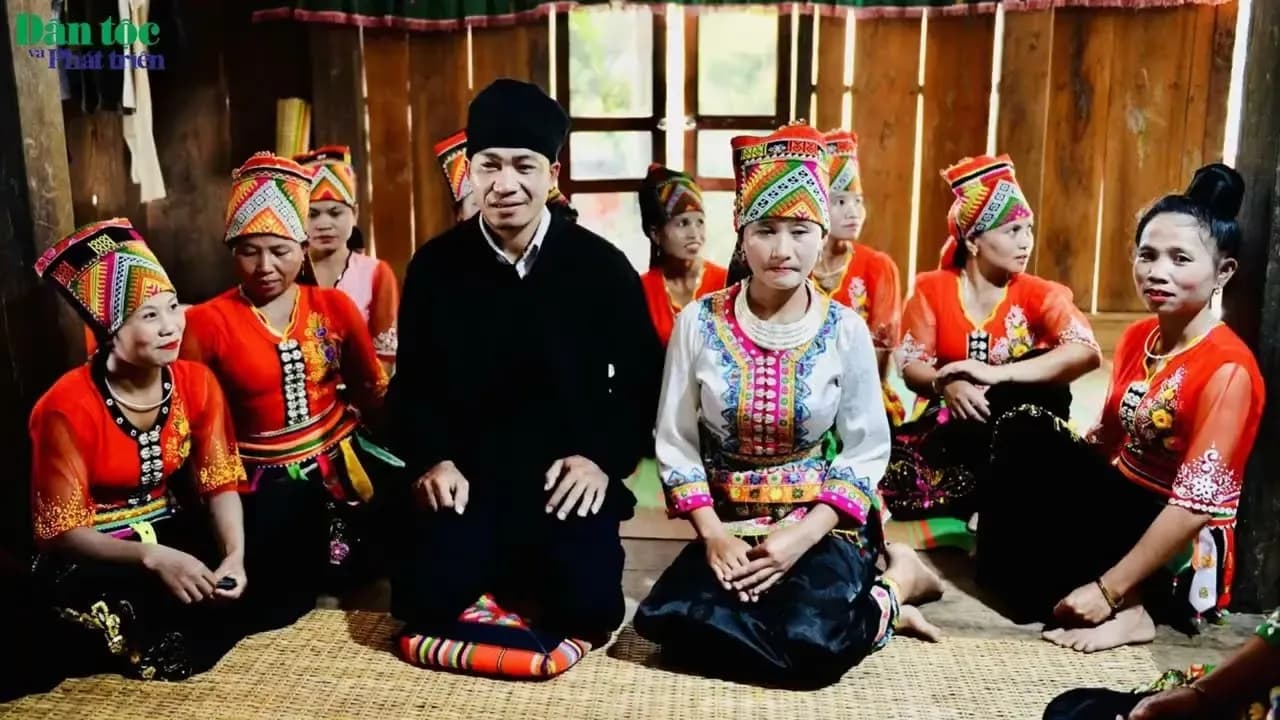
Vietnamese ethnic groups
Discover the unique culture of the Khmu people in Northwest Vietnam. Experience the vibrant traditional cultural space.
Dec 25, 2024 · 5 min read
The Khmu people live in the provinces along the Vietnam - Laos border such as Nghe An, Thanh Hoa, Son La, Lai Chau, Dien Bien. They are residents who mainly live by slash-and-burn farming. Currently, most Khmu people have settled down. Let's find out information about the Khmu ethnic group in Vietnam with iGuide.ai!
There are still some different opinions about the origin of the Khmu people in Vietnam. Up to now, most scientists have affirmed that the Khmu people are local residents of the Indochina peninsula, living concentratedly in Northern Laos with the largest gathering point being Luang Prabang and formed a kingdom called Swa or Lawa.
After the Laotians migrated down with the expeditions and people from Yunnan (China) flooded down, forcing the Khmu people to migrate to Thailand and Northwest Vietnam. Some other opinions say that the Khmu people are local residents in the Northwest region (Vietnam), based on the folk story of the Khmu and Thai people about the origin of humans born from gourds. Self-name: Kmu, Kum Mu means "people" or "human community." Other names: Xa Cau, Kha Klau, Mang Cau, Tay Hay, Mun Xen, Pu Thếnh, Tếnh.
According to the survey of 53 ethnic minorities on April 1, 2019, the Khmu ethnic group has 90,612 people, of which 45,494 are men and 45,118 are women, 97% of the population lives in rural areas. They are mainly distributed in provinces along the Vietnam - Laos border such as Nghe An, Thanh Hoa, Son La, Lai Chau, Dien Bien.
The Khmu people use a language belonging to the Mon-Khmer group (Austroasiatic language family) and many of them can read and write Thai. According to the survey of 53 ethnic minorities on April 1, 2019, the rate of people aged 15 and over who can read and write is 65.8%. The rate of primary school attendance is 100.6%, lower secondary school is 79.2%, and upper secondary school is 26.2%. The rate of out-of-school children is 22.8%.
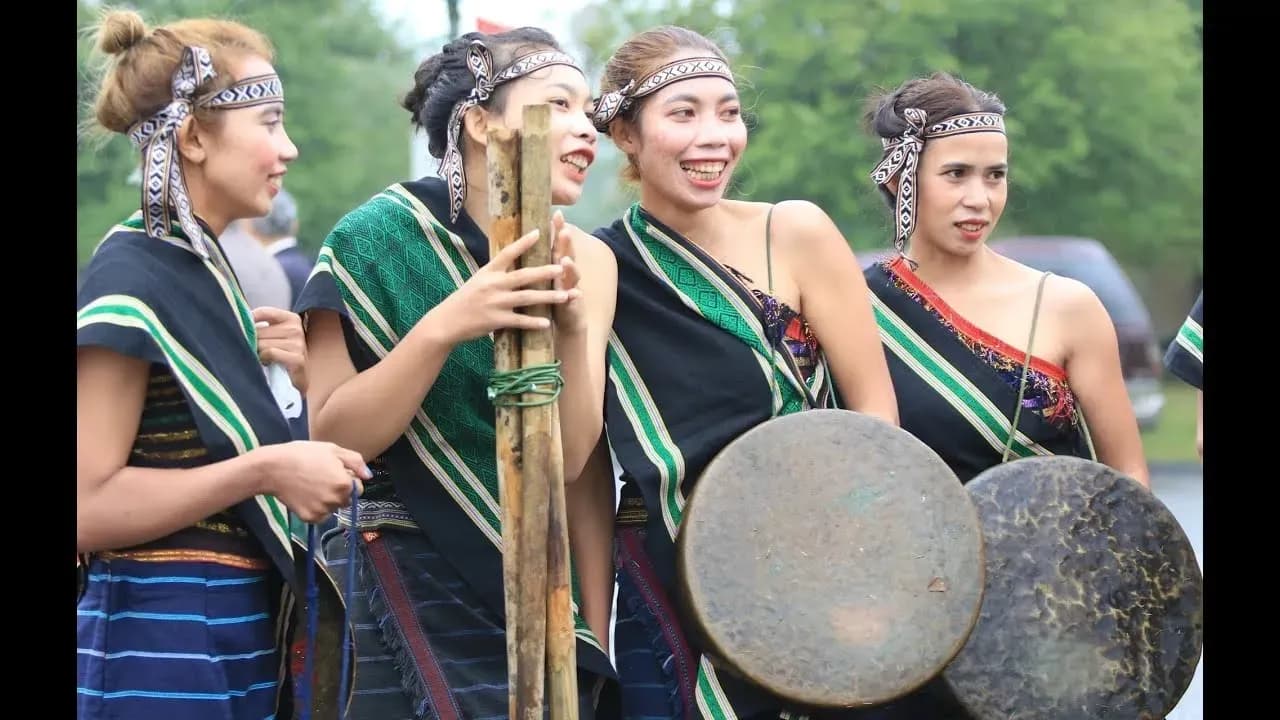
The Khmu people often cook sticky rice or corn, mixed with cassava. They like to eat spicy, sour, bitter foods, grilled foods with smells like fermented fish sauce, nam pia, and sour fish. Regarding clothing, they dress like the Thai people, but the difference is the way the women decorate their shirts with rows of money and shells.
Stilt houses mainly use unbent columns, bamboo walls, and bamboo floors. Nowadays, many places have built more spacious and sturdy houses. Social relations: The Khmu have close relations between people of the same ethnic group and neighbors, especially the Thai people. Each village consists of many families belonging to different clans, each clan has a clan leader. These clans have the names of animals, birds, plants and can be divided into 3 groups of clan names. In addition, there are some clans named after inanimate objects such as: pig baskets, soup ladles.
In marriage, the Khmu follow the principle of mutual respect, especially within a clan. Many matriarchal remnants still exist, such as the custom of living with the wife's family, the husband taking the wife's surname, and marriage between brothers-in-law and sisters-in-law. Khmu funerals include many religious rituals, especially the hour-long farewell prayer for the deceased. Moving into a new house is a happy occasion for the family and the whole village, often with a pig slaughtered to entertain the neighbors.
In addition to Tet Nguyen Dan, the Kho Mu also celebrate the new rice festival after the harvest in the 10th lunar month. Regarding worship, the Kho Mu believe that there are 5 most important ghosts: sky ghost, earth ghost, dragon ghost, ancestor ghost and house ghost. The Kho Mu popularize the method of calculating the date and time based on the ca la table to apply in house building and weddings. Regarding art, they love the Tom folk song, along with many activities such as xoe, dancing, lip blowing, various types of flutes and homemade bamboo and rattan percussion instruments.
The Khmu people are residents who mainly live by slash-and-burn cultivation, so they are called "Xa an lua." Currently, most Khmu people have settled down. In addition to rice and corn, they also grow squash, beans and root crops. The main family sideline is weaving household items, and some places also know blacksmithing, carpentry and weaving. Since converting crops and expanding the cultivated area, many households have escaped poverty and have a stable economic life.
The Khmu ethnic group has a poverty rate of 51.6%, a near-poor rate of 13.4%. The unemployment rate is 1.04%, the rate of trained workers with degrees and certificates is 3.1%. The rate of workers working in the non-agricultural sector is 8.3%, the rate of workers working in management or high and medium-level technical and vocational jobs is 1.1%, and the rate of households working in traditional handicrafts is 0.05%.
Above is some interesting information about the Khmu ethnic group in Vietnam. Let's join iGuide.ai to plan to meet, interact and immerse yourself in the culture of the Khmu people in the near future!
Source:
- Ethnic groups in Vietnam (National Political Publishing House Truth)
- Basic characteristics of 54 ethnic minorities in 2019 (Committee on Ethnic Minorities and General Statistics Office)
- Website of the Ethnic Committee, Website of Nhan Dan Newspaper
- Survey results collect information on the socio-economic status of 54 ethnic groups in Vietnam)
Keep reading
 Related
 Related
 Related
 Related
 Related
 Related
 Related
 Related
Log in to leave a comment. Log in
Be the first to comment.
React to this story