authenticated by

Share
Vietnamese ethnic groups
Vietnamese: An insight into the lifestyle and culture of the Muong people, the intersection of nature and tradition.
Dec 25, 2024 · 6 min read
The Muong people have a population of over one million people, the fourth largest after the Kinh, Tay, and Thai people. As long-time indigenous residents, they have the same origin as the ancient Vietnamese people, residing in many northern provinces, most concentrated in Hoa Binh and Thanh Hoa provinces. Let's find out information about the Muong ethnic group in Vietnam with iGuide.ai!
The Muong people are indigenous people who have lived in our country for a long time and have created a rich culture with rich ethnic identity. Other names: Mol, Mual, Mul or Mon.…
The Muong people in our country live in a fairly large mountainous area, in the valleys at the foot of the mountains, with a favorable geographical environment for cultivation, located between the Viet people in the east and the Thai people in the west, about 350km long, about 80-90km wide. The Muong people are mainly concentrated in Hoa Binh province, Thanh Son, Tan Son, Yen Lap, Thanh Thuy districts of Phu Tho province; Ngoc Lac, Thach Thanh, Cam Thuy, Ba Thuoc, Nhu Xuan, Lang Chanh districts of Thanh Hoa province and scattered in Son La, Ninh Binh, Yen Bai provinces.
- Population: The Muong are the 4th most populous ethnic group in the Vietnamese ethnic community, after the Vietnamese, Tay, and Thai. According to the 2019 Census of 53 Ethnic Minorities, the Muong have a total population of 1,452,095 people, mainly concentrated in Hoa Binh province (with a population of 549,026 people), Thanh Hoa (341,359 people); Phu Tho (218,404 people); Son La (84,676 people); Hanoi (62,239 people); Ninh Binh (27,6345 people), Yen Bai (17,401 people)... In addition, the Muong are also present in some southern provinces and cities such as Dak Lak (15,656 people); Binh Duong (9,021 people); Dong Nai (6,257 people); Lam Dong (6,072 people),...
- Language: Muong, belongs to the Viet-Muong language group, South Asian language family.
- Traditional social institutions: The traditional social organization of the Muong people has many unique features, that is, the society has been differentiated into the lang (noble) and commoner classes. The social institutions in traditional society of the Muong people in general are the hamlets and the muongs. There, a management and operation apparatus is formed according to customary law, all members of the hamlet and muong communities must absolutely comply. The place of residence of the Muong people is called the word quel or xom, which means village. The village is the basic unit of Muong society, consisting of many patriarchal sub-families whose family cells are parents and children, in which the power belongs to the eldest son.
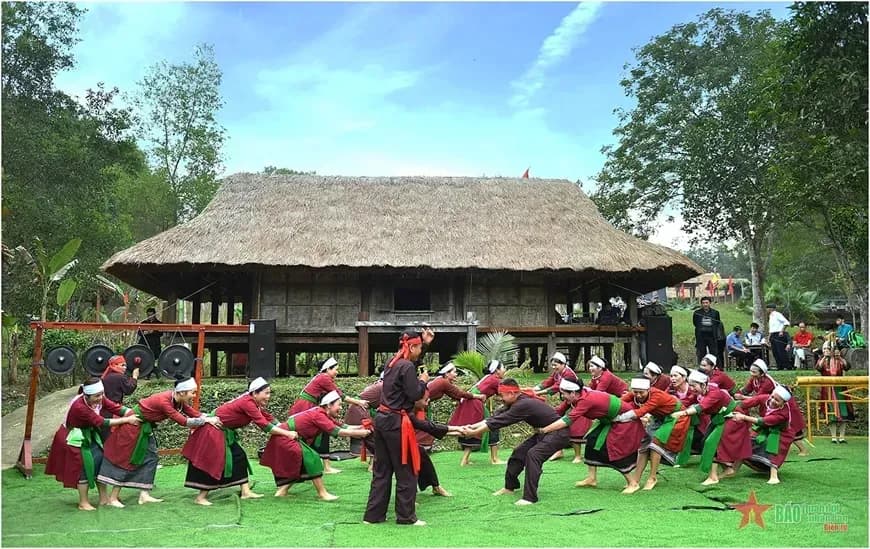
- Housing: The majority of Muong people live in stilt houses, a type of house with 4 roofs, surrounded by rows of areca trees and jackfruit trees. The upper part of the house is for people to live, the lower part is for livestock and poultry pens, rice mortars, and other production tools. Nowadays, economic conditions are increasingly developing, people's lives are improving, so in addition to traditional stilt houses, in many areas of Muong people, tiled-roof houses, flat-roof houses, and high-rise buildings have appeared. The architecture of these types of houses bears the strong mark of the Vietnamese people.
- Religion, beliefs: Ancestor worship, Tan Vien worship, Tho Cong worship.
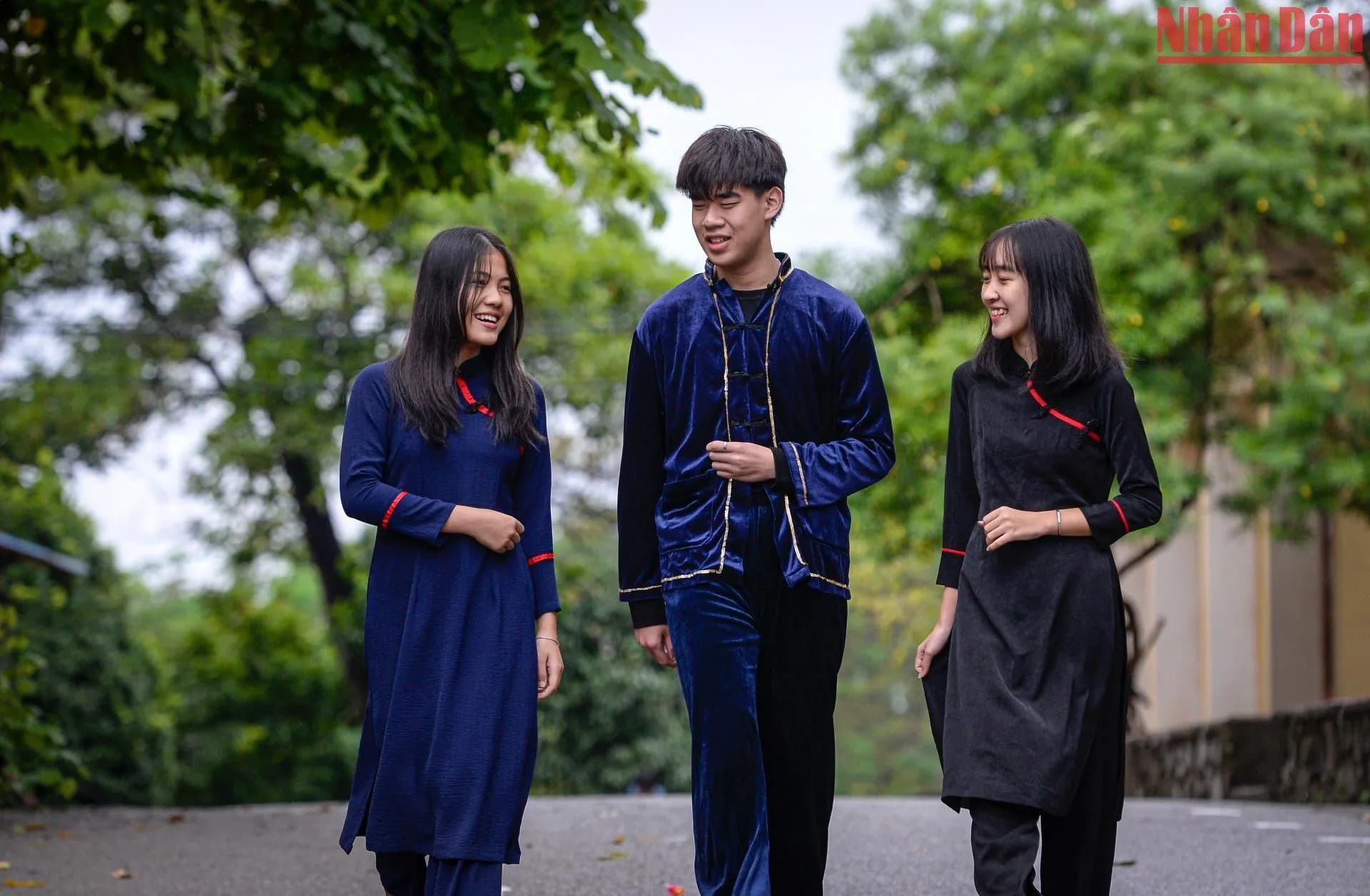
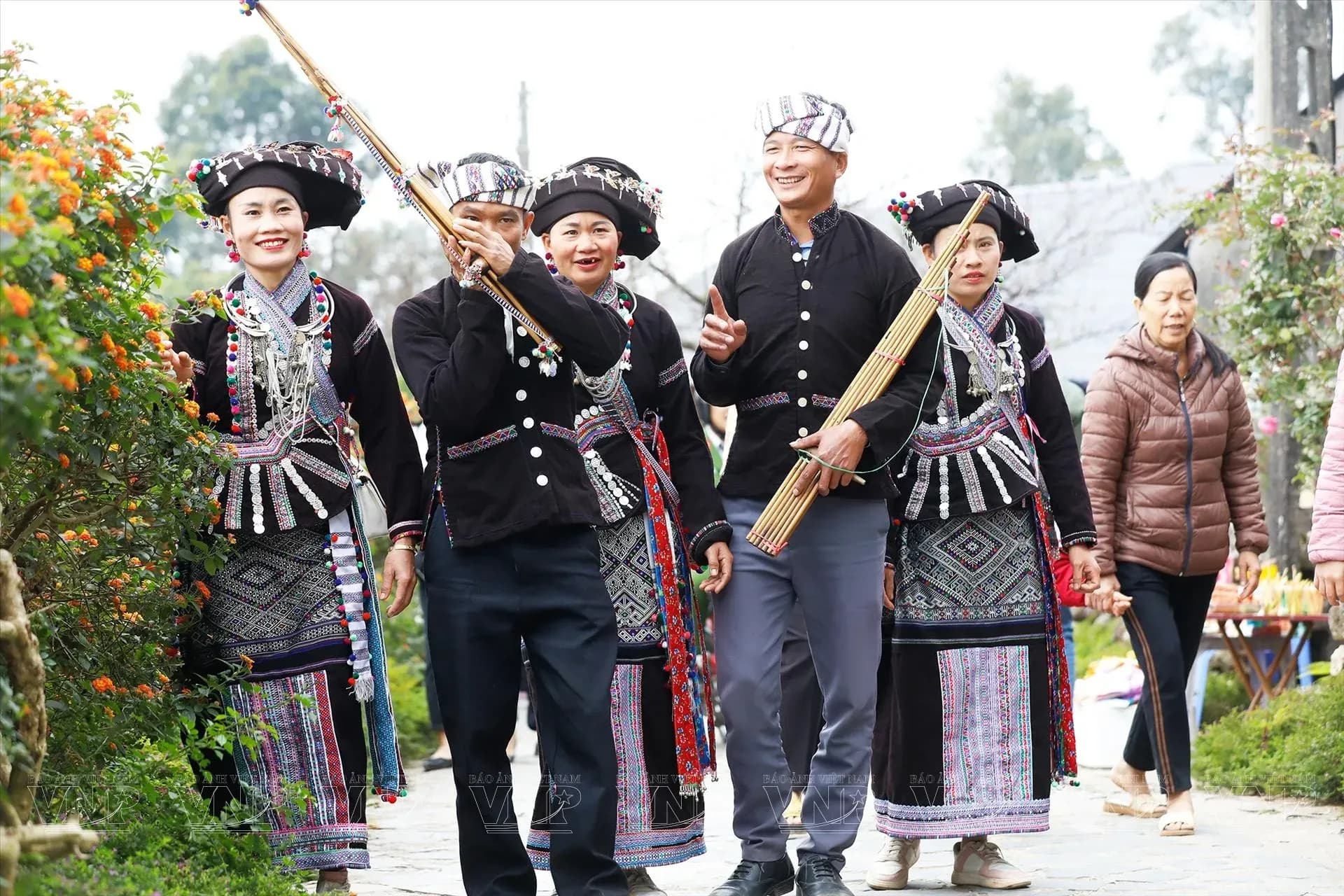
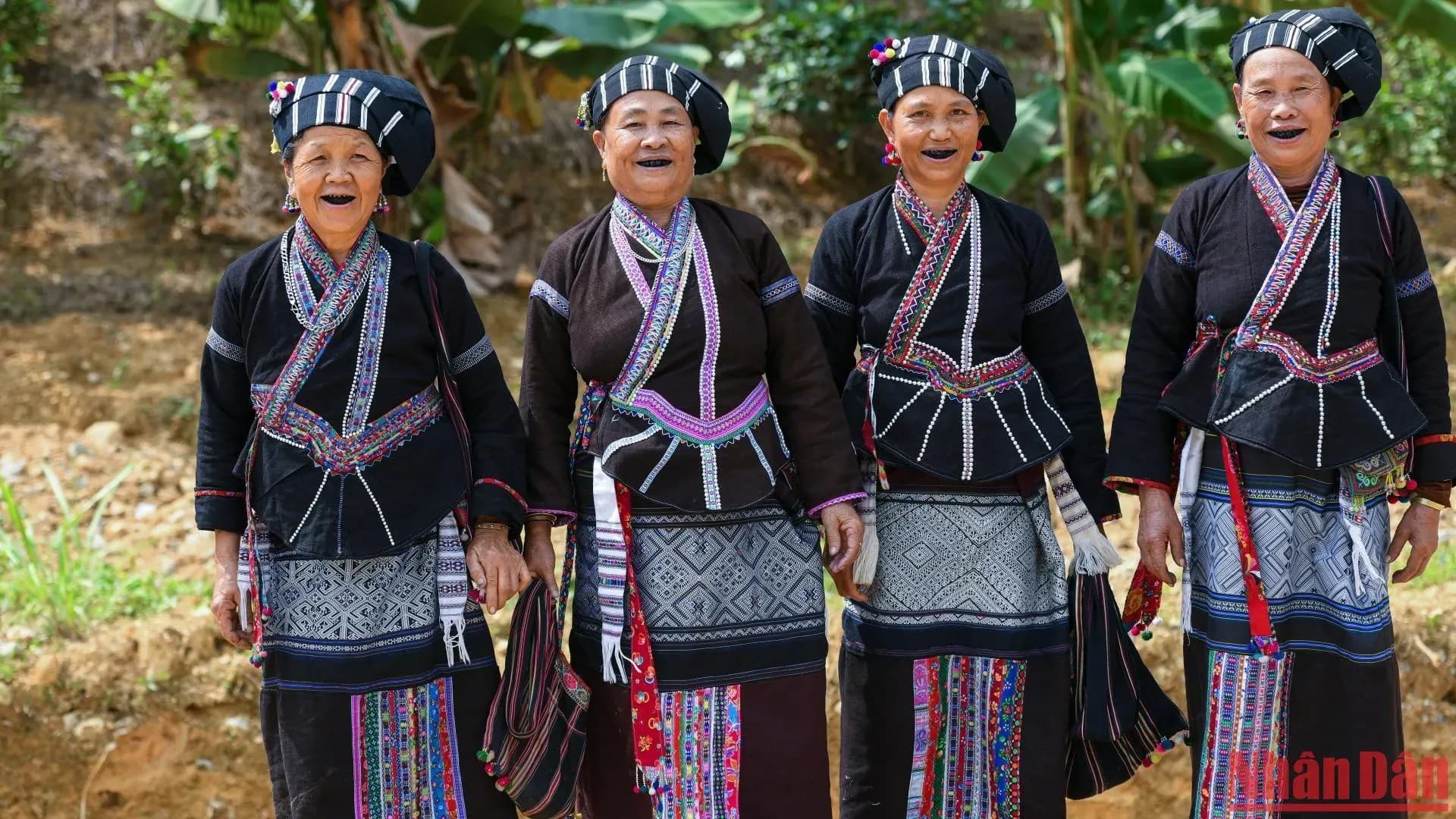
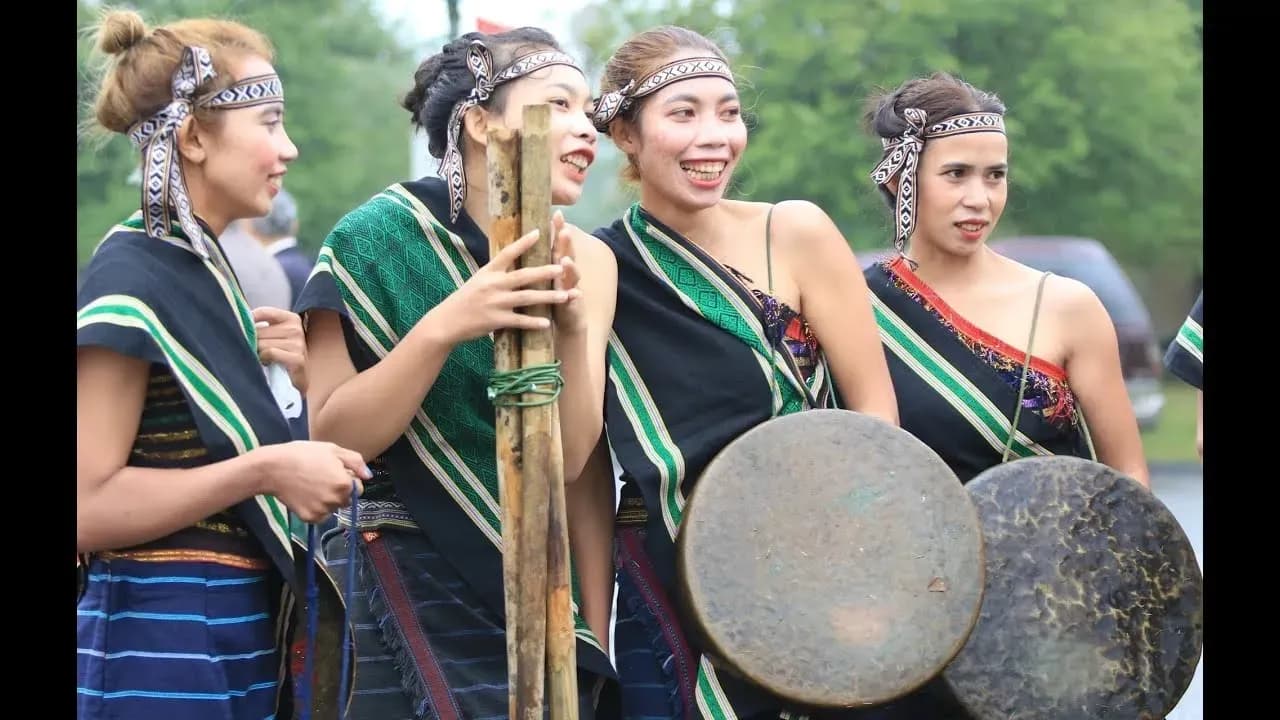
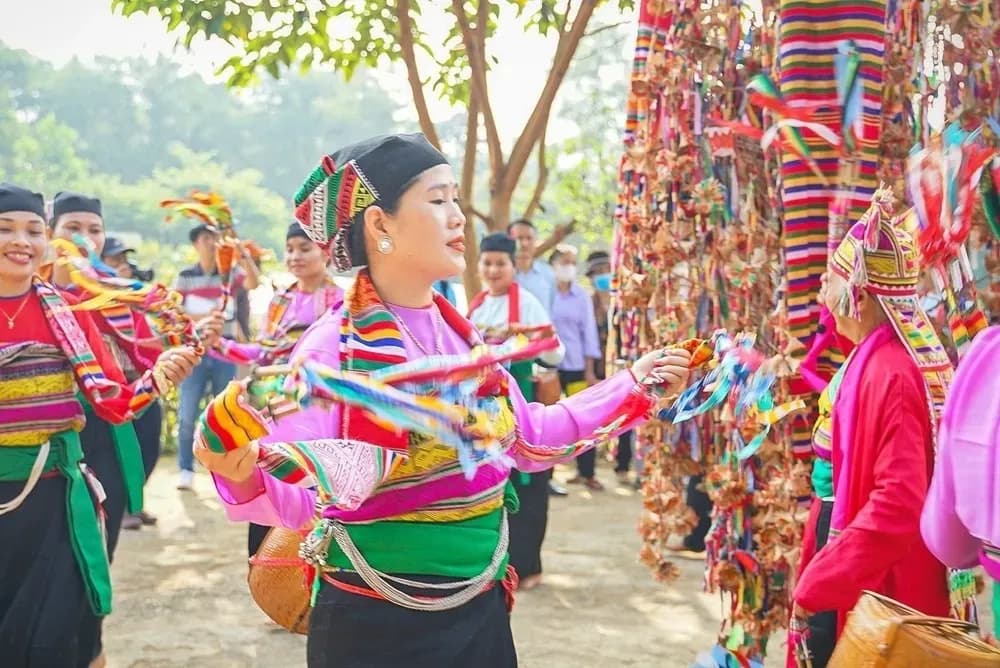
- Costume: Women's costumes are more diverse than men's and still retain their unique features. The headdress is a rectangular piece of white cloth without embroidery, a bib, a blouse (usually white) with a very short body, usually slit at the chest, and an ankle-length skirt consisting of two main parts: the skirt body and the waistband. The waistband is famous for its elaborately woven patterns. Jewelry includes bracelets, beads, and a set of 2 or 4 silver chains with a peach box and silver-covered tiger and bear claws.
The traditional costume of Muong men is simpler. The shirt is short, round-necked, and has a border. The pants are made of white, brown-dyed or indigo-dyed raw cloth, with wide legs. When wearing the pants, the wearer will cross the two edges of the waistband, tuck them inside, and tie them with a scarf. The scarves of Muong men are black or purple, made of self-woven fabric. Nowadays, the traditional costume of Muong men is almost gone, they mainly buy Kinh costumes at the market.
- Marriage: The wedding ceremony of the Muong people today has been carried out according to the new lifestyle, the phenomenon of buying brides and buying sons-in-law no longer exists. Boys and girls are free to date and get to know each other. If they like each other, they inform their families so that they can prepare for the wedding ceremony.
- Cuisine: In the past, sticky rice was the main dish in the daily meals of the Muong people, but now, regular rice has gradually replaced it as the main food source, sticky rice is only used on holidays and to entertain guests. Muong people's rice wine is famous for its processing method and the rich flavor of the yeast, which is served to distinguished guests and drunk in group parties. Women as well as men like to smoke tobacco with a large pipe. In particular, women also have the custom of many people passing around a cigarette to smoke together.
- Education: In the past, only a few Muong people knew the national language or Chinese characters, while the majority were illiterate. Since peace was restored, the learning movement has developed strongly. Most parents have limited the thoughts that inhibit their children's desire to learn and study well, and instead send their children to school, combining family and school education to create conditions for their children to have a brighter future. According to statistics from the General Statistics Office in 2019, the rate of people aged 15 and over who can read and write in common is 95.5%; the rate of people attending primary school is 100.8%; the rate of people attending lower secondary school is 96.3%; the rate of people attending upper secondary school is 71.5%; the rate of out-of-school children is 6.7%.
The main economic activity of the Muong is wet rice farming. The Muong combine wet rice farming with slash-and-burn farming, animal husbandry, hunting, gathering and small-scale handicrafts with a strong sense of self-sufficiency. Because they live in valleys at the foot of mountains, where there are many rivers and streams, the Muong have long since perfected an irrigation system to irrigate fields and grow crops. They also practice handicrafts, typically weaving and knitting.
Since the country began to carry out the renovation process, moving towards industrialization and modernization, the Muong economy has had remarkable changes. According to the General Statistics Office in 2019: unemployment rate (1.18%); proportion of laborers working in the non-agricultural sector (36%); poverty rate (14.5%); near-poor household rate (14.9%); proportion of households using clean water sources (89.9%); proportion of households using grid electricity for lighting (99.6%).
Above is some interesting information about the Muong ethnic group in Vietnam. Let's plan to explore, meet and experience the culture of the Muong people with iGuide.ai in the near future!
Source:
- Ethnic groups in Vietnam (National Political Publishing House Truth)
- Basic characteristics of 54 ethnic minorities in 2019 (Committee on Ethnic Minorities and General Statistics Office)
- Website of the Ethnic Committee, Website of Nhan Dan Newspaper
- Survey results collect information on the socio-economic status of 54 ethnic groups in Vietnam)
Keep reading
Log in to leave a comment. Log in
Be the first to comment.
React to this story