authenticated by

Share
Vietnamese ethnic groups
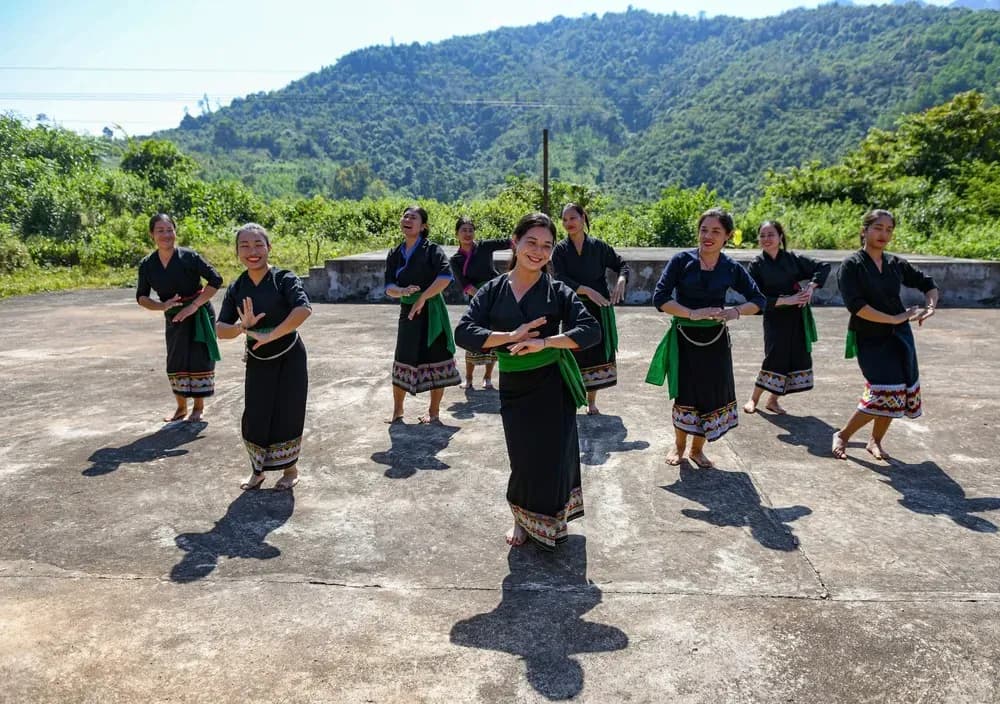
Immerse yourself in the unique cultural world of the O Du ethnic group, where traditional customs and precious heritages are preserved in the heart of Nghe An mountains and forests.
Dec 25, 2024 · 5 min read
The O Du ethnic group is one of the five smallest ethnic groups in Vietnam, residing in Tuong Duong district, Nghe An province. Let's find out information about the O Du ethnic group in Vietnam with iGuide.ai!
Many documents show that the O Du are an ethnic group that has lived for a long time in the two districts of Tuong Duong and Ky Son, Nghe An province today. Their self-name is O Du or I Du (loving people). Other names are Tay Hat (hungry and ragged people).
According to the survey of 53 ethnic minorities on April 1, 2019: The O Du ethnic group has a total population of 428 people, of which 237 are men and 191 are women. The proportion of the population living in rural areas: 93.2%.
The O Du people are concentrated in Tuong Duong district, Nghe An.
Belonging to the Mon-Khmer language group (South Asian language family). Most of the O Du people use the Khmu and Thai languages as daily communication tools. Regarding education, now in the resettlement area, preschool and primary school students study at a spacious school right in the center of the village. Many O Du language classes are opened by elders, attracting a large number of young people to participate.
According to the survey data of 53 ethnic minorities on April 1, 2019: The rate of O Du people aged 15 and over who can read and write: 89.4%; The rate of people attending primary school: 101.9%; The rate of people attending lower secondary school: 97.7%; The rate of people attending upper secondary school: 65.2%; The rate of out-of-school children: 6.7%.
The O Du people usually eat 1 side meal (breakfast) and 2 main meals (lunch and dinner). In the past, they ate sticky rice, but now they also eat rice. When the harvest is bad, they eat brown roots, yams, cassava, or corn instead of rice. They like to drink alcohol and smoke tobacco. Nowadays, both men and women dress in the style of the Thai and Vietnamese people in the region. There are very few traditional costumes left.
In the past, traditional houses, stilt houses, had to be built facing the mountain (built vertically). When erecting the pillars, a certain order had to be followed. Now this type of house no longer exists. They live in stilt houses like the Thai people. Due to their small population, living intermingled with the Khmu and Thai people, their social and cultural relations are greatly influenced by these two ethnic groups. The O Du people take the surnames of the Thai and Lao. The organization of the clan is very vague. The clan leader is a prestigious, respected person and plays a major role in the clan.
The O Du family is a small patriarchal family. Men decide all the household chores. Women do not inherit. They commonly live with the wife's family. Indispensable wedding gifts include squirrel meat, dried rat meat, and salted fish.
The O Du believe that when a person dies, their soul turns into a ghost. The body's soul resides in the cemetery, while the soul that originates in the hair remains as the house ghost. The house ghost only stays with the descendants for one generation, in order from the eldest son to the second son. When all the sons have died, people hold a ceremony to send the house ghost back to their ancestors. The place to worship the house ghost is in the corner of the second room. The altar is simple, hanging high up near the roof.
The O Du celebrate the Lunar New Year and the New Rice Festival. The biggest festival is the thunder welcoming ceremony of the year. On that day, people from all over flock to the sky to celebrate, slaughtering buffaloes, cows, and pigs in Xop Pot village, Kim Da commune, Tuong Duong, Nghe An. Arts: The O Du are proficient in playing musical instruments of the Kho Mu and Thai people such as flutes, panpipes, gongs, and drums; they know the folk melodies of the Kho Mu and Thai people, and they tell historical stories.
The O Du people live mainly on slash-and-burn cultivation and partly on wet rice fields. Raising buffaloes, cows, pigs, chickens and goats is quite developed. They weave household items from bamboo and rattan, partly for consumption and partly for exchange. In the past, they also knew how to weave. Since the end of 2006, the O Du people have been living together with the Kho Mu and Thai people in remote villages of four communes in Tuong Duong district. They have been separated and moved to live in Vang Mon village, Nga My commune (also in Tuong Duong district). Their sedentary economic life has had many changes.
According to the survey data of 53 ethnic minorities on April 1, 2019: Poverty rate: 56.7%; Rate of households using clean water sources: 95.0%; Rate of households using grid electricity for lighting: 100.0%; Unemployment rate: 0.91%; Rate of trained workers with degrees and certificates: 4.5%; Rate of workers working in the non-agricultural sector: 13.2%; Rate of households doing traditional handicrafts: 2.01%.
Above is some interesting information about the O Du ethnic group, Vietnam. Let's plan to explore, meet and experience the culture with the O Du people in the near future with iGuide.ai!
Source:
- Ethnic groups in Vietnam (National Political Publishing House Truth)
- Basic characteristics of 54 ethnic minorities in 2019 (Committee on Ethnic Minorities and General Statistics Office)
- Website of the Ethnic Committee, Website of Nhan Dan Newspaper
- Survey results collect information on the socio-economic status of 54 ethnic groups in Vietnam)
Keep reading
 Related
 Related
 Related
 Related
 Related
 Related
 Related
 Related
Log in to leave a comment. Log in
Be the first to comment.
React to this story