authenticated by

Share
Vietnamese ethnic groups
Discover Ede culture through festivals, cuisine and daily life. An exciting experience in the majestic Central Highlands.
Dec 25, 2024 · 6 min read
The Ede ethnic group consists of many local groups: Kpa, A-dham, Krung, Mđhur, Ktul, Dlie, Rue, Krung, Bih... living for a long time in the Central Highlands region. Let's find out information about the Ede ethnic group, Vietnam with iguide.ai!
The Ede are long-standing residents of the Central Highlands. Traces of the Ede people's island origins are reflected in epics and folk art and architecture. Up to now, the Ede community still maintains strong matriarchal traditions in our country. Self-names: Anăk Ea Đê, Ra Đê (or Rhade), ê Đê, êgar, Ðê. Local groups: Kpa, Adham, Krung, Mđhur, Ktul, Dliê, Hruê, Bih, Blô, Kah, Kdrao, Dong Kay, Dong Mak, Ening, Arul, Hwing, Ktlê, £pan...
The main residential areas are currently Dak Lak province, southern Gia Lai province and western Phu Yen and Khanh Hoa.
Holidays: The Ede celebrate Tet in December (the 12th month of the lunar calendar) when the harvest is complete (not on a specific day, depending on each village). After Tet, they celebrate new rice (hma ngat) and then Tet (mnam thun) celebrates a bountiful harvest. This is the biggest Tet, when rich families slaughter buffaloes and cows to worship the rice god; other families slaughter pigs and chickens.
The Greatest God: He is the creator of Aê Ðê and Aê Ðu, then the earth god (yang lán), the rice god (yang mđie) and other gods. He popularizes the concept of animism. The agricultural gods are considered lucky gods. Thunder, lightning, storms, floods and ghosts are considered evil gods. Rituals follow a person's entire life and ceremonies to pray for blessings and health for each individual. Whoever organizes many of these ceremonies, especially the big ceremonies that sacrifice many buffaloes, cows, and precious tea (jars for brewing rice wine), is more respected by the villagers.
Social relations: The Ede family is a matriarchal family, marriage is on the wife's side, children carry the mother's surname, the youngest daughter is the heir. Ede society operates according to the traditional legal practices of the matriarchal family organization. The whole community is divided into two clans to practice exchange marriage. The village is called a village and is the basic residential unit, also the only social organization. People in a village belong to many branches and surnames of both clans, but there is still one branch that is the nucleus. At the head of each village is a person called the water-station owner (Po-pin-ca) who represents his wife and manages all activities of the community.
Wedding: Women take the initiative in marriage, asking for a husband through a matchmaker and marrying him to live with their family. When one of the two people passes away, the family and clan of the deceased must have someone to replace them according to the custom of "continuing the lineage" (chuê nuê) so that the living person is never alone, the love bond between the Nie and Mlô clans is never broken according to the teachings of the ancestors.
Funeral: When someone dies, the family lineage must be continued. The funeral of the elderly and the sick usually takes place at home, then the coffins are taken to the cemetery for burial. In the past, when people in the same family died close together, the coffins were buried in the same grave. Because the afterlife was believed to be a re-enactment of this world, the deceased were given their property and placed in the tomb. When the tomb was built, a grand ceremony was held to abandon the tomb, followed by the end of the care of the soul and the tomb.
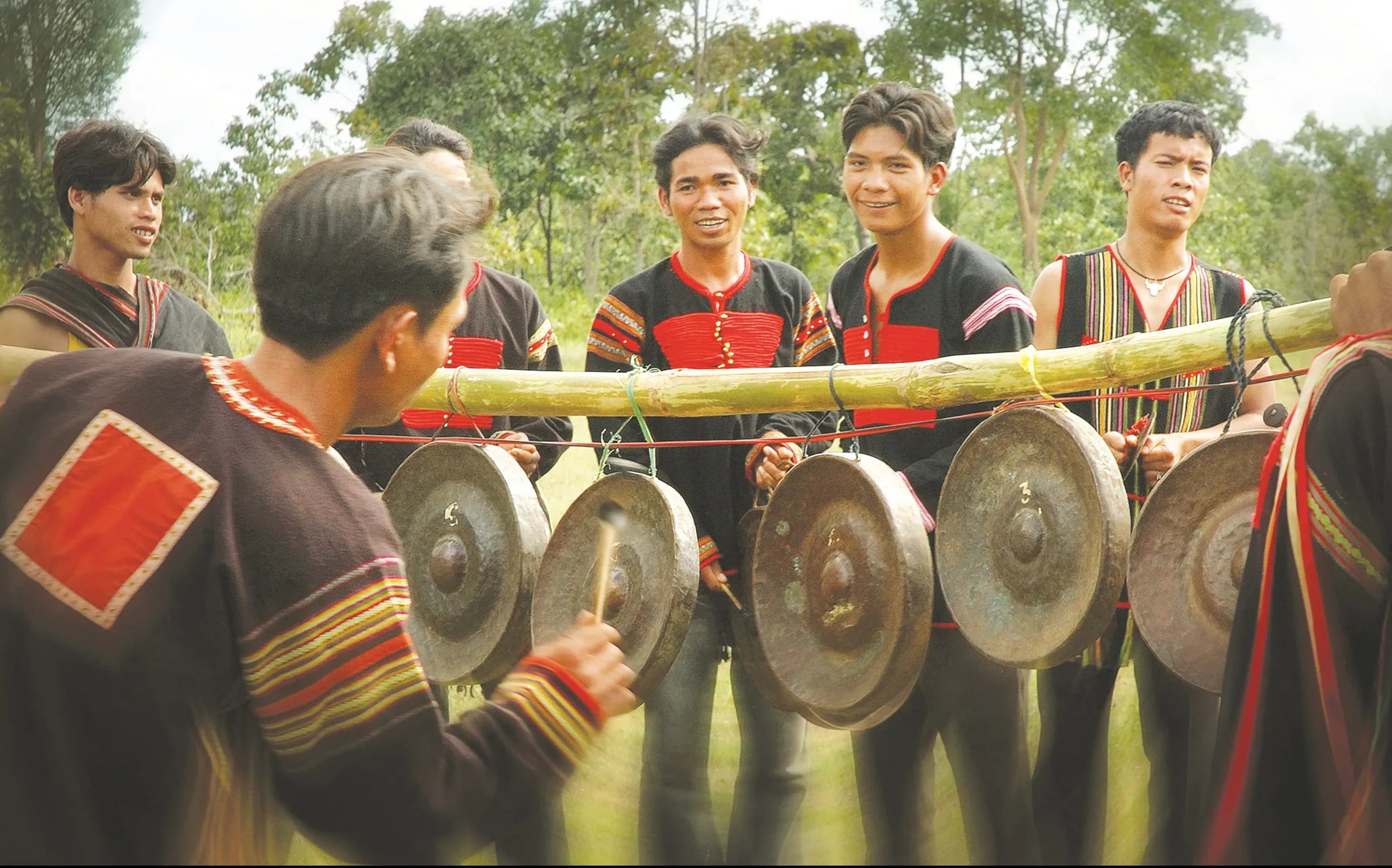
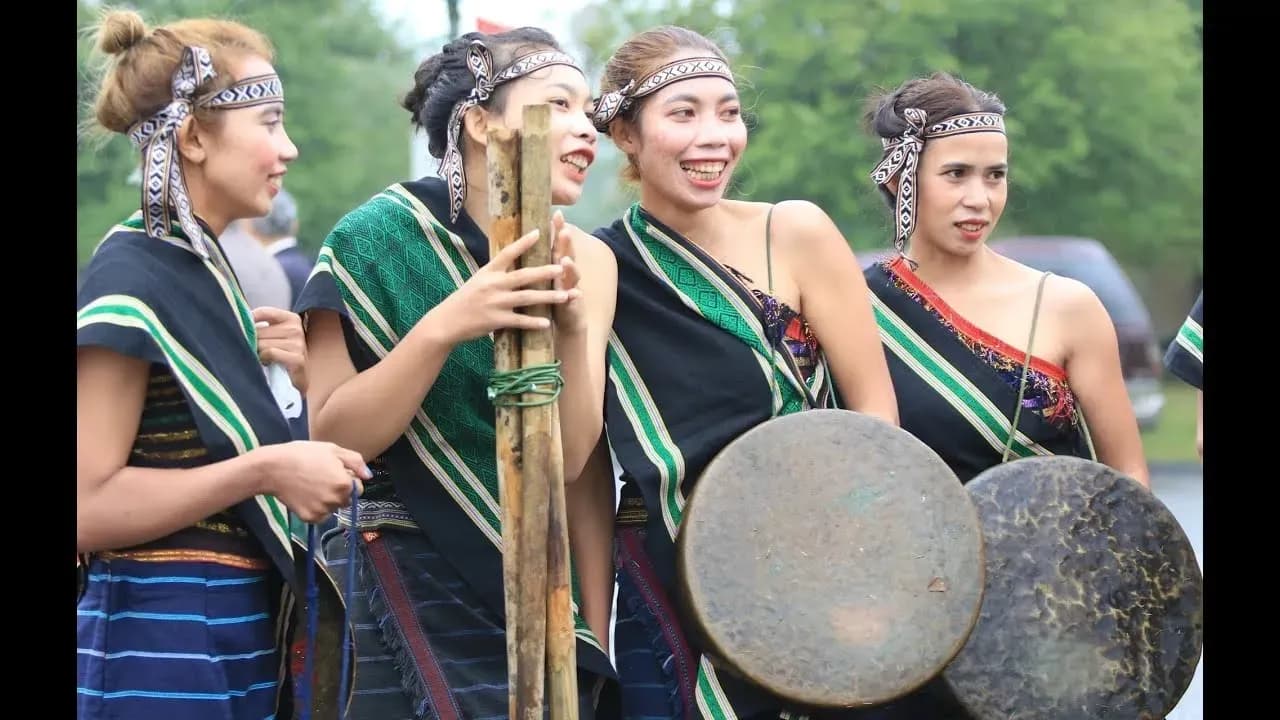
Culture and arts: There is a very attractive form of khan telling. In terms of literature, khan is an ancient epic, a long poem; in terms of performance, it is a type of recitation accompanied by some movements to convey emotion. In terms of folk songs, there are antiphonal singing, riddle singing, genealogical singing... Ede music is famous for its gong set consisting of 6 flat gongs, 3 knob gongs, a gong to keep the rhythm and a leather-faced drum. Besides gongs, there are musical instruments made of bamboo, dried gourd shells like other ethnic groups in Truong Son, Tay Nguyen, but with more or less unique techniques.
The Ede mainly grow rice on a rotational basis. Pigs and buffaloes are the most common livestock, while chickens are the most common poultry, but they are raised mainly for religious purposes. Popular household crafts include weaving bamboo and rattan to make household items, and growing cotton and weaving with an ancient Indonesian loom. Pottery and blacksmithing are not very developed. In the past, trading and exchanging were done by barter.
Above is some interesting information about the Ede ethnic group, Vietnam. Let's plan to explore, meet and experience the culture of the Ede people with iGuide.ai in the near future!
References:
- Ethnic groups in Vietnam (National Political Publishing House Truth)
- Basic characteristics of 54 ethnic minorities in 2019 (Committee on Ethnic Minorities and General Statistics Office)
- Website of the Ethnic Committee, Website of Nhan Dan Newspaper
- The survey results collect information about the situation.
Keep reading
 Related
 Related
 Related
 Related
 Related
 Related
 Related
 Related
Log in to leave a comment. Log in
Be the first to comment.
React to this story