
Vietnamese ethnic groups
Origin and history of the Ha Nhi ethnic group
Explore the unique life, culture and beliefs of the Ha Nhi people, a community with a rich history and traditional identity in Vietnam.
Dec 25, 2024 · 6 min read
The Ha Nhi people have a history of migrating to Vietnam about 300 years ago, currently residing in the northern mountainous provinces of Dien Bien, Lai Chau and Lao Cai. Let's find out information about the Ha Nhi ethnic group in Vietnam with iGuide.ai!
1. Historical origin
The Ha Nhi people have been migrating for a long time, through different routes and to many countries, including Vietnam. The Ha Nhi people migrated to Vietnam about 300 years ago. Ha Nhi ethnic groups: Based on the area of residence, they can be divided into 3 groups: the Ha Nhi Co Cho (Ha Nhi people living in the lowlands), the Ha Nhi La Mi (living in the highlands) and the Ha Nhi Den (Ha Nhi Lo Me). Based on their costumes, language and characteristics of their place of residence, they are divided into two groups: the Ha Nhi Den and the Ha Nhi Hoa (including the Ha Nhi Co Cho and Ha Nhi La Mi groups). Regarding ethnic names: The Ha Nhi people call themselves Ha Nhi Gia.
2. Population
According to the results of the survey on collecting information on the socio-economic status of 54 ethnic minorities in 2019 by the Vietnam Ethnic Minorities Committee - General Statistics Office, the Ha Nhi population as of April 1, 2019 was 25,539 people, of which 12,895 were men and 12,644 were women.
3. Language
Belonging to the Tibeto-Burman language family (Sino-Tibetan language family), closer to Burmese.
4. Geographic distribution
The Hoa Ha Nhi people mainly reside in the districts of Dien Bien and Lai Chau provinces; the Black Ha Nhi people mainly reside in the communes of Bat Xat district, Lao Cai province, a part resides in Dien Bien and Lai Chau provinces.
5. Main features
Housing
Most of the residents live in houses made of earth, with solid walls, up to 30-40cm thick, suitable for the cold climate of the highlands. The walls are 3-4m high, the roof is steep and short, the house has no porch, only one entrance. Inside the house there is another layer of wall for defense, against cold, against dew and fog entering the house, called the inner porch. This is also the place where the homeowner drinks water and receives guests.
The houses of the Ha Nhi people in Bat Xat district, Lao Cai province are usually arranged as follows: the two gable rooms are divided into two rooms for the head of the family and his wife and children or the son and his wife. About 1/3 of the width of the two middle rooms is the ground, the rest is built into the floor. The ground has a stove for cooking and a cupboard. The floor is where the ancestral altar is placed, the bedrooms for children who have not yet married and guests. The stove is placed above the floor.
Family structure
Patriarchy.
Traditional Costume
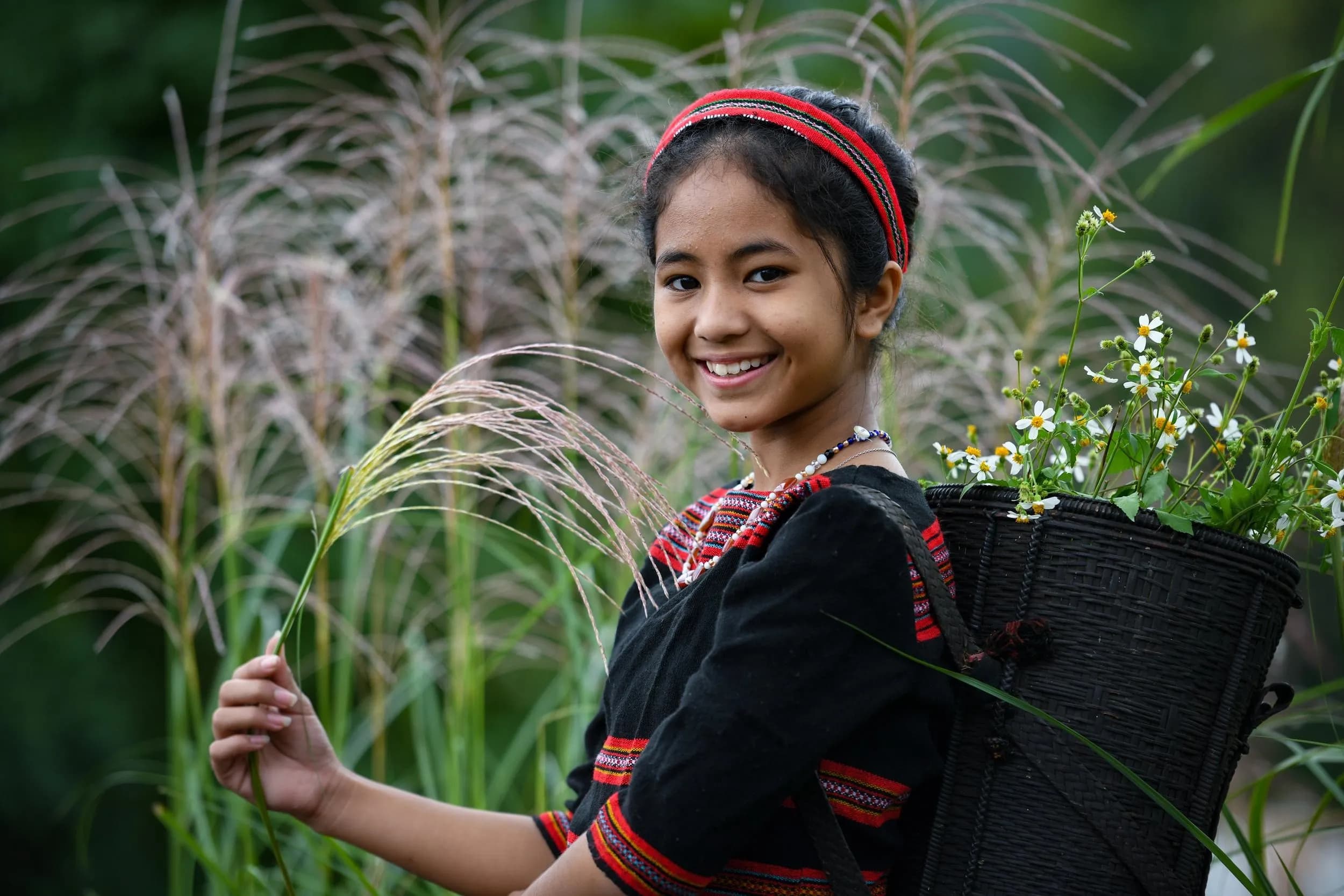
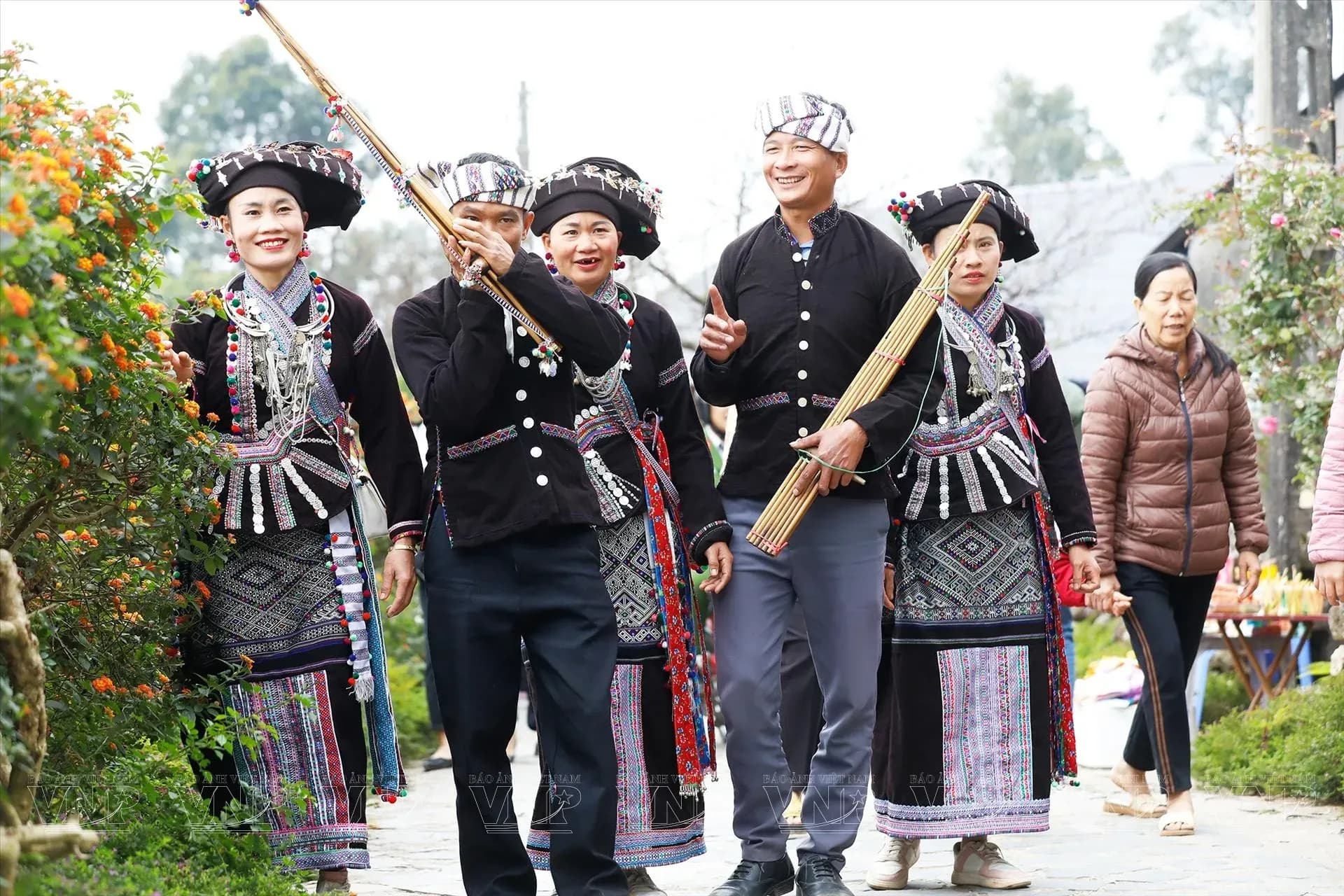
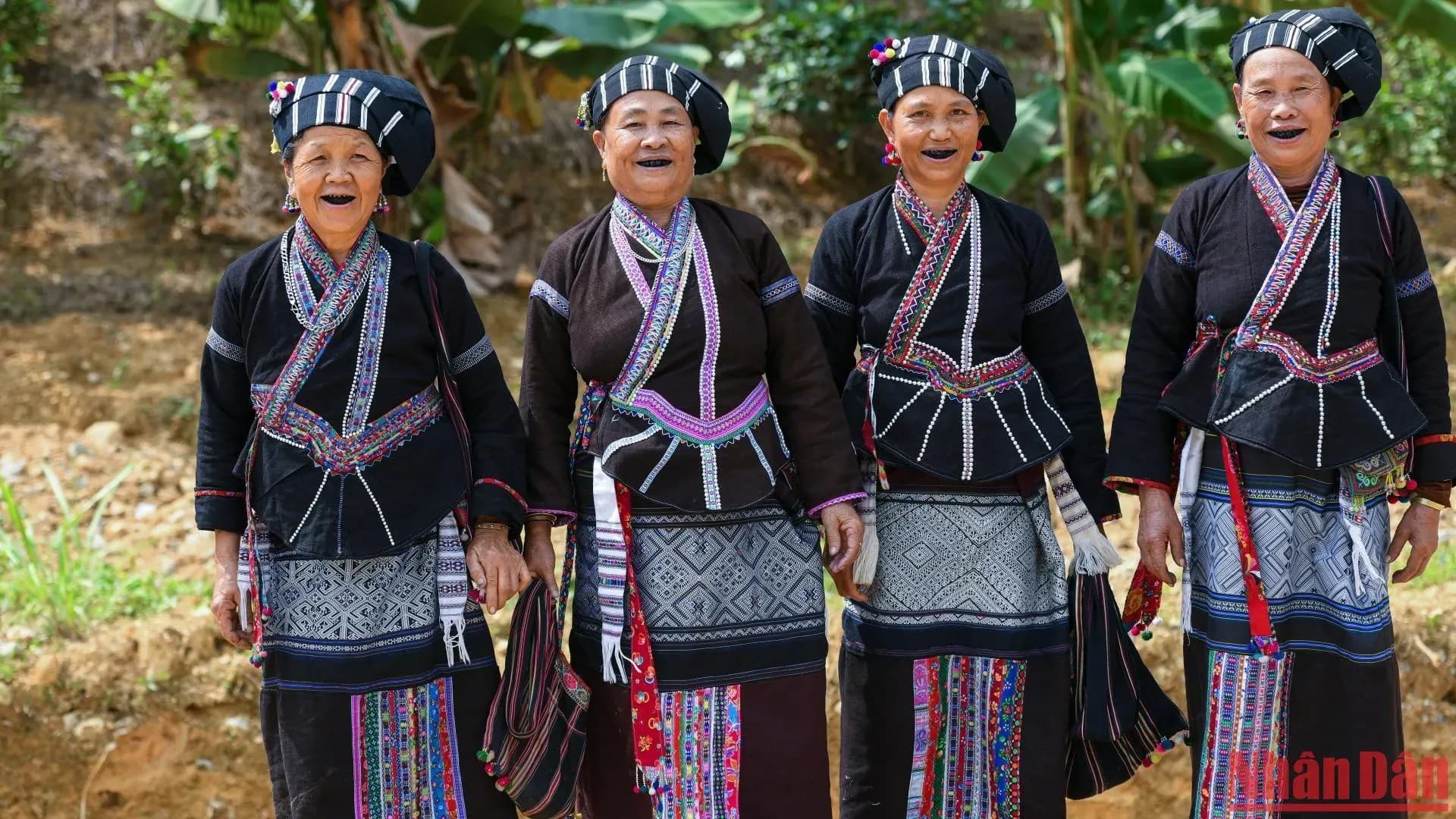
Men's shirts are made of home-woven fabric, dyed indigo or black. The pants have lame legs, a large waistband, and a hem with a border, and the length is appropriate for the height of the wearer. Women in the two Ha Nhi groups dress differently. Black Ha Nhi women mainly wear indigo shirts and head scarves, without decoration or embroidery, the shirt is short to the knee, the hem is large and slightly protruding in the middle, buttoned on the right armpit and decorated only with coins and silver buttons. Only married women wear scarves. The Ha Nhi Hoa women's shirts are made in two layers, reaching to the ankles, the sleeves are decorated with patterns and the head is covered with a colorful scarf.
Cuisine
The daily meals of the Ha Nhi people usually consist of only one stir-fried or stewed dish and one boiled vegetable soup. In particular, the boiled dishes of the Ha Nhi people never add salt or spices. The Ha Nhi people also have colored sticky rice and some types of cakes made from sticky rice. Regarding drinks, the Ha Nhi people prefer to drink the juice of some types of plants that have a sweet taste, have the effect of enriching the blood and diuresis, along with tea or wine.
Holidays
The Ha Nhi people celebrate New Year in the beginning of the 10th lunar month. During the year, there is also a New Rice Festival, the 5th day of the 5th lunar month, and the 15th day of the 7th lunar month.
Belief
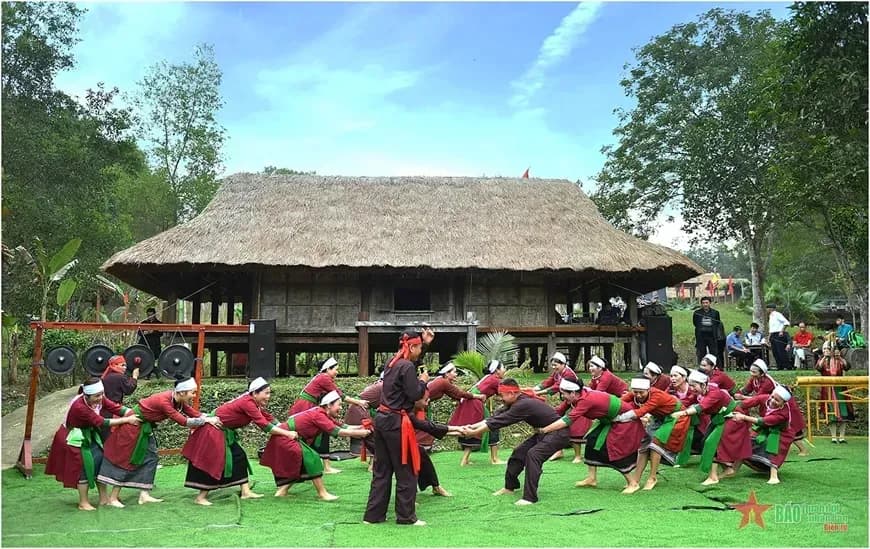
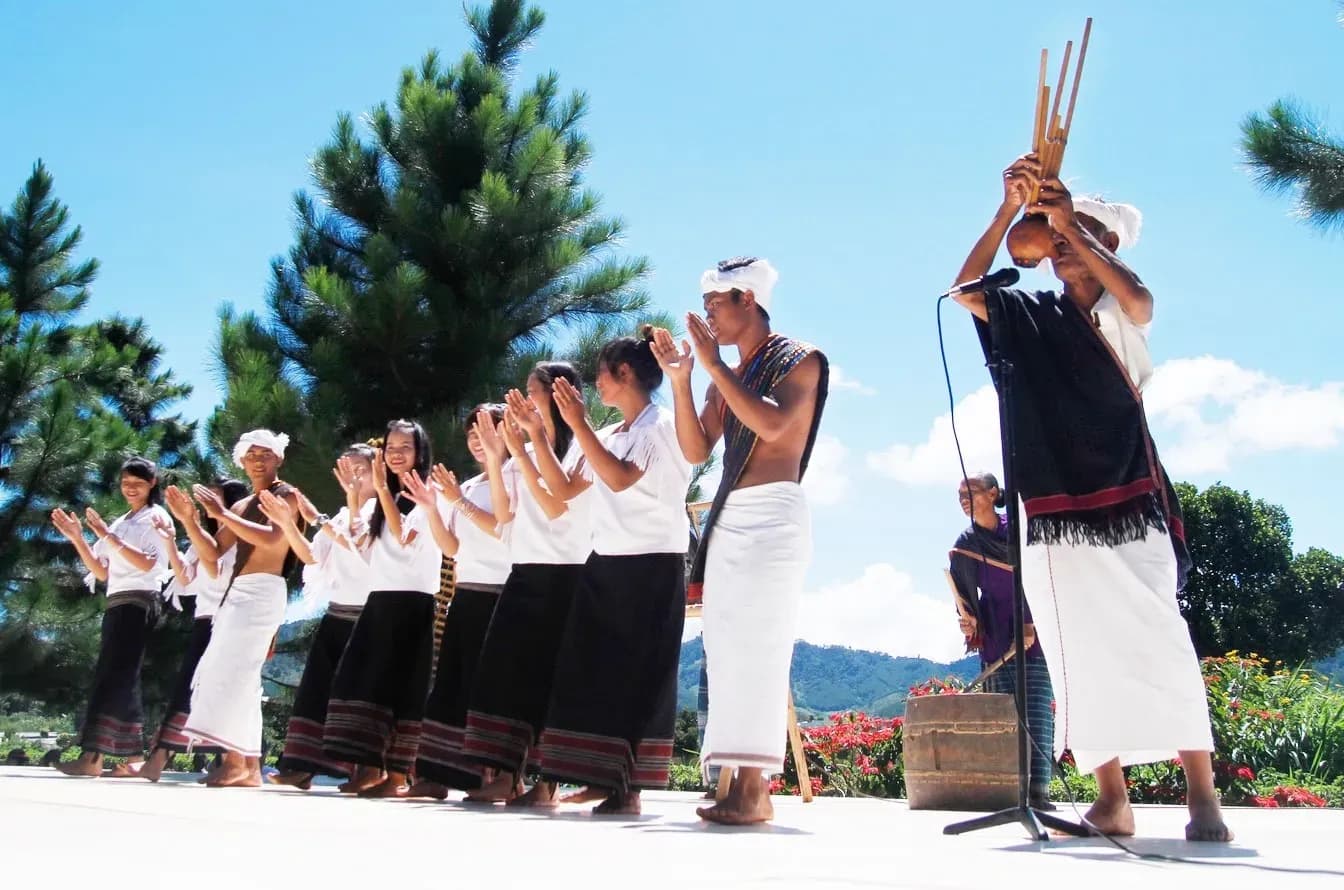
The Ha Nhi people always believe in “all things have animism” - everything has a soul and is always represented by a deity. Therefore, on certain days of the year, the Ha Nhi people often organize traditional worship rituals to pray for the deities to protect and bless people with peace, health, and bountiful harvests.
“Ga tu tu” is the first ritual to worship the gods at the beginning of each new year. This is the ritual of stretching ropes to block the road, forbidding strangers from entering, preventing evil spirits from harming the villagers, usually held on the first Tiger day of the first lunar month.
Water god worship ceremony: worship at the sacred water source “Lu khu su” so that the water source will never stop flowing. In the afternoon, right after the water god worship ceremony, the Ha Nhi people will perform the “Ga ma gio” worship ceremony, one of the biggest and most important rituals for them.
Every March, the Ha Nhi people hold a ceremony to worship the forest god "Mu thu gio", praying for good crops, prosperous livestock, and a large population in the village.
“Kho gia gia” season worshiping festival: one of the biggest and most unique ceremonies of the year of the Ha Nhi people, to pray to the gods to protect the crops, to grant favorable weather for plants to grow, and for a bountiful harvest. In addition, every year the Ha Nhi people also worship the god Tho Ty and the sacred tree, to protect the peaceful life of the people.
Economic conditions
Terraced and swidden farming, animal husbandry, exploitation from nature, doing some handicrafts such as weaving, cotton growing and weaving... According to "Basic characteristics of 54 ethnic minorities in 2019" of the Ethnic Committee and the General Statistics Office, the poverty rate: 44.8%; The near-poor household rate: 14.9%; The unemployment rate: 3.03%; The rate of trained workers with degrees and certificates: 11.3%; The rate of workers working in the non-agricultural sector: 12.7%; The rate of workers working in management or high and medium-level technical and vocational jobs: 4.6%.
Educational conditions
According to the "Basic characteristics of 54 ethnic minorities in 2019" conducted by the Ethnic Committee and the General Statistics Office, the rate of people aged 15 and over who can read and write: 60.7%; The rate of people attending primary school: 101.2%; The rate of people attending lower secondary school: 91.7%; The rate of people attending upper secondary school: 58.8%; The rate of out-of-school children: 14.7%.
Above is some interesting information about the Ha Nhi ethnic group in Vietnam. Let's plan to meet, exchange and experience the culture with the Ha Nhi people in the near future with iGuide.ai!
Source:
- Ethnic groups in Vietnam (National Political Publishing House Truth)
- Basic characteristics of 54 ethnic minorities in 2019 (Committee on Ethnic Minorities and General Statistics Office)
- Website of the Ethnic Committee, Website of Nhan Dan Newspaper
- Survey results collect information on the socio-economic status of 54 ethnic groups in Vietnam)
Share