authenticated by

Share
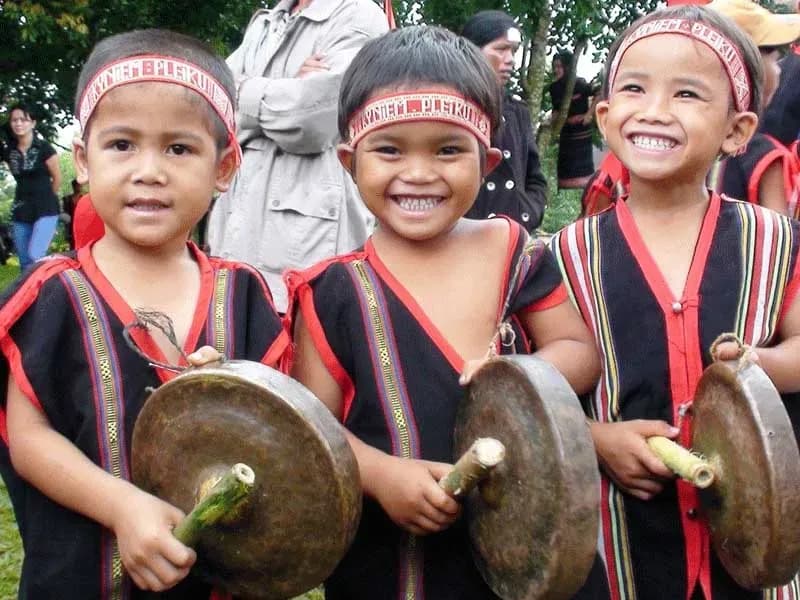
Vietnamese ethnic groups
Learn about the unique culture of the Ro Mam people through their language, beliefs and colorful daily life.
Dec 25, 2024 · 5 min read
The Ro Mam ethnic group ranks third among the ethnic groups with the smallest population in Vietnam (only higher than the Brau and O Du ethnic groups). The Ro Mam people currently live a sedentary life, focusing on economic development and preserving traditional culture. Let's join iGuide.ai to learn about the Co Lao ethnic group in Vietnam according to reference information from the Vietnam Ethnic Committee!
Regarding the historical origin of the Ro Mam people, in general, scientists have not clearly determined it, only knowing that this ethnic group has been present in Vietnam for a long time.
According to the survey of 53 ethnic minorities on April 1, 2019: Total population 639 people, male population: 317 people; female population: 322 people. Percentage of population living in rural areas: 88.4%.
Historically, in the early 20th century, the Ro Mam population was still relatively large, scattered in 12 villages mixed with the Gia-rai people in Kon Tum province. After many events, now there is only one village with a small population in the area bordering Vietnam - Cambodia, in Sa Thay district, Kon Tum province.
- The language belongs to the Mon-Khmer language group (Austroasiatic language family). The Ro Mam people are currently fluent in the languages of many ethnic groups, including the common language. - Education: According to the survey data of 53 ethnic minorities on April 1, 2019: The percentage of Ro Mam people aged 15 and over who can read and write in common: 80.0%; The percentage of people attending primary school: 106.1%; The percentage of people attending lower secondary school: 77.1%; The percentage of people attending upper secondary school: 58.3%; The percentage of out-of-school children: 15.7%.
- Eating: The custom of eating with your hands is still quite popular today. During holidays and festivals, people drink rice wine made from rice, cassava, corn, etc.
- Clothing: In traditional society, Ro Mam men wear loincloths that hang down to their calves. Women wrap themselves in skirts and go shirtless, some wear short-sleeved shirts. Skirts and loincloths are both white, undyed. Women like to wear earrings made of ivory, bamboo or wood. Young men and women cut off 4 or 6 of their upper front teeth when they reach adulthood.
- Housing: Housing is a long stilt house, built next to, surrounding the communal house. The main door of every house faces the communal house and the family houses are the playground. Around the village there is a protective fence. Each roof usually has many kitchens. Each couple lives in a room with partitions, with a separate kitchen. The main room in the middle of the house is where guests are received.
- Social relations: The village head is a village elder, the oldest person in the village, elected by the people. The traditional village is a neighboring commune. All members relate to each other on the basis of equality in obligations and rights. Social relations here still retain quite strong remnants of the matriarchal period in the period of rapid transition to patriarchy.
- Wedding: The wedding ceremony is held simply, just a communal meal of the villagers to witness and celebrate the first meal together of the bride and groom. After the wedding, the young couple lives with the wife's family for 4-5 years and then moves to live with the husband's family or alternately resides on both sides. Divorce is very rare.
- Funerals: The Ro Mam often use drums to announce a death in the family. The corpse is placed in front of the house, head facing inward, face looking sideways. The burial will take place one or two days later. The graves are arranged in rows so that the deceased's face does not face the village.
- Worship: The Ro Mam believe that "all things have animism", and that even the human soul after death is a powerful and mysterious supernatural force. One of the supernatural forces most worshiped by the people is the rice god. They worship the rice god on the day they start sowing, when the rice is in ear shape, before the day of threshing... to pray for a bountiful harvest.
- Tet: The biggest festival is usually held after the harvest season. After the new rice celebration is the time for a series of weddings of young men and women and grave-sweeping ceremonies for the dead.
The Ro Mam people live by farming, mainly growing sticky rice, with some rice, corn and cassava. Among the family's side jobs, cotton growing and weaving are the most developed. The fabric they weaved was enough to meet the family's clothing needs and was also a commodity to exchange for fuel oil and salt. Currently, thanks to special policies of the State, the Ro Mam people have shifted their crop and livestock structure to bring about high economic efficiency.
According to the survey data of 53 ethnic minorities on April 1, 2019: Some indicators on living standards and employment of the Ro Mam people: Rate of poor households: 33.3%; Rate of near-poor households: 36.4%; Rate of households using clean water sources: 94.6%; Rate of households using grid electricity for lighting: 98.4%.
Above is some interesting information about the Ro Mam ethnic group in Vietnam. Let's plan to learn, meet and enjoy the culture with the Ro Mam people in the near future with iGuide.ai!
Source:
- Ethnic groups in Vietnam (National Political Publishing House Truth)
- Basic characteristics of 54 ethnic minorities in 2019 (Committee on Ethnic Minorities and General Statistics Office)
- Website of the Ethnic Committee, Website of Nhan Dan Newspaper
- Survey results collect information on the socio-economic status of 54 ethnic groups in Vietnam)
Keep reading
 Related
 Related
 Related
 Related
 Related
 Related
 Related
 Related
Log in to leave a comment. Log in
Be the first to comment.
React to this story