authenticated by

Share
Vietnamese ethnic groups
Discover the rich cultural heritage of the Co people in the Central Highlands, from language, customs to interesting daily life.
Dec 25, 2024 · 5 min read
The Co ethnic group has about 40 thousand people, living mainly in Quang Ngai and Quang Nam provinces. Currently, thanks to the policies of the Party and the State, the life of the Co people has gradually improved, integrating with the life of other ethnic groups. Let's find out information about the Co ethnic group, Vietnam with iGuide.ai!
To date, most researchers believe that the Co people are one of the indigenous peoples in the Truong Son - Tay Nguyen region. Self-name: Cor, Col. Other names: Cua, Trau.
According to the survey of 53 ethnic minorities on April 1, 2019, the Co ethnic group has 40,442 people. Of which, the male population is 20,548 and the female population is 19,894. Number of households (households) 9,897; Household size (people/household) 4.1; Percentage of population living in rural areas: 96.5%.
The Co people live mainly in Tra Bong and Tra Mi in the northwest of Quang Ngai province and the southwest of Quang Nam province. The Co people also live scattered in the provinces of Kon Tum, Gia Lai, Dak Lak, and Thua Thien Hue.
The language belongs to the Mon-Khmer language group (Austroasiatic language family), relatively close to other ethnic groups in the northern Central Highlands and neighboring areas such as: Hre, Xo Dang, Ba Na... The written language was created before 1975 on the basis of using the Latin alphabet but is not popular now. In areas bordering the Hre people such as Son Ha district, Quang Ngai province, the Co people speak Hre. The vast majority of the Co people know the common language.
According to the survey of 53 ethnic minorities on April 1, 2019: The rate of people aged 15 and over who can read and write in common script is 75.2%; The rate of people attending primary school: 102.2%; The rate of people attending lower secondary school: 87.8%; The rate of people attending upper secondary school: 49.2%; The rate of out-of-school children: 14.4%. The rate of people aged 15 and over who can read and write in their own ethnic script: 0.8%.
Traditional house: It is a long stilt house with doors at both ends. The house is divided into 3 parts: a passageway in the middle, one side is divided into small rooms for each family to live in, and the other side is used as a common living space (receiving guests, meeting, organizing festivals, eating with many people, weaving, playing...).
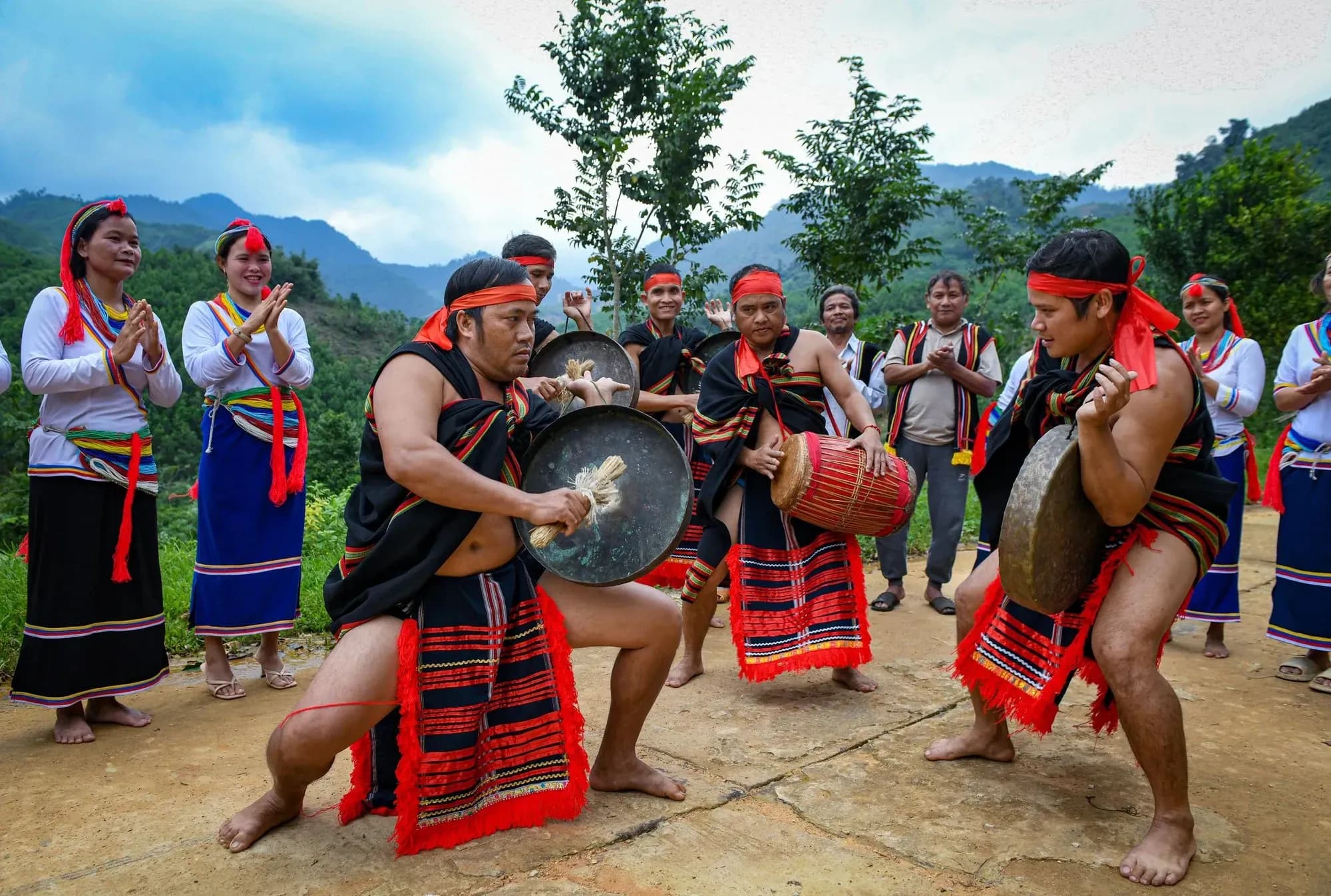
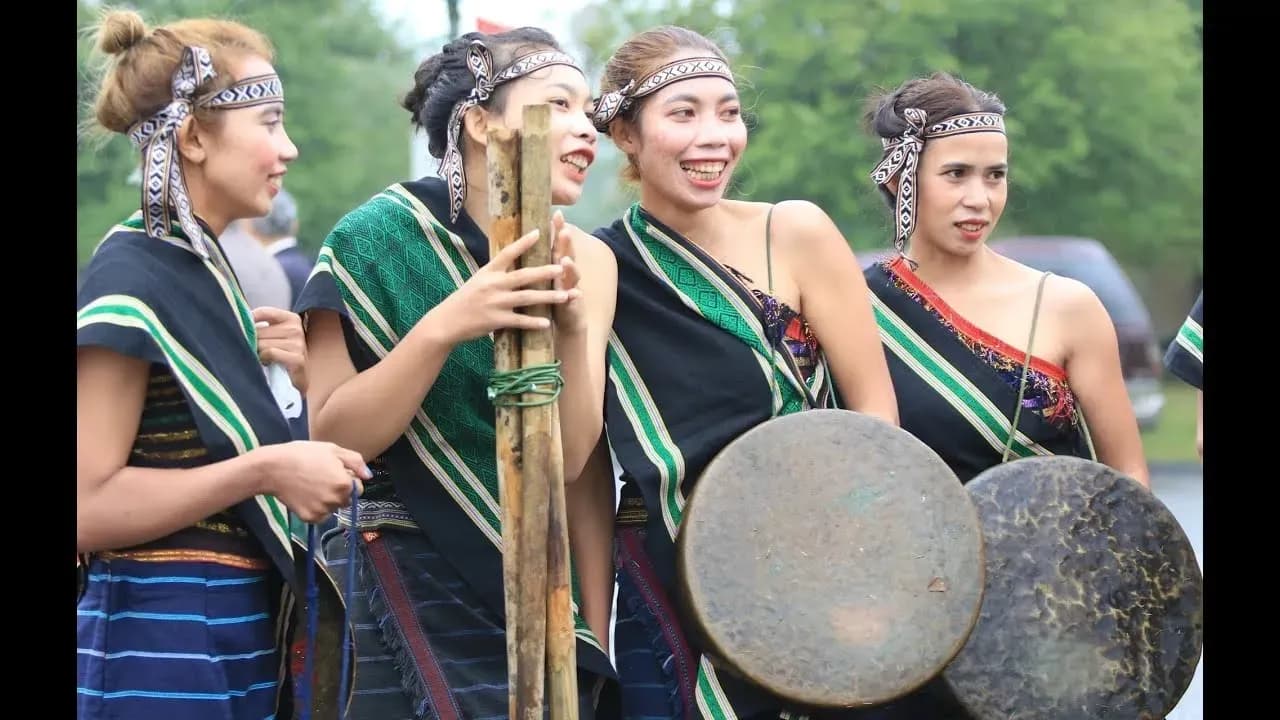
Clothing: The Co people mainly buy their clothes from the Xo Dang and the Viet. Traditionally, men wear loincloths and go shirtless, women wrap skirts and wear short-sleeved shirts; in the cold season, they wear a shawl. The long dress and turban imported from the plains were used to dress up during festivals, especially by the wealthy elders.
Social relations: Each village has a "village elder" who is respected and obeyed by everyone.
Marriage: The form of marriage where the husband resides is common. Custom allows that if the wife dies, she can marry her sister or brother, but a widow cannot marry her husband's sister; if two brothers marry two sisters, the older brother must marry the older sister, and the younger brother must marry the younger sister; if a daughter of one family has married another family, then 2-3 generations later the other family will marry their daughter to this family. Children of aunts and uncles, children of what kind - old children, children of the same parents cannot marry each other. Weddings are simple, short, and not very expensive.
Funeral: Wooden coffin, carved in the style of a single log. The deceased is buried in the village cemetery, not far from the residence. The bereaved family "divides the property" among the newly deceased, bringing to the grave not only the deceased's belongings and personal belongings, but also jars, gongs, etc.
Worship: The Co people call the high mountain peaks Ong and Ba mountains. They believe that "spirits" reside there. The system of "ghosts" (ka muych) and "gods" (kơi, ma) is very large: ghosts of people who died normally, ghosts of people who died abnormally, cinnamon ghosts, banyan tree ghosts, water ghosts, kitchen gods...
The Co people have many festivals, the biggest of which is the buffalo sacrifice ceremony - this is also a big festival in the village. In addition, Tet is associated with the end of a rice season and is a bustling occasion.
The way of calculating the days is similar to the Vietnamese lunar calendar, but there are only 10 months, followed by a rest period after the farming season.
Music is popular, using a set of three gongs is common; musical instruments include drums and various types of erhu. Dance only appears in the buffalo stabbing ceremony. Xru (Klu) and Agio folk songs are widely circulated. The source of ancient stories is quite rich, with myths, legends, fables... Decorative art is most concentrated on the ceremonial pole and the "taste" in the buffalo stabbing festival.
The main source of livelihood is slash-and-burn agriculture, with rice being the main food source. Cultivation is by slash-and-burn farming, digging holes to plant seeds, and threshing rice by hand. Betel leaves and cinnamon of the Co people have long been famous. The Co people raise buffalo, pigs, and chickens primarily for offerings; dogs are found in almost every household. Weaving and blacksmithing are not developed. Woven goods are beautiful and abundant.
The poverty rate of the Co ethnic group is 57.1%, the near-poor household rate is 16.7%. Unemployment rate: 2.08%; Percentage of trained workers with degrees and certificates: 8.0%; Percentage of workers working in the non-agricultural sector: 12.4%; Percentage of workers working in management or high and medium-level technical and vocational training: 3.6%; Percentage of households working in traditional handicrafts: 0.12%.
Above is some interesting information about the Co ethnic group, Vietnam. Let's plan to explore, meet and experience the culture with the Co people in the near future with iGuide.ai!
Source:
- Ethnic groups in Vietnam (National Political Publishing House Truth)
- Basic characteristics of 54 ethnic minorities in 2019 (Committee on Ethnic Minorities and General Statistics Office)
- Website of the Ethnic Committee, Website of Nhan Dan Newspaper
- Survey results collect information on the socio-economic status of 54 ethnic groups in Vietnam)
Keep reading
 Related
 Related
 Related
 Related
 Related
 Related
 Related
 Related
Log in to leave a comment. Log in
Be the first to comment.
React to this story